Category Archives: Blog

PT News

This Month in PT News. Featuring articles from PTandMe partnering clinics!

1.Is Technology A “Pain In The Neck?”
Written by Robyn Smith, Director of Sports Physical Therapy Services – The Center for Physical Rehabilitation

Technology is everywhere. Computers, video games, smart phones, ipods, ipads, and tablets. You name it – it’s all at our fingertips.  Read More


2. Keep The Tingle Out Of Your Arm 
Written by the Therapy Team at The Jackson Clinics Physical Therapy

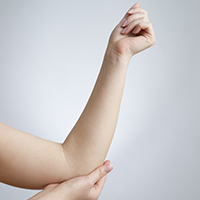
One of the main nerves in the arm, the ulnar nerve runs from the neck to the hand. At various points along this path, the nerve can become irritated or compressed, causing tingling in the elbow, wrist, hand or fingers.   Read More


3. Massage Therapy – A Relaxing Way To Promote Health
Written by the Therapy Team at Oregon Spine and Physical Therapy

If you are wondering what does massage has to do with your health, think again… Several studies and research have confirmed the beneficial effects of massage. Read More


avoiding workplace hazards for feet and hands

Avoiding Workplace Hazards for Feet and Hands

avoiding workplace hazards for feet and hands

OSHA Estimates totals for foot and hand types of injuries annually at 320,000 hand and finger injuries, 70,000 eye injuries, 70,000 head and face injuries, and 110,000 foot and toe injuries in 1987. Close to 30% of the total injury base. Sharp or heavy falling objects are the primary sources of foot injuries. So how does one go about avoiding workplace hazards for feet and hands?

To help you get started we have listed out some of the common injuries and actions that lead to workplace injuries of the hand and foot. This is by no means complete as there certainly could be burns or lacerations or multiple levels of sprains/strains in either body area in addition to those noted.

Foot Injuries

One’s feet provide support and movement. Yet, the 26 bones in the human foot can be easily damaged. According to the BLS, 40 laborers suffer disabling injuries to their feet and toes every day. These injuries account for 8.5 percent of all lost-time injuries in the construction industry.

  • Compression – when foot or toe is squeezed between two objects
  • Puncture – when a sharp object like a nail, penetrates the shoe
  • Slipping – loss of traction due to oil, water or chemicals
  • Chemicals/Solvents – may penetrate ordinary safety shoes and can harm feet
  • Temperature Extremes – insulated boots may be necessary, depending on climate
  • Wetness – extended exposure to water may result in discomfort and possible infection
  • Electricity – a danger when using power tools or electric equipment

Some of the most common foot and leg injuries include:

  • Fractures – A fracture of the bones in the leg, foot, or knee may be caused by falling objects or an accidental fall from a height. Some fractures can be treated by using a lightweight cast and crutches, while more serious fractures may require surgery and extensive physical therapy.
  • Knee Tendonitis – Knee Tendonitis is a swelling of the tendons surrounding the knee. Individuals who spend a lot of time walking, standing, or lifting objects while at work are at risk of developing this painful condition. Older individuals are, particularly at risk.
  • Knee Bursitis – Knee Bursitis is a swelling of a fluid sac that provides cushioning for your knee joint. Like tendonitis, bursitis can cause severe pain, inflammation, and loss of mobility.
  • Loss of Limb – The most serious workplace accidents may require amputation. These life-altering accidents can have devastating effects on an individual’s quality of life and ability to work. Amputation cases are especially complicated because they involve issues of retraining, prosthetic replacement, wound care, and home modification. Leg and foot injuries can be among the most devastating for an individual to sustain as well as the most difficult to overcome. Using crutches or a wheelchair can severely limit a person’s mobility, and make it difficult to complete, let alone enjoy, everyday activities at work, at home, and in the community.
    Leg and foot injuries can also make it very difficult, if not impossible, to return to one’s pre-injury employment. Individuals who perform manual labor rely on the use of their legs and feet to perform nearly every aspect of their jobs. Furthermore, many workplaces are also not properly equipped for individuals with limited mobility.

hand injury


Hand Injuries

The hands are an extremely important part of the body and can be damaged in a matter of seconds, leaving a Laborer permanently disabled. According to the Bureau of Labor Statistics (BLS), Laborers suffer over 8,600 disabling hand injuries each year, accounting for roughly 18 percent of all disabling injuries.

The most common dangers include:

  • Pinch or crush points
  • Hot surfaces
  • Rotating devices
  • Chemicals
  • Machinery not properly locked out

Some common hand, wrist, and arm injuries that can occur in the workplace include:

  • Fractures – A hand, wrist, or arm fracture can occur due to falling objects or other accidents. Some fractures can be severe and may require extensive reconstructive surgery.
  • Nerve damage – An accident may damage the nerves in the hand and arm, which may cause numbness and pain.
  • Loss of limb – A serious accident may require the amputation of an arm or hand. This serious injury can dramatically affect all aspects of your life. Individuals must relearn how to conduct even simple functions, and while prosthetic limbs can help, they are expensive. Furthermore, approximately 60-80% of amputees experience phantom limb syndrome, causing them to feel sensations such as aching, itching, and burning to emanate from the body part that is no longer there.

In addition to hand and arm injuries that are caused by an accident, many common injuries are caused or worsened by repetitive stress.
These ailments include:

  • Carpal tunnel syndrome – People with carpal tunnel syndrome experience pain and tingling sensations in their thumbs and fingers. Although the exact cause of carpal tunnel syndrome is unknown, many researchers believe that performing repetitive manual tasks, such as typing on a keyboard, may cause or worsen the condition. Carpal tunnel syndrome may require wrist surgery, steroid injections, or the use of a brace.
  • Repetitive strain injuries – Repetitive strain injuries are characterized by painful sensations while performing a repetitive task, such as lifting heavy objects. These injuries can worsen the more an activity is performed. Injuries to the arm and hand, whether suffered by an accident or through repetitive strain, can permanently impact a person’s life. Even the completion of simple, everyday tasks may become difficult and exhausting, diminishing one’s overall quality of life.

Understanding what the injuries are is the first step in prevention. If you are looking to put protocols in place to help team members avoid workplace hazards for feet and hands, please reach out to a physical therapy clinic that specializes in industrial rehabilitation. They can work with you to improve the safety of the workplace and the employees.

physical therapy near me

Gait Analysis

Keeping Pace – The Value of a Gait Analysis

Gait Analysis

As the warmer weather comes to an end we may just now be seeing the emphatic group of athletes who push their bodies to the limits. Some push too hard and too fast while others endure countless episodes of micro-injury that slowly breaks down their system.  You guessed it – Runners.

For those of us in the medical profession that have the pleasure of working with the running population, we know that they can sometimes be the most challenging group to work with.  That being said they also provide us an opportunity to play a tole in preserving a very important piece of their quality of life. Whether it’s a novice runner who just “got the bug” or an experienced runner who knows of nothing else but to run, they all have something in common: recognizing what they are doing to their body!

In the orthopedic community we see mostly micro-trauma and repetitive use injuries in the form of tendinitis, bursitis, muscle strains and joint pain. During the running season we do our best to control the situation by advising rest, stretching, ice, etc; but what else can we do when eliminating the source of trauma is not a plausible answer? One solution is to speak  their language. How do you run? Running is natural, we just learn how to do it and most runners have never been coached how to run properly, Even very efficient runners can have biomechanical faults that lead to increased stress in any one area. A good rehab program would consist of:

  • Symptom management
  • Education of proper stretches, modifications to footwear, strengthening (including core)
  • Advice on what to do the next time they are injured

Often overlooked is the form they take when running. There is bountiful information to by learned by watching the way someone moves. A single flaw in running mechanics is magnified a thousand times with each foot strike. If we can’t stop someone from invoking trauma to their body, we can teach our runners how to make it less traumatic in the first place.

This is where a video gait analysis comes in handy. A video gait analysis enables us to zoom in on targeted areas and see what is actually going on at various joints. With plenty of normative data and efficient runners for comparison, physical therapist can provide different perspectives for patients.  By slowing down a sequence of strides frame by frame we can not only focus on several links in the chain at once, but we can show runners exactly how their actions are impacting their body. We can also show them targeted angles and body positions which shows runners a side of themselves they are unable to see otherwise.

Formulating a productive plan of care in rehabilitation can now include very specific exercises and technique modification. When added to traditional treatments of common running injuries the overall outcome is enhanced and often more timely. If you are running in pain – ask your physical therapist for a video gait analysis.

Written by the therapists at Plymouth Physical Therapy Specialists.

Managing BMI to Improve Pre & Post Surgical Outcomes

494389015

MANAGING A PATIENT’S BMI can reduce pain and improve outcomes pre & post surgically.
Physical therapists can treat patients for their pain (potentially related to their obesity) and can provide can provide general population information to patients regarding healthy eating, healthy recipes, general daily activity.

Continue reading

PT News

This Month in PT News. Featuring articles from PTandMe partnering clinics.

sb10063626bc-001
1.One Less Headache to Worry About
Written by the therapy Team at The Jackson Clinics Physical Therapy

Jaw and head pain can be a real pain in the neck—literally. Did you know that many people suffering from both temporomandibular joint disorder (TMD) and headaches have postural issues with their cervical spine or neck? This is why we can be an important ally in combating persistent headaches and TMD-related facial pain. Read More

ThinkstockPhotos-459936813

2. PAIN, NO GAIN. BE NICE TO YOURSELF

Written by Jen Ryskamp at The Center for Physical Rehabilitation

“No pain, no gain”

This is a phrase we have all heard spoken in gyms or on the field especially during particularly difficult workouts. I’m sure you have uttered the phrase a time to two when you felt like giving up on a task that was physically challenging for self-motivation. Cleverly thought up by Jane Fonda in the 1980’s, she used this concept to keep her clientele motivated. Jane was a pioneer in the workout world selling 17 million copies of her aerobic exercise videos, motivating people to get in shape. Her lifetime of physical fitness has paid off. Now in her 70’s, she still has a great physique and carries herself well. Read More


ThinkstockPhotos-478561018 (1)
3. 4 Safety Tips for the Weekend Warrior
Written by the therapy Team at Desert Hand Therapy and Physical Therapy

Weekend warrior (noun): a person who participates in an activity only in their spare time.
Every day, approximately 10,000 Americans visit the emergency room for sports or exercise-related injuries. If you are a weekend warrior, it’s important to remember your body can’t go from inactive mode to weekend warrior mode in an instant. Exercise intensity needs to be progressive, or the risk for injury increases. Weekend warriors tend to jump right into an intense activity and bypass preparation. Read More

Shoulder Impingement Syndrome

ThinkstockPhotos-478265881
 
Article written by: Chris Wolfe, PT, Certified MDT, OCS
Director of Green Hills STAR Physical Therapy
www.StarPT.com

 
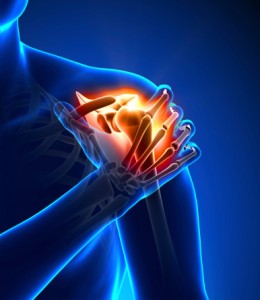
Shoulder disorders are some of the most common joint complaints, and shoulder impingement syndrome and rotator cuff tendonitis are considered to be the most frequent cause of shoulder pain and disability. The shoulder complex is unique in the body due to its structure and function. It is considered a ball and socket joint involving the large rounded end of the upper arm bone called the humerus and the small shallow socket of the shoulder blade. This disproportional shape allows for a wide range of directions that the arm can be moved; however, it does not provide much stability to hold it in place. The stability of the shoulder relies heavily on numerous ligaments, tendons and muscles; and the most common group is called the rotator cuff. The rotator cuff attaches to and surrounds the rounded end of the humerus and is bordered superiorly by a bony roof called the acromion. There is a small space between this bony roof and the rotator cuff. With reaching overhead, the space around the rotator cuff decreases, sandwiching and pinching the tendons between the two bones. This can lead to the disorder of shoulder impingement where the tendons become compressed and then inflamed.
Continue reading

Kinesio Taping

Taping: A Pain Reliever When All Others Fail


kinesio taping pain relief

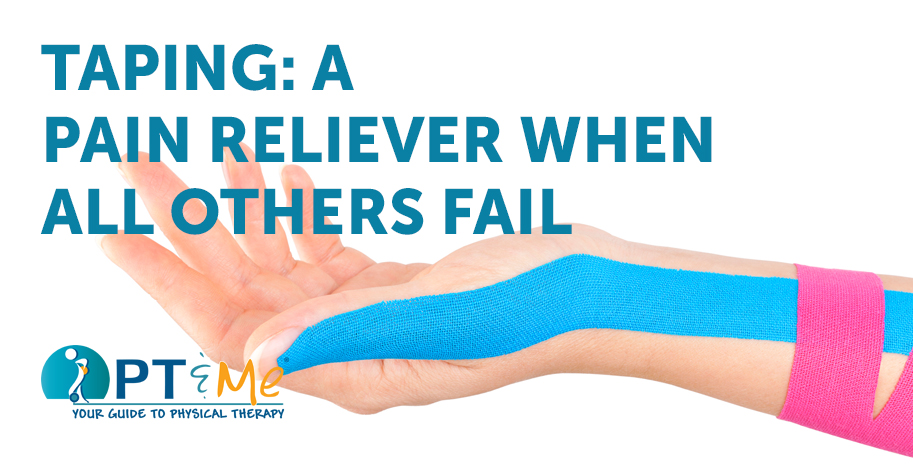
“It’s gone” and “I can’t believe a little piece of tape can help that much”. These are typical comments made by patients after they have been shown how to tape their joints. Hand therapists have expanded the tricks in their bag of treatment options for pain reduction methods. Kinesio taping is now used as an effective pain reliever for hands. Patients who have not found traditional splints comfortable or effective now have an alternative. They report significant improvements in hand function with the use of simple taping techniques due to reduced pain.

  • HOW IT WORKS: Traditional splints have a history of mixed results. Hard or soft neoprene devices were used but patients often complained they were bulky, uncomfortable, and caused additional pain. Today’s therapists have borrowed taping techniques used by athletic trainers. These methods often decrease pain, provide external support for healing tissues, help reduce edema, and are less cumbersome than splints.
  • TAPE TYPES: Various types of tape may be used depending on the type of support needed and the patient’s tolerance of adhesives. Examples include McConnell and Kinesio tapes. Proper tape and adhesive, as well as wrapping styles, will maximize results.
  • EFFECTIVE TREATMENT AREAS: Typical pain-reducing taping areas include many of the typical painful hot spots in the hand such as the CMC joint, thumb, ulnar-sided wrist pain as well as joint ligament pain.
  • KINESIO TAPING ADVANTAGES: Taping is a low-profile alternative to traditional splinting. It provides custom relief to the area needing support. It is cost-effective in that a splint need not be purchased. It is easier for the patient and may result in better treatment compliance.

If you are a patient with hand or wrist pain talk to your physical or occupational therapist about taping as a low-cost practical method of pain relief.  Information provided by our friends at Plymouth Physical Therapy Specialists

More PTandMe articles about Kinesio Taping can be found here:

remove kinesio tape   kinesiotaping helpful for lymphedema patients