Category Archives: Sports and Fitness

lack of exercise worse than smoking

Lack of Exercise Worse than Smoking, Diabetes, and Heart Disease

lack of exercise worse than smoking

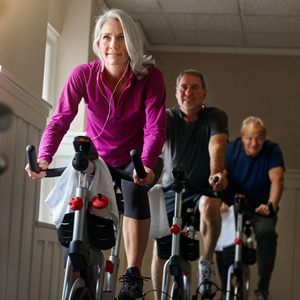
As physical therapists, it is our job to promote movement and overall well-being.  Exercising regularly is linked to better physical and mental health and can help to prevent or delay heart disease, strokes, certain types of cancer, and diabetes. What is perhaps less known is that not being active can be harmful to your health. This lifestyle, called sedentary, has been linked to a number of preventable diseases. Researchers wanted to assess the impact of a sedentary lifestyle on all-cause mortality. The study, published in JAMA, suggests that a sedentary lifestyle has a larger impact on our health than previously thought.

About the study
The study by Jama included 122,007 participants at an academic medical center. The mean age of the participants was 53 years and they were 59% male. Among these, 13,637 died during the study.

The study followed participants for median of 8.4 years. Their physical fitness was measured using exercise treadmill testing and they were arranged by age and gender into the following performance groups:

  • Low—less active than 25% of participants
  • Below average—less active than 49% of participants
  • Above average—more active than at least 50% of participants
  • High—more active than at least 75% of participants
  • Elite—more active than almost 98% of participants

The study found that death from any cause was lowest among elite category. Death rates were highest among those in low category. It also found that the increase in risk of death linked to sedentary behavior was equal to or greater than the risk of death from smoking, diabetes, and heart disease.

How Does This Affect You?

Cohort studies are observational studies. These studies simply observe events as they unfold, but do not interfere or introduce factors that can affect the outcome. While they can’t show direct cause and effect, they can show a possible link between two factors. A large number of studies have found that sedentary behavior affects health, however this is the first that showed it may be as significant as smoking, diabetes, or heart disease.

If you are sedentary, start moving. Make changes in small increments to help you adjust. Starting a workout routine can be a challenge, but with the help of a physical therapist, you can learn how to get started and safely build up to a regular routine. Work toward at least 150 minutes a week of moderate intensity aerobic activity. Here are some tips to help you get started:

  • Start with short episodes of activity. Try doing 3-4 bouts of walking for 10 minutes at a time, spread throughout the day.
  • Try out different activities to see which work best for you.
  • Look for opportunities to move during the day. Take stairs instead of the elevator, park a little further away, or walk instead of taking your car. Little bits can add up and help you reach longer goals.

If you are already active, keep it up! Make sure to schedule activity into your daily routine.

Need help getting started? We have some great ideas for you here!

exercise tips starting a workout program

SOURCES:

2008 physical activity guidelines for Americans Summary. Office of Disease Prevention and Health Promotion website. Available at: https://health.gov/paguidelines/guidelines/summary.aspx. Accessed October 25, 2018.

Mandsager K, Harb S, et al. Association of cardiorespiratory fitness with long-term mortality among adults undergoing exercise treadmill testing. JAMA Netw Open. 2018;1(6):e183605. Available at: https://jamanetwork.com/journals/jamanetworkopen/fullarticle/2707428?resultClick=3. Accessed October 25, 2018.

PT News PTandMe

PT News October 2018

PT News PTandMe

This time in PT News we recap what our clinics have been posting throughout October, 2018. Featuring published articles from PTandMe partnering clinics!

Kicking injury aside Rebound Physical Therapy Review

1. Kicking Injury Aside and Back on the Field
Written by Rebound Physical Therapy with 10 physical therapy locations throughout Bend, OR and the surrounding communities.

Physical therapists help patients with all kinds of disabilities or injury. Read about Kaylee’s journey through rehab as she goes from being a soccer athlete to having to relearn how to walk, and eventually get back into her sport.  Read more


Transitioning Indoor Activities

2. Transitioning to Indoor Activities
Written by the Therapy Team at The Jackson Clinics with 18  physical therapy locations throughout Northern VA and soon branching into Maryland.

While summer offers opportunities to walk, jog, bicycle, garden, play sports and get into shape, cold weather brings the temptation to eat more, move less and hibernate indoors. Shorter days, frosty air and holiday parties can threaten the fitness gains you made during the summer.  Read more

women's health

3. The Importance of Physical Therapy on Women’s Health: All You Need to Know
Written by the Therapy Team at Cornerstone Physical Therapy with 5 physical therapy locations in Ohio.

Ever since the #1 New York Times bestseller entitled “Men Are from Mars, Women Are from Venus” by John Gray was published, more and more people have asked the question “What makes men and women so different?” Read more

5 Most Common Sports Injuries

Top 5 Most Common Sports Injuries and How to Avoid Them

 Most Common Sports Injuries and how to avoid them: We list some of the most common injuries that can occur from sports


Injuries are a byproduct of sports, no matter if you are a professional athlete or just a sports enthusiast. You may go to extra lengths to prevent them and avoid the pain and trouble, but prevention can only go so far when you’re trying to achieve performance. Depending on the type of physical activity that you are engaging in, some injuries might occur more often than others. In this article, we will be talking about the most common of them and also, what to do to avoid suffering from them.

1. Ankle Sprain

Scary official numbers tell us that every day, about 25.000 people end up spraining their ankle in the United States. This is probably the most common injury among people of all ages. However, it doesn’t necessarily result from playing sports. It can also happen while you’re walking on the street or walking down some stairs. Nevertheless, the problem with ankle sprains resulted from playing sports like basketball, soccer, tennis or volleyball is that they can be more serious because of the increased force and speed at which the injury occurs. Naturally, this means that the time needed for recovery is longer and the treatments costlier.

Ankle sprains have three degrees of severity, according to doctors:

  • Grade 1: Minimal damage to the ligaments, just some slight stretching;
  • Grade 2: A loose ankle joint and partial tearing of the ligament, more pain is involved;
  • Grade 3: The most severe case, very unstable ankle joint, a complete tear of the ligament.

The good news is that an ankle sprain is preventable if you truly want to avoid going through all that trouble and pain. Here are a few tips:

  • Practice ankle strengthening exercises and stretching before every exercise session;
  • If you’ve had a sprain before, always wear preventive braces before and while playing sports;
  • Practice balance training regularly so that your ankle will become stronger and your body will gain more control over various types of exercises and positions;
  • Wear proper footwear for the surface you’re exercising on and for the sport, you’re practicing.

2. Shoulder dislocation

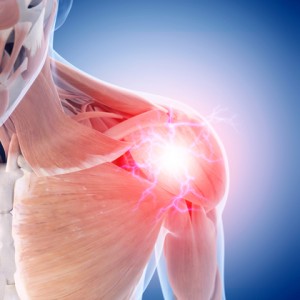
Shoulder dislocation is also among the most common injuries that you can get. It usually occurs when your upper arm bone goes out of the shoulder socket where it should normally stay. This kind of injury is often caused by a nasty fall, a tackle in football for example, or by any other type of strong collision. Apart from football, rugby and hockey are the two other high contact sports where shoulder dislocations occur most frequently. However, surfers, tennis players, weightlifters, and cyclists can also suffer from it, but not as frequently.

A dislocated shoulder is a very visible problem, as you will immediately notice the deformed shape it will take after an injury, and you will feel a lot of pain. If you’re lucky, your arm bone might go back into the shoulder socket on its own, but if it doesn’t do that, a doctor is the only one who can fix your problem. Thankfully, you can also prevent your shoulder from becoming dislocated:

  • Do strengthening exercises for your rotator cuff muscles so that you can decrease your chances of a shoulder dislocation;
  • Wear a shoulder brace or some kind of support while doing physical exercise or playing sports, especially if you have suffered from a dislocated shoulder before;
  • Invest in a resistance band and use it for exercises. Also, do some push-ups and shoulder shrugs to avoid a shoulder dislocation.

3. Knee Sprain

A knee sprain resulted from physical exercise is very similar to an ankle sprain. It happens when the ligaments in the knee become either stretched, partially or completely torn. The four ligaments in your knee that can be affected by a knee sprain are the anterior and posterior cruciate ligaments, and the medial and lateral collateral ligaments. People or professional athletes who play football, soccer, and basketball, as well as cyclists, tennis players, and runners often end up suffering from knee sprains. Often, this injury is the result of an abrupt directional change or a hit to the knee area from either side of it.  There are a few ways in which you can avoid this very common injury. Here are some of them:

  • If you maintain your body weight under control and don’t go overboard you are less likely to injure your knee in any way because they won’t have to sustain so much pressure;
  • Warm-up before your exercise session by biking, jogging, or walking;
  • Strengthening exercises for your quadriceps, calf, and hamstring muscles will also help you prevent knee sprains.

4. Lower back injuries

Most people are affected by lower back injuries at one point in their lives, no matter if they’re professional athletes or not. However, people who play a sport or are physically active usually end up with common back strains. Those are, in fact, a group of injuries that affect the soft tissue of the spine like ligaments, muscles, blood vessels, and tendons. There are many causes of back strains like obesity, trauma, poor posture, etc. Even lifting something heavy or moving suddenly can cause such an injury. Here is how to prevent a lower back strain:

  • Stretching helps a lot in these cases. So, if you have a sedentary job, try to get up as often as possible and walk around;
  • Spine and lower back muscle strengthening exercises can help a lot when it comes to preventing injuries;
  • Always warm up your back before doing any type of exercise. Also, after your routine, apply some ice on your lower back area in case you feel it sore or tight.

5. Hamstring strain

A hamstring strain is definitely one of the most common sports injuries and regardless of what sport or type of physical activity you have done, you most likely suffered from it. The biggest problem with it is that it can last for a very long time, and sometimes, you carry it for your entire life. Stopping suddenly can cause a hamstring strain, as well as running and jumping. In most cases, it’s caused by failure to warm up before routines, and poor flexibility and balance. However, there are a few things that you can do to avoid and prevent it:

  • You always need to properly warm-up before doing any kind of exercise;
  • Massage your hamstring before starting your routine;
  • Strengthen your quadriceps and glutes to relieve the pressure off your hamstring.

Conclusion
All in all, it seems that certain injuries resulted from various types of sports and physical exercises are very common among people of all ages. Fortunately, there are certain things that you can do in order to avoid them. The truth is that certain injuries are sometimes unavoidable no matter how hard you try, but just a bit of precaution might go a long way.

This guest post was written by Benjamin Holeman, an amateur pickleball player and a writer for toppickleballpaddle.com.
He thinks that sport has many benefits and that’s why he wants more and more people to play sports.

soccer injuries

Prevent Common Soccer Injuries with Physical Therapy

soccer injuries

Soccer is a great way to build endurance, improve speed, and stay fit, all while enjoying being a part of a team. However, it does not come without it’s risks. By regularly performing quick, complicated movements combined physical contact, injuries can range from mild sprains and strains – to those that may require surgery like a torn ACL. Risk of injury is no reason not to play soccer, though. Soccer players just need to be aware of the risks and know what steps they can take to play as safely as possible.

1. Sprains

Sprains are common soccer injuries. They often happen to the ankle or knee. The pivoting and lateral movements of soccer contribute to these injuries. To avoid unnecessary risk, always check the condition of the field before you play. Do not play on fields that are uneven or have holes or rocks on them. Also, proper footwear and appropriate strength and balance training are the key to prevention.

2. Strains

Muscle strains can be caused by:

  • Pulling a muscle too far in a direction it does not want to go
  • Contracting a muscle hard against resistance
  • Contracting a muscle hard when the muscle is not ready

The most common muscle strains in soccer occur with groin muscles, hamstrings, and quadriceps. A muscle strain won’t send you to the emergency room, but it can be painful and can keep you off the field for a few days or weeks. Strains occur frequently in soccer due to constant stop and go movement, or taking a longer stride than muscles can handle. Good flexibility and strength can lower your chances of muscle strain. Start with a warm up, then stretch the areas that are most likely to suffer a strain. Make sure that you are also doing strengthening exercises before the season begins. Wearing well-fitted cleats with appropriate spikes (longer spikes in softer turf and shorter spikes on dry, hard turf) may also help prevent strains.

3. Fractures

The majority of soccer-related fractures are also in the lower extremities . Fractures often occur as a result of contact, so wearing protective gear like shin guards is important.

4. Head Injury

Closed-head injury is most often the result of a collision between players or from not heading the ball properly. Correct heading involves use of the forehead to contact the ball, the neck muscles to restrict head motion, and the leg muscles to to propel the body from the waist. You may want to consider strengthening your neck muscles to prepare them for heading. You can use your hand to provide resistance against your head. Then, use your neck muscles to turn your head right, left, forward, and backward. Wear a fitted mouth guard to protect your mouth and teeth. You may also want to consider protective eye-wear.

Preventing Soccer Injuries with Physical Therapy.

By working with a physical therapist for injury prevention you get the opportunity to work with an expert of the human body. A physical therapy team will be able to target specific muscles in the legs to strengthen and prepare for the movements performed regularly from athletes of all performance levels. For example, to help prevent an ACL Tear  they may provide an athlete with multi directional knee stability training.  In regard to head injuries a physical therapist may ask you to complete baseline testing, giving coaches and athletic trainers the ability to track your cognitive progress in case of a concussion.

Physical therapists can also help by working with teams to create more effective warm-up exercises designed specifically for your sport and ability levels.

After an Injury Occurs

If you have experienced a soccer injury that doesn’t recover after a few days of rest it may be time to consult a physical therapist or your primary health care provider.  Pushing through pain while trying to remain active in a sport may lead to a more severe injury as well as improper healing of the affected muscles. By going through a physical therapy program, athletes are not only given all of the tools needed to recovery from the initial injury, but also the education and exercises needed to prevent injury in the future.

REFERENCES:

Asken MJ, Schwartz RC. Heading the ball in soccer: what’s the risk of brain injury? The Physician and Sportsmedicine. 1998;26(11).

Boden BP, Kirkendall DT, Garrett WE Jr. Concussion incidence in elite college soccer players. Am J Sports Med. 1998;26(2)238-41.

Metzl JD, Fleischer GR. Sports-specific concerns in the young athlete: soccer. J Pediat Care. 1999 April.

Soccer and the brain. University of Washington website. Available at: https://faculty.washington.edu/chudler/soccer.html. Accessed Accessed January 18, 2017.

Soccer injury prevention. American Academy of Orthopaedic Surgeons website. Available at: http://orthoinfo.aaos.org/topic.cfm?topic=A00187. Updated September 2013. Accessed January 18, 2017.

Soccer injury prevention. Stop Sports Injuries website. Available at: http://www.stopsportsinjuries.org/soccer-injury-prevention.aspx . Accessed January 18, 2017.

Tips for Seniors: How to Avoid Injuries During Sports and Exercise

Tips for Seniors: How to Avoid Injuries During Sports and Exercise

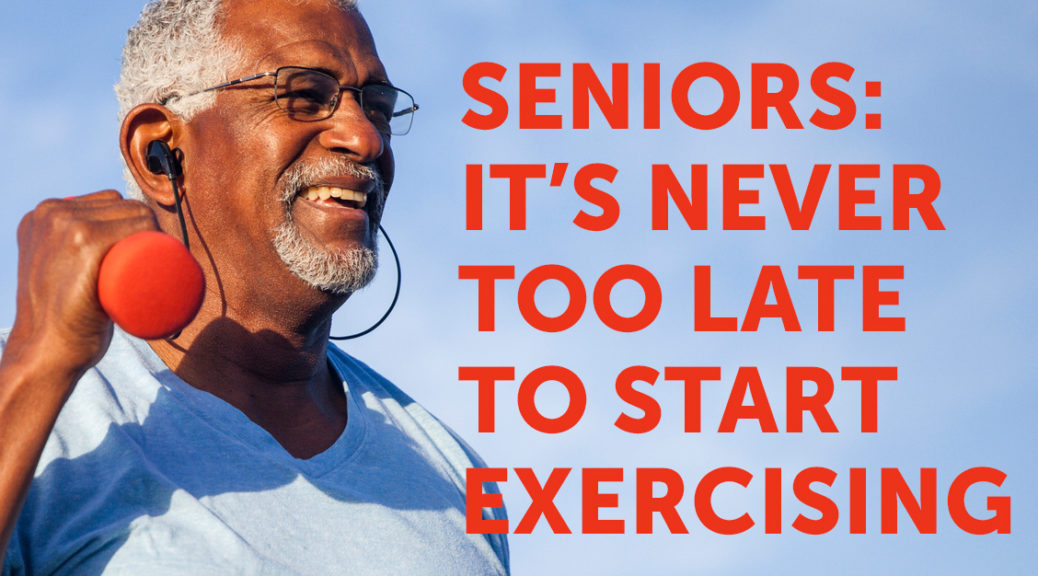
Tips for Seniors: How to Avoid Injuries During Sports and Exercise

Our bodies change with age. It may not be a pleasant thought, but at least most changes are gradual. One thing that does not change as the body ages is the need for physical activity. Physical activity promotes physical and mental well-being. Before you head out the door, learn why your risk for injury is higher as you get older.

As you age it’s possible to notice a couple of significant changes:

  • Tendons and ligaments lose some of their elasticity. This can lead to reduced range of motion in the joints, making these areas more prone to injuries. And unfortunately, older bodies tend to take a bit longer to recover from injuries.
  • A loss in muscle. This loss usually begins in the mid-40s (earlier if you are inactive) and may decline as much as 10% after the age of 50. This muscle loss can certainly mean a decline in physical abilities and make it easier to gain weight. Fortunately, regular exercise can significantly slow this muscle loss. If you do not use your muscles regularly, the tissues become weaker and less compliant.

Although older adults accumulate a variety of injuries, the most common injuries involve sprains (stretching or tearing of a ligament) and strains (stretching or tearing of a muscle or tendon) around the shoulders, knees, and ankles. These injuries may only cause minor soreness or stiffness. People often do not recognize soreness as a problem, and they work through the pain. This may lead to more soreness and injury. Other common injuries include tennis elbow, Achilles tendinopathy, and shin splints.

How to Avoid Injuries During Sports and Exercise

To live a longer, more productive life, you have to exercise. You may need to exercise at a lower pace or for shorter periods of time than you did when you were younger. Remember that you may not be able to play hoops to the level of your 30-year-old colleagues, or play as many back-to-back tennis matches as you once could. This is a great time to make some changes to your routine and play smart. Before you get started, follow these tips so you can avoid injuries during sports and exercise:

  • Get a basic medical screening. Talk with your doctor. Find out if you have any conditions that would put you in jeopardy while exercising. If you have a chronic condition that is limiting, you may be able to work out an activity plan within the scope of your ability.
  • Find a balanced exercise program. Do not rely on one sport to keep you in shape. Follow a program that includes cardiovascular activity, strength training, and stretching.
  • Warm up before and cool down after physical activity. Adding a few minutes to your warm up can make your workouts smoother. Cold muscles are more prone to injury, which is why you are asking for trouble if you skip the warm-up. Try some light jogging or walking.
  • Keep it regular. You will not make gains in fitness by cramming your activity into the weekend. Aim for 30 minutes of physical activity every day.
  • Take lessons. Hire a trained professional such as a physical therapist or licensed athletic trainer to help you attain and maintain proper form in your sport, even if it is weight training.
  • Get the right equipment for your sport. You want to make sure the gear you use for your activity is in good shape and used properly. Think about the condition of your shoes, or if you will need a helmet.
  • Follow the 10% rule. When you are ready to increase your activity level, do so in 10% increments. In other words, increase activity small increments per week. This rule also applies to working with weights.
  • Be cautious about adding new exercises. Whether you are a seasoned fitness enthusiast or new to exercise, avoid taking on too many activities at once. Add activities gradually.
  • Listen to your body. Pay attention to the messages your body is sending you. If your knees hurt after you ski, find an easier ski run or maybe think about a different activity that does not hurt your knees.
  • Be careful about jumping right back into your routine. Gradually return to your workout routine if you had to take a brief time out because of illness or injury. If an injury requires additional help make sure to follow the return-to-play guidelines provided by your physical therapist.
  • Seek professional help if you injure yourself. Consult your physical therapist for injuries that are not relieved with home care. Some injuries require medical treatment and will not go away on their own.

Old age no longer means less activity. In fact, it means quite the opposite. The more active you are the better your body will age. Play smart, listen to your body, and you will find more abilities than limits. For help finding a workout that fits your lifestyle and ability levels don’t hesitate to call your physical therapist. They have the expertise and skills needed to help keep you active and safely avoid injuries during sports and exercise.

RESOURCES:

Office of Disease Prevention and Health Promotion
www.health.gov

Sports Med—American Orthopaedic Society for Sports Medicine
http://www.sportsmed.org

CANADIAN RESOURCES:

Healthy Canadians
http://www.healthycanadians.gc.ca

Public Heath Agency of Canada
http://www.phac-aspc.gc.ca

REFERENCES:

Effects of aging. Ortho Info—American Academy of Orthopaedic Surgeons website. Available at: http://orthoinfo.aaos.org/topic.cfm?topic=A00191. Updated September 2009. Accessed October 26, 2016.

Making physical activity a part of an older adult’s life. Center for Disease Control and Prevention website. Available at: http://www.cdc.gov/physicalactivity/everyone/getactive/olderadults.html. November 9, 2011. Accessed October 26, 2016.

Physical activity guidelines for Americans. United States Department of Health and Human Services website. Available at: http://www.health.gov/PAGuidelines. Accessed October 26, 2016.

Sports injury prevention for baby boomers. Ortho Info—American Academy of Orthopaedic Surgeons website. Available at: http://orthoinfo.aaos.org/topic.cfm?topic=A00178. Updated August 2011. Accessed October 26, 2016.

Last reviewed October 2016 by Michael Woods, MD  Last Updated: 12/10/2014

PT News PTandMe

PT News June 2018

PT News PTandMe

This Month in PT News. Featuring articles from PTandMe partnering clinics!

1. Walking: An Effective Tool for Weight Loss and Maintenance
Written by The Jackson Clinics with locations throughout Northern VA.

The simplest exercise available is placing one foot in front of the other and walking. Because this is something we do every day, it is often overlooked as a valuable tool for weight loss. Read more


athletic trainer

2. The Roles of an Athletic Trainer
Written by the Therapy Team at The Center for Physical Rehabilitation with locations throughout Great Rapids, MI

Athletic trainers not only help individuals return to the athletic field or a respective line of work but it also allows these athletic trainers to practice in a setting that best suits them and their interests.  Read more

physical therapy

3. Why Should I Try Physical Therapy
Written by the Therapy Team at Excel Physical Therapy in Palmer & Wasilla AK

Do you suffer from aches and pains in your joints? Physical therapy can help! Most people who suffer from pain wait it out to see if it will subside on it’s own, but what is the cause of the pain? Read more

PT News PTandMe

PT News May 2018

PT News PTandMe

This Month in PT News. Featuring articles from PTandMe partnering clinics!


2. Hands-on physical therapy effective for common shoulder conditions
Written by the Therapy Team at Rehab Associates of Central Virginia 

Shoulder problems are one of the more common issues that affect the musculoskeletal system, as its prevalence in the general population has been reported as high as 4.8%.  Read more

3. What to expect on your first visit with a pelvic Physical Therapist
Written by the Therapy Team at Ability Rehabilitation – Central Florida

You may be wondering how this will help with your concerns and symptoms. You may be wondering “how does this work”. What will happen during the first visit and follow up treatments? Read more

Big Toe Problems in Runners

Big Issues with the Big Toe

Big Toe Problems in Runners

Many runners don’t realize what an important role the big toe plays in stabilizing the foot both during push-off and when the foot hits the ground. There’s a reason the big toe is also called the great toe: if it lacks strength, the foot can collapse. And if it is unable to move fluidly, unwanted motion will occur at the next link up the chain…the foot. And that’s not good. Let’s find out how big toe problems in runners can be addressed with physical therapy.

Quick vocabulary time-out: a joint can be hypermobile (too mobile) or hypomobile (not mobile enough). So how do we manual therapists know if a joint is moving too much or not enough? We look for 60-90 degrees of extension. If you can bend your big toe up so far that your toenail almost hits the top of your foot, that’s too much mobility! But if your big toe doesn’t bend at all or can’t budge up to 60 degrees, then you’ve got too little mobility.

Let’s look at hypermobility first. I see more instances of hypermobility in women than men, especially if the woman sits with her toe in extension, dances ballet now or in adolescence, or frequently wears high heels. Hypermobility can lead to a lengthening and weakening of the tendon or muscle, and can lead to issues like turf toe, plantar fasciitis, posterior tibilais tendinitis, anterior knee pain, and even chronic hip issues.

So what do we do? For a hypermobile joint, we have to stabilize the big toe using strengthening exercises. Research shows that the following exercises help stabilize the foot/arch:

The Isometric Vele Lean (think of the “Michael Jackson lean”)

  • Find a neutral foot position. (A flat foot position will have little to no space between the floor and your middle arch. A high/rigid foot position allows you to fit two fingers between the floor and your middle arch. What you want is a neutral position in which the arch of your foot is just an index finger high off the ground.)
  • Lean about ten inches forward (similar to the position you see skiers use when they jump off a slope to get distance), hold 10 seconds, and then return to the neutral foot position.
  • Perform 10 reps, provided you do not feel pain.

Backwards Walk (sticking with the MJ theme, you could consider this a slow and controlled Moon Walk)

  • Again, find a neutral arch.
  • Walk backwards heel to toe (“retro tandem gait” in manual therapist speak), maintaining that neutral arch.
  • Continue for two minutes, stopping if you feel fatigue or pain.

Let’s not forget that the toe, foot, and leg are like a chain, so we have to address all weak links, not just the hypermobility. For example, if a toe is hypermobile, the next joint up is often stiff. Or the knee might be painful. A manual therapist can help determine the cause (lack of quad strength? hip or foot weakness?) as well as the solution.

OK, now to address hypomobility, in which the great toe does not allow enough movement. Runners with hypomobile toes tend to compensate in one of two ways: they either over pronate, which can result in a bunion or a collapsed foot, or they can keep their feet supinated in order to avoid rolling off their big toes. As with hypermobility, it’s important to find the cause of the cause: what is the reason for the hypomobile big toe, which is the reason for such irritants as turf toe, plantar fasciitis, lateral foot pain, and even lateral ankle pain? And up the chain? Yes, even knee and hip pain can result from a big toe that can’t move freely enough.

While a manual therapist can help address your overly stiff big toe, you can also gain mobility with exercise at home. To determine if your great toe is too stiff, actively lift the toe while in a weight-bearing stance. You should be able to lift the toe high enough to allow you to slide a finger under it. If you can’t lift your big toe that high, try the following to get your hypomobile great toe moving:

  • Kneel down and lift the hypomobile big toe by placing it on a folded towel in front of you.
  • Holding the foot neutral, try a lunge or calf raise. If you feel pain, decrease the height of the big toe.
  • Perform ten reps.
  • Progress to more lifts the following day, provided you are not too sore.

The exercise above will certainly help loosen a big toe with low mobility. But if you aren’t able to get the big toe off the ground at all, then you may need to proceed with caution. Before attempting the lunge/calf raise exercise, simply try to hold a prolonged low-load stretch for seven minutes or longer. Be careful, as overly aggressive stretching can be harmful. I would rather you progress slowly, day by day, to make sure you keep you from pain. (Please seek a manual therapy fellow to prescribe the correct intensity and duration of activity if you DO have pain.)

Now, please don’t read the above and immediately diagnose yourself as having a problem with your great toes; many runners will never experience big toe stability or mobility issues. This is just one tool in a manual therapist’s toolbox. Just because you now have this hammer, it doesn’t mean you have a nail that needs hammering!

Written by: Brad Perry, PT, MS, SMTC, FAAOMPT
Owner @ Kingwood, Lake Houston, Spring-Klein, Cleveland, & Northern Oaks Sports Medicine Physical Therapy
Kinesiologist, USA Triathlon, USATF Certified Coach, & Slowtwitch Certified Running Coach
www.kingwoodotpt.com

National Athletic Training Month

March is National Athletic Training Month

March is National Athletic Training Month

March is Athletic Training Month!

ATHLETIC TRAINERS (ATCs) are highly qualified, multi-skilled health care professionals who collaborate with physicians to provide preventative services, emergency care, clinical diagnosis, therapeutic intervention, and rehabilitation of injuries and medical conditions. They can work in a variety of settings, including high schools, middle schools, universities, professional sports teams, hospitals, clinics, performing arts, club sports teams, and more. Athletics trainers decrease the liability on coaches, ensure a quicker and safer return to play, and reduce the risk of injuries for athletes of all ages.

Athletic Trainers Provide Game & Practice Coverage:

• Early injury detection and intervention
• Quick referral process to local specialists if required
• Concussion safety injury screenings:
• Evaluation of injury
• Recommendation on immediate care
• Quicker return to play

March is National Athletic Training Month

WHAT IS NATIONAL ATHLETIC TRAINING MONTH?
March is National Athletic Training Month, a time to celebrate the positive impact athletic trainers have on work, life, and sport. National Athletic Training Month is sponsored by the National Athletic Trainers’ Association (NATA), the professional members association for certified athletic trainers, and others who support the athletic training profession. NATA represents more than 45,000 members worldwide.

ATC SPORTS STATS
All statistics are taken from www.atyourownrisk.org

90% of student-athletes report some sort of sports-related injury in their athletic careers.
54% of student-athletes report they have played while injured.
12% report they have sustained concussions and head injuries from their time on the field.
163,670 middle or high school athletes were reported being seen in the emergency room for a concussion.
300 sports-related deaths of youth anything to prevent injuries.
37% of public high schools employ a full-time athletic trainer.
54% of athletes said they have played while injured.

Looking for help with an injury? Don’t go back on the field too soon. Our licensed physical therapists can get your athlete back in the game safely. 

physical therapy near me

Blood Flow Restriction Therapy

blood flow restriction therapy Frisco

Blood Flow Restriction Therapy is a new tool used to decrease the time to return to sport postoperatively.
(http://www.sportsmed.org/AOSSMIMIS/members/downloads/SMU/2017Spring.pdf)

After an injury or surgery, the body’s ability to increase strength is significantly compromised. Individuals who are not able to bear weight or have chronic pain can suffer from muscle atrophy which can take 6-12 months to recover from. Now a patient no longer has to run the risk of significant muscle atrophy during the early recovery phases when Blood Flow Restriction Therapy (BFRT) is combined with low intensity resistance training. (https://www.ncbi.nlm.nih.gov/pubmed/20175789)

Blood Flow Restriction (BFR) Has Been Scientifically Proven To:

  • Significantly increase muscle size (hypertrophy) and strength with less resistance, quicker than traditional therapy. (https://www.ncbi.nlm.nih.gov/pubmed/24476782)
  • Patients have less soreness and muscle fatigue 24 hours after treatment than traditional strength methods.

BFR also provides a natural increase in factors that improve healing such as:

  • Human Growth Hormone
  • Insulin Like Growth Factor
  • Myogenic Stem Cells
  • Decrease in Myostatin Improving Strength

Blood flow restriction therapy is a relatively new technique used by physical therapists to help promote healing in athletes with less risk of re-injury. It is currently being used by 57 major university sports programs, 20 NBA teams, 23 NFL teams, 19 MLB teams and 10 NHL teams nationwide.

Written by the Therapy Team at Frisco Physical Therapy – Frisco, Texas. Frisco Physical Therapy is currently providing blood flow restriction therapy for its patients. The licensed therapists have completed additional training courses in order to provide this service.
To learn more about Frisco Physical Therapy click here.