Category Archives: Blog

Common Orthopedic Injuries

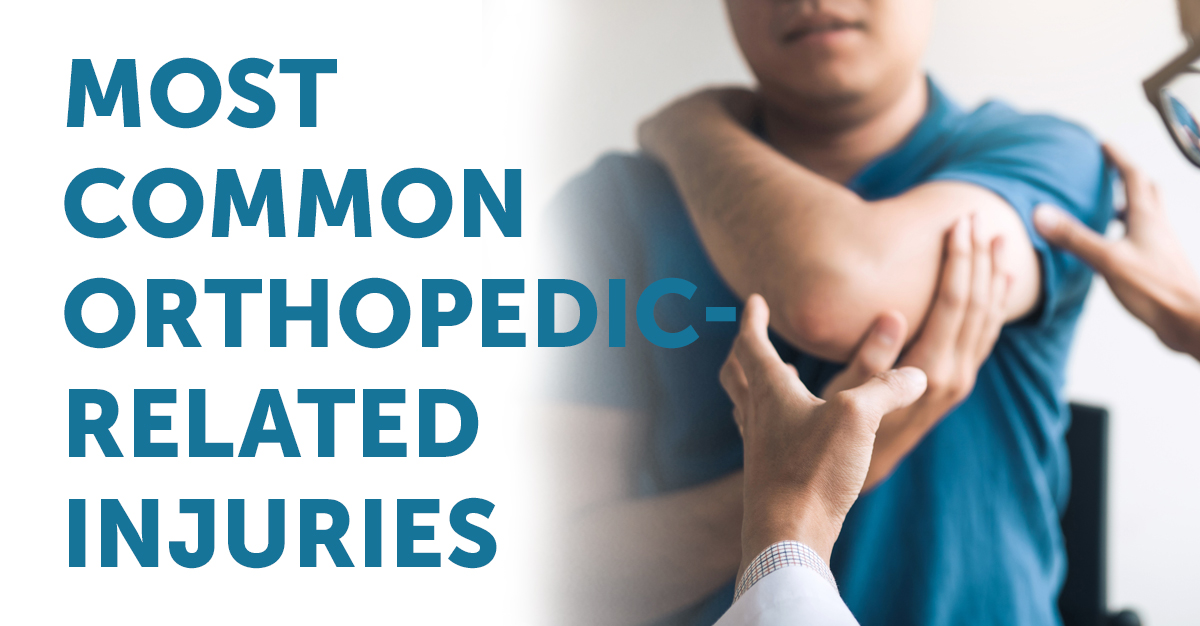
Most Common Orthopedic-Related Injuries

Common Orthopedic Injuries

If you feel pain after a fall, sporting accident, or sudden movement, it is recommended that you have yourself checked by an orthopedic specialist. This is important to assess if you have sustained injuries that have affected your joints, bones, and connective tissues.

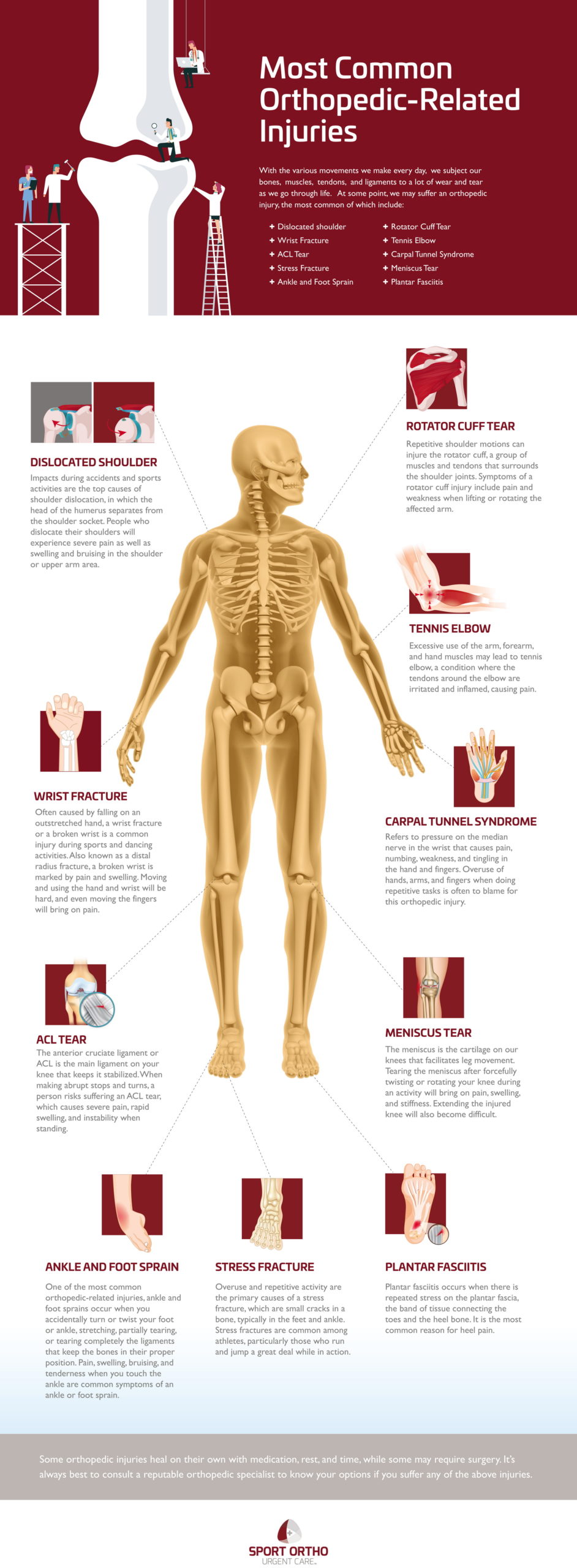
Orthopedic doctors recommend that you don’t treat any orthopedic injuries on your own or wait them out as it might lead to permanent damage. Some of the most common injuries orthopedic and sports injury clinics attend to include:

Fractures

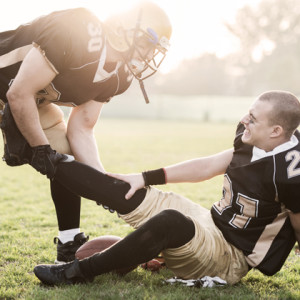
Fracture is a prevalent risk, especially for those that engage in contact sports. Fractures have two primary classifications: simple and compound. The most common fractures in sports occur in the ankle, foot, wrist, collarbone, and hand.

A fractured bone can be extremely painful, and the area around the fracture often swells instantly. If you suspect you have a fracture, it is recommended that you seek medical attention right away.

Groin Strains

Groin strains often occur when you change direction drastically while exercising. Groin strains can also be attributed to overstretching of the groin muscles. Some of the most common symptoms of groin strain include swelling, bruising, and muscle spasms.

Hamstring Injuries

Hamstring injuries often occur when exercising or running. The hamstrings can get injured when they are overworked or stretched too far. In some instances, the muscle can also tear.

Individuals with hamstring injuries can feel severe pain in the back of their thighs. Some people will also feel a “pop.” Hamstring injuries can also cause bruising or inflammation at the back of the thigh.

Ankle Sprains

When the ankle is bent or twisted the wrong way, a sprain can occur. Ankle sprains can also happen if you wear improper footwear or get injured while playing sports. While a mild ankle sprain can get better with rest, severe cases will require orthopedic care.

physical therapy near me

common orthopedic injuries

About the author

Dr. Charles R. Kaelin received his medical degree from the University of Louisville, Kentucky, and completed his orthopaedic training at Orlando Regional Center in Orlando, Florida. Dr. Kaelin also received training in Sports Medicine at Alabama Sports Medicine with Dr. Lemak, specializing in sports medicine and workman’s compensation injuries. He has been a fellow of the American Academy of Orthopaedic Surgeons (AAOS) since 1990. He is a charter member of the International Cartilage Research Society, a Founding member of the AAOS Education Enhancement Fund (AAOS), and a past editorial board member for the American College of Sports Medicine Health and Fitness Journal.

Depending upon the injury, patients may benefit from physical therapy for further rehabilitation. Our licensed orthopedic professionals work each day to help patients back to the activities they love most. Find the location nearest you today!

physical therapy near me

common basketball injuries

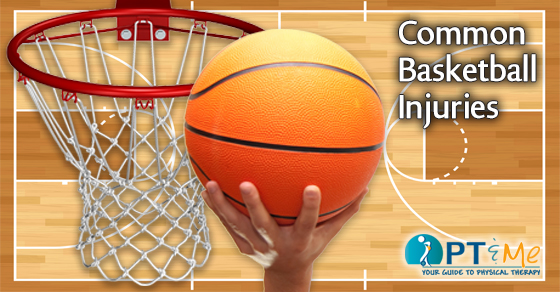
Common Basketball Injuries

Basketball_Injuries_FBsize

Whether you are a weekend warrior or involved in youth sports, athletes ages 5-75 can experience injuries from playing the games they love. Physical therapists are adept at working with patients suffering from common basketball injuries and can help in a variety of different ways.

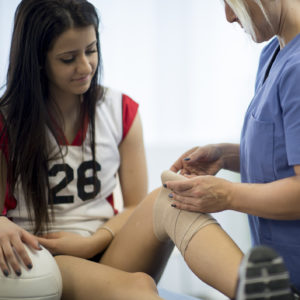
One of the most common basketball injuries is an ankle sprain. An Ankle sprain is a partial or complete tear of the ligaments that support the ankle. Ankle sprains may be caused by falling or sudden twisting of the ankle, such as:
• Stepping on an uneven surface or in a hole
• Taking an awkward step when running, jumping, or stepping up or down
• Having your ankle roll over when playing sports or exercising called inversion of the foot

Physical therapy intervention is the standard for treatment of ankle sprains. Treatment for the acute ankle sprain is based primarily upon the RICE principles: Rest, Ice, Compression and Elevation. This is followed quickly by a program of exercises and functional training to reduce the likelihood of chronic ankle instability. Balance and “proprioceptive” training are critical components of the rehabilitation process. In the case of a severe sprain and subsequent chronic instability, surgical intervention may be indicated.

Stress fractures are also seen frequently. A stress fracture is a tiny crack in the bone from chronic overuse. It is typically caused by repeated stress or overuse.
Causes include:
• Increasing the amount or intensity of an activity too quickly
• Switching to a different playing or running surface
• Wearing improper or old shoes
• Stress fractures can worsen by continued physical stress. Smoking can also make

Rest is the first thing you can do for a stress fracture. This includes avoiding the activity that caused the fracture and any other activities that cause pain. Rest time required is at least 6-8 weeks. Once you are ready to restart activity your physician may prescribe physical therapy. They may begin with non weightbearing activities, such as swimming, cycling, use of an Alter-G treadmill. Next, weight-bearing, nonimpact exercise may be prescribed. Gradually, low-impact activity, starting with walking, will be added to your treatment. Once you can do fast-paced walking with no pain, your physical therapist will give higher impact activities, such as light jogging.

spinning basketball

HAND INJURIES are also commonly seen in basketball. If you experience a finger injury, a hand therapist will work to make sure your fingers heal correctly and reduce the risk of long term damage.

A Boutonniere injury is usually the result of a forceful blow to the bent finger and causes a disruption of the central slip of the extensor tendon insertion at the level of the middle phalanx. The middle joint (PIP) is unable to fully straighten. If left untreated, a PIP flexion contracture can result and chronic deformity ensue. Acute boutonniere injuries are treated with PIP extension splinting continuously 4-8 weeks. Chronic boutonniere injuries with PIP flexion contractures are treated with dynamic splinting to improve passive PIP extension and static splinting for at least 4 weeks once full PIP extension is achieved.

Mallet injuries are seen commonly with ball sports and result when the terminal extensor tendon is torn from the attachment on the bone. When this occurs, a small fragment of bone may be avulsed from the distal phalanx and the end of the finger droops down and cannot be straightened actively. X rays are necessary to determine the course of treatment. Bony mallet injuries may require surgical correction. Most of these injuries can be treated conservatively with continuous DIP extension splinting for 6-8 weeks.

PT News PTandMe

PT News March 2021

PT News PTandMe

This time in PT News we recap what our clinics have been posting throughout February and March 2021. We are excited to bring you current physical therapy-based posts featuring published articles from PTandMe partnering clinics!

Sports Injury Physical Therapy

1. 5 Common Sports Injuries: Causes, Prevention, and Treatment

Written by Wright Physical Therapy with multiple locations throughout Idaho.

Sports injuries happen, and they usually occur when engaging in sports or exercise. Sports injuries can occur due to overtraining, lack of conditioning, and improper form or technique. Failing to warm-up increases the risk of sports injuries.  Read more


The Cost of Being Sedentary

2. The Cost of Being Sedentary

Written by The Jackson Clinics, an outpatient physical therapy practice with multiple locations throughout Northern Virginia. 

While it might be easy to list off all of the benefits of exercising, we don’t typically talk about the cost of being sedentary.  In fact, a recent study by Jama followed over 100,000 adults for more than 8 years and measured their fitness using a treadmill. The participants were arranged by age and gender into performance groups:  Read more


Work From Home Pain Relief

3. Work-at-Home Pain Relief

Written by JACO Physical Therapy, an outpatient physical therapy group with 4 locations throughout Oahu, HI.

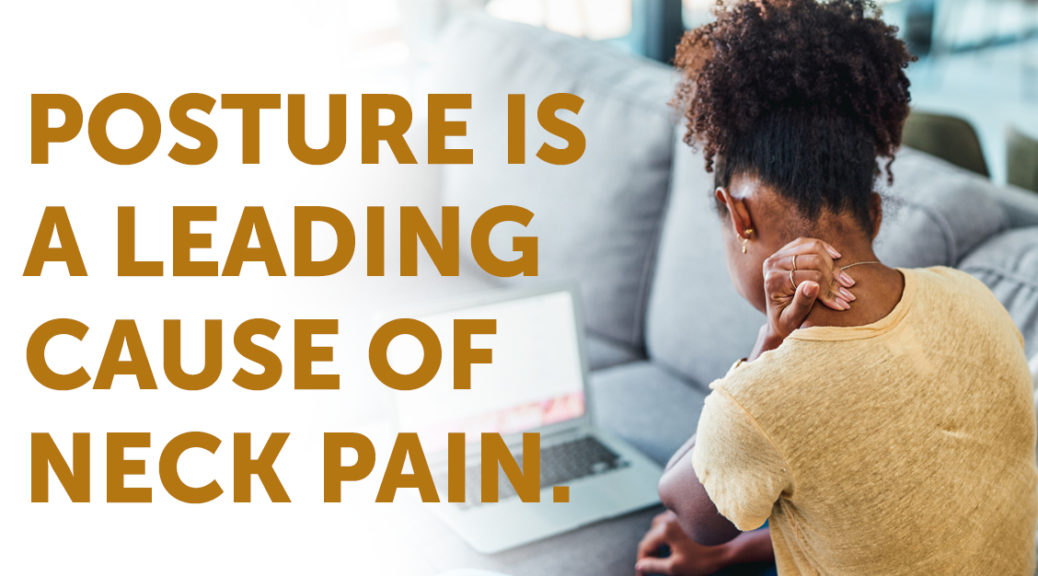
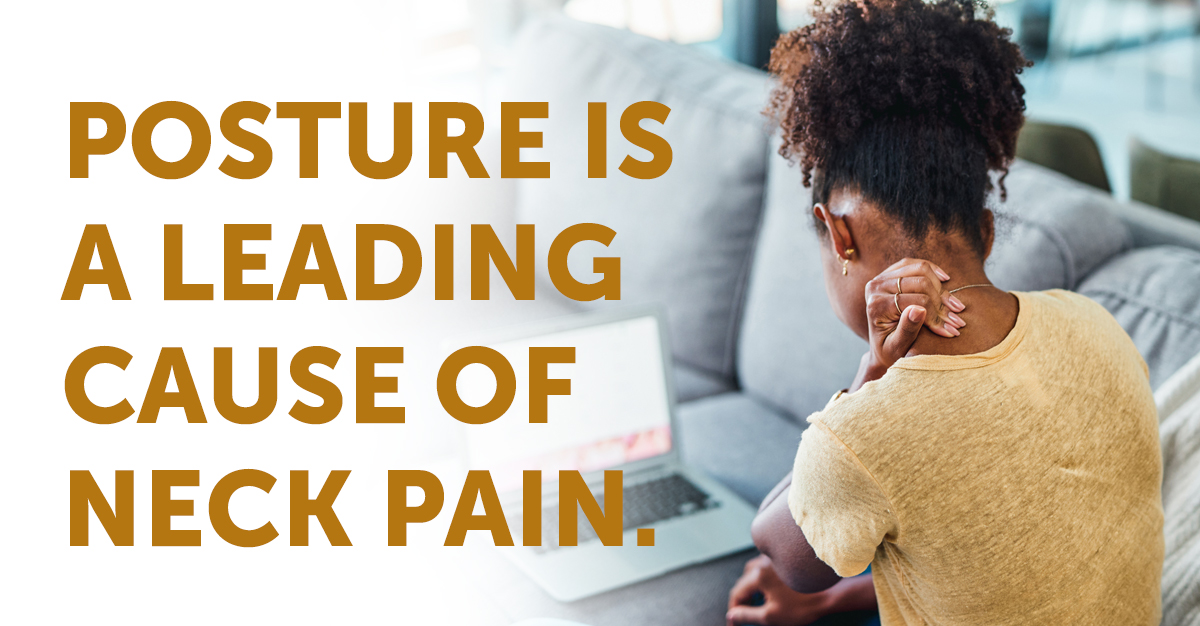
We have found that many of our patients are still working from home and spending more time than they anticipated working at a less-than-ideal workstation. We’ve been seeing complaints of neck pain, back pain, and wrist pain that is caused by strain from poor body mechanics while working.  Read more

We hope you enjoyed our picks for the PT News March 2021 edition.

Find these locations and others to start feeling better today!

physical therapy near me

cold weather safety

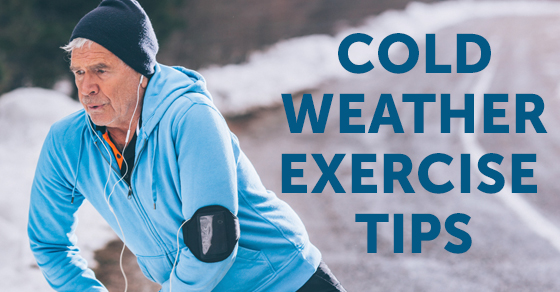
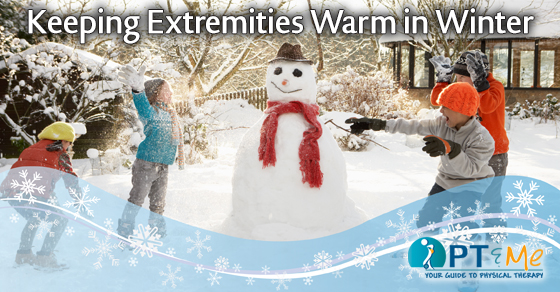
Keeping Extremities Warm in Winter

KeepingWarm_FBsize

OUTDOOR SAFETY
Highlights
• Dress warmly and stay dry.
• Wear a hat, scarf, and mittens.
• Avoid frostbite.
• If you have to do heavy outdoor chores, dress warmly and work slowly.
• Avoid walking on ice or getting wet.
• Notify friends and family where you will be before you go hiking, camping, or skiing.
• Avoid traveling on ice-covered roads, overpasses, and bridges if at all possible.
• If you are stranded, it is safest to stay in your car.

When the weather is extremely cold, and especially if there are high winds, try to stay indoors. Make any trips outside as brief as possible, and remember these tips below to protect your health and safety.

DRESS WARMLY AND STAY DRY
Adults and children should wear:
• a hat
• a scarf or knit mask to cover the face and mouth
• sleeves that are snug at the wrist
• mittens (they are warmer than gloves)
• water-resistant coat and boots
• several layers of loose-fitting clothing

Be sure the outer layer of your clothing is tightly woven, preferably wind-resistant, to reduce body-heat loss caused by wind. Wool, silk, or polypropylene inner layers of clothing will hold more body heat than cotton. Stay dry—wet clothing chills the body rapidly. Excess perspiration will increase heat loss, so remove extra layers of clothing whenever you feel too warm. Also, avoid getting gasoline or alcohol on your skin while de-icing and fueling your car or using a snowblower. These materials in contact with the skin greatly increase heat loss from the body. Do not ignore shivering. It’s an important first sign that the body is losing heat. Persistent shivering is a signal to return indoors.

AVOID FROSTBITE AND HYPOTHERMIA
When exposed to cold temperatures, your body begins to lose heat faster than it can be produced. Prolonged exposure to cold will eventually use up your body’s stored energy. The result is hypothermia or abnormally low body temperature. Body temperature that is too low affects the brain, making the victim unable to think clearly or move well. This makes hypothermia particularly dangerous because a person may not know it is happening and won’t be able to do anything about it.

Hypothermia is most likely at very cold temperatures, but it can occur even at cool temperatures (above 40°F) if a person becomes chilled from rain, sweat, or submersion in cold water.

Frostbite is an injury to the body that is caused by freezing. Frostbite causes a loss of feeling and color in affected areas. It most often affects the nose, ears, cheeks, chin, fingers, or toes. Frostbite can permanently damage the body, and severe cases can lead to amputation. The risk of frostbite is increased in people with reduced blood circulation and among people who are not dressed properly for extremely cold temperatures.

AVOID EXERTION
Cold weather puts an extra strain on the heart. If you have heart disease or high blood pressure, follow your doctor’s advice about shoveling snow or performing other hard work in the cold. Otherwise, if you have to do heavy outdoor chores, dress warmly and work slowly. Remember, your body is already working hard just to stay warm, so don’t overdo it.

UNDERSTAND WINDCHILL
The Wind Chill index is the temperature your body feels when the air temperature is combined with the wind speed. It is based on the rate of heat loss from exposed skin caused by the effects of wind and cold. As the speed of the wind increases, it can carry heat away from your body much more quickly, causing skin temperature to drop. When there are high winds, serious weather-related health problems are more likely, even when temperatures are only cool.

AVOID ICE
Walking on ice is extremely dangerous. Many cold-weather injuries result from falls on ice-covered sidewalks, steps, driveways, and porches. Keep your steps and walkways as free of ice as possible by using rock salt or another chemical de-icing compound. Sand may also be used on walkways to reduce the risk of slipping.
snow war

BE SAFE DURING RECREATION
Notify friends and family where you will be before you go hiking, camping, or skiing. Do not leave areas of the skin exposed to the cold. Avoid perspiring or becoming overtired. Be prepared to take emergency shelter. Pack dry clothing, a two-wave radio, waterproof matches and paraffin fire starters with you. Do not use alcohol and other mood altering substances, and avoid caffeinated beverages. Avoid walking on ice or getting wet. Carefully watch for signs of cold-weather health problems.

BE CAUTIOUS ABOUT TRAVEL
• Listen for radio or television reports of travel advisories issued by the National Weather Service.
• Do not travel in low visibility conditions.
• Avoid traveling on ice-covered roads, overpasses, and bridges if at all possible.
• If you must travel by car, use tire chains and take a mobile phone with you.
• If you must travel, let someone know your destination and when you expect to arrive. Ask them to notify authorities if you are late.
• Check and restock the winter emergency supplies in your car before you leave.
• Never pour water on your windshield to remove ice or snow; shattering may occur.
• Don’t rely on a car to provide sufficient heat; the car may break down.
• Always carry additional warm clothing appropriate for the winter conditions.

WHAT TO DO IF YOU GET STRANDED
Staying in your vehicle when stranded is often the safest choice if winter storms create poor visibility or if roadways are ice covered. These steps will increase your safety when stranded:
• Tie a brightly colored cloth to the antenna as a signal to rescuers and raise the hood of the car (if it is not snowing).
• Move anything you need from the trunk into the passenger area.
• Wrap your entire body, including your head, in extra clothing, blankets, or newspapers.
• Stay awake. You will be less vulnerable to cold-related health problems.
• Run the motor (and heater) for about 10 minutes per hour, opening one window slightly to let in air. Make sure that snow is not blocking the exhaust pipe—this will reduce the risk of carbon monoxide poisoning.
• As you sit, keep moving your arms and legs to improve your circulation and stay warmer.
• Do not eat unmelted snow because it will lower your body temperature.
• Huddle with other people for warmth.

physical therapy near me

For more information about winter safety visit: http://emergency.cdc.gov/disasters/winter/index.asp

For more PTandMe cold weather safety tips to keep you out of harm’s way this winter check the articles below!
snow shoveling safety PTandMe   Winter Safety PTandMe

COVID Recovery for healthy individuals

Introducing REHAB-19

REHAB-19 COVID Recovery for healthy individuals

It’s not uncommon for patients that experience a milder form of COVID-19 to experience longer-lasting symptoms.  To help patients combat these lasting physical ailments we have created a Rehab-19 Program designed specifically to restore energy for healthy active bodies.  If you have recovered from COVID-19 and you’re not quite feeling like yourself yet, our licensed team of physical therapists can help get you the rest of the way.

physical therapy near me

 Some impairments that can last several weeks or months after COVID include:

  • Decreased lung capacity
  • Decreased strength
  • Decreased balance, mobility, and difficulty walking
  • Decreased endurance
  • Abnormal breathing patterns
  • Muscle aches and pain
  • Musculoskeletal pains from coughing/bed rest
  • Chronic fatigue

To help patients overcome these obstacles, our clinicians will provide patients with a comprehensive evaluation to develop an individualized treatment plan to overcome impairments. Once your evaluation is complete, you will begin to work on your personalized reconditioning program.  Both in-clinic and virtual appointments through Telehealth are available for this treatment plan.

The types of strategies that may be included in your REHAB-19 recovery program may include:

By choosing to go to physical therapy for a REHAB-19 program you will be back to your normal energy levels in no time. Our clinicians are experts at helping patients get back to their best selves.  The benefits of physical therapy after COVID-19 include:

  • Improve cardiopulmonary endurance/stamina
  • Improve balance and mobility
  • Return to work, sports, hobbies, and normal activities
  • Restore flexibility and strength
  • Improve breathing mechanics

Rehabilitation programs for patients that have spent time in the ICU are also available. If you are having trouble getting back to your former activity levels, or simply don’t quite feel like yourself, we’re here to help!

physical therapy near me

PT News PTandMe

PT News January 2021

PT News PTandMe

This time in PT News we recap what our clinics have been posting throughout December 2020 and January 2021. We are excited to bring you current physical therapy based posts featuring published articles from PTandMe partnering clinics!

1. Shoulder Pain Treatment

Written by Riverview Physical Therapy with multiple locations throughout Southern Maine.

If you are looking for shoulder pain treatment in Southern Maine, the information below will help you make a better decision as well as help you avoid unnecessary and expensive healthcare treatment. There are seven common diagnoses that cause shoulder pain and usually respond very well to physical therapist directed treatment. These diagnoses are:  Read more


Snow Shoveling

2. Prevent Low Back Pain While Shoveling Snow

Written by Rehab Associates of Central VA, an outpatient physical therapy practice with multiple locations throughout VA. 

As I was shoveling the snow off my driveway this week, I quickly realized that I needed to adjust my technique or I was going to pay for it later. Injury can result from repetitive movements with a general lack of awareness and variability in movement and may be prevented with some easy steps.  Read more


3. FAQ About 3 of the Most Common Knee Conditions

Written by Evergreen Physical Therapy, an outpatient physical therapy group with locations throughout MI.

The knee is the largest and one of the most complex joints in the body. It primarily joins the thighbone (femur) to the shinbone (tibia), but also includes the kneecap (patella) and fibula in the lower leg. These bones and the muscles that surround them are connected through a series of ligaments, tendons, and cartilage (menisci) which collectively stabilize the knee and allow it to bend, twist, and rotate…  Read more


Find these locations and others to start feeling better today!

physical therapy near me

Vestibular Physical Therapy

Vestibular Physical Therapy

Vestibular Physical Therapy

Vestibular Dysfunction

It is estimated that 35% of adults aged 40 years or older in the U.S. have experienced some sort of vestibular dysfunction — approximately 69 million Americans. Many people who suffer from acute dizzy spells can be helped by physical therapy. Benign Paroxysmal Positional Vertigo (BPPV) is characterized by a brief episode of vertigo (spinning) every time your head moves into a specific position. Common causes for this disorder are trauma to the head (concussion, motor vehicle accident, etc.) and acute infection, but frequently the cause is unknown. Patients usually complain of a spinning sensation being provoked by lying down, rolling over in bed, bending over, or looking up. Common activities that can provoke this sensation include getting out of bed, gardening, washing hair in the shower, and going to the dentist or beauty parlor.

vertigo diagram

Common Symptoms

  • Vertigo: The perception of movement/spinning, either of the self or the environment
  • Dizziness: General term that describes light-headedness, floating sensation, or faintness
  • Imbalance: Disequilibrium is a feeling of being off-balance or a loss of equilibrium


Uncommon Symptoms

  • Nausea
  • Blurred vision
  • Anxiety
  • Lack of coordination
  • Difficulties with memory and concentration
  • Headaches/neck pain


How Do You Know if You Need Vestibular Therapy?

80% of older adults over the age of 65 have experienced dizziness with 50% being due to Benign Paroxysmal Positional Vertigo (BPPV).

  • Do you feel unsteady?
  • Do you lose your balance and fall?
  • Do you feel like you are falling, the room is spinning, or get dizzy when you lay down?
  • Do you like you are moving when you are standing or sitting still?
  • Do you feel light-headed?
  • Do you have blurred vision?
  • Do you ever feel disoriented, such as losing your sense of time or where you are?
  • Or if you’ve been diagnosed with BPPV, labyrinthitis, vestibular neuritis, Meniere’s syndrome, migraine-related dizziness, cervicogenic dizziness

Video provided by Advance Rehabilitation (GA)

What to Expect from Vestibular Physical Therapy?

Our goal for vestibular physical therapy patients is to decrease feelings of vertigo and dizziness, improve balance, posture control, gaze stability, overall endurance, and conditioning, and increase safety.

We use exercises that provide small, controlled, and repeated “doses” of the movements and activities that provoke dizziness to de-sensitize and fine-tune the brain. Physical therapists provide comprehensive Balance and Vestibular Rehabilitation. They perform specific treatment protocols for specific diagnoses, with a focus on alleviation of symptoms and return of function. Treatment for vestibular rehabilitation may include, but is not limited to:

  • Patient Education
  • Home Exercise Program
  • Repositioning Maneuvers
  • Habituation Exercises
  • Balance Exercises
  • Conditioning Exercises
  • Functional Activities


When you Go for a Vestibular Physical Therapy Visit

  • Wear comfortable clothes that allow you to move freely
  • Bring a list of your current medications, especially those prescribed for your s/s
  • You may experience dizziness or an increase in symptoms initially. If possible, have someone with you for the first couple of appointments to assist you home if needed

For more information about vestibular disorders and vertigo, please don’t hesitate to reach out to any of our highly trained teams of physical therapists nationwide. We are here and ready to help.

physical therapy near me

Information for this post provided by Agility Spine & Sports Physical Therapy (locations throughout Tucson, AZ)

Physical Therapy for Seniors in Retirement Homes

Physical Therapy for Adults Living in Retirement Communities

Physical Therapy for Seniors in Retirement Homes

Physical therapy for adults in retirement communities is common. Physical therapy programs can restore a great degree of functionality and bring independence to an elderly after he/she has sustained an impairment either from some chronic condition, injury, or illness. It also works when a person is recovering from surgery.

Physical therapy can be used to manage injury, deformity, or disease using physical methods rather than surgery or drugs. Typical methods include stretching, strengthening through exercise, and manual therapy. Today most outpatient physical therapy clinics and assisted living facilities for disabled adults would offer these as part of their services.

Under physical therapy, a trained therapist will evaluate and assess a person’s condition and accordingly devise a plan to suit their needs. The goal is to restore mobility and prevent future injuries. Treatment plans are usually long-term that keep in mind the degree of independence to which a person was accustomed and aim to bring that back.

Common Types of Physical Therapies for Seniors

Orthopedic Physical Therapy

When needing physical therapy for adults living in retirement communities, outpatient PT clinics offer an array of valuable services. Injuries related to the musculoskeletal system are treated by orthopedic physical therapists. Seniors recovering from orthopedic surgery are also ideal for undergoing this form of therapy. It aims to restore the functioning of joints, bone, muscles, ligaments, and tendons.

Seniors who have a hard time balancing or have reduced physical strength can also benefit from regular physical therapy sessions. It can help seniors in improving and maintaining better endurance and muscle tone enabling them to live more freely and independently. The goal is to decrease their risk of falling and accidental muscle/bone damage.

Patients suffering from post-intensive care syndrome can also benefit from physical therapy. Post-ICU physical therapy programs help patients get back into their daily routines and activities by working with them to reduce the effects of muscle loss and weakness.

Trained therapists who work at outpatient clinics and assisted living for adults with disabilities often create restorative therapy programs for the residents. These programs are led by nursing staff and caregivers with the specific needs of the patient in mind. The nursing staff prescribes certain exercises that improve strength and range of motion.

Geriatric Physical Therapy

The main emphasis under geriatric therapy is on the needs of the aging individual. Common conditions that receive treatment are – joint replacement, balance disorders, cancer, osteoporosis, and arthritis. Special programs are devised to improve fitness levels, reduce pain, and restore mobility to the maximum range.

Aquatic or Hydrotherapy

Aquatic therapy is beneficial for a few key reasons. Water decreases the gravity placed on weak limbs unable to bear much weight. This makes it easier for a patient to move, with less stress on joints, muscles, and bones. Physical therapists also utilize water to surround the patient’s body and help blood circulation in the legs. This can also reduce swelling in the patient’s ankles and feet. As the swelling decreases, the range of motion can increase.

Neurological Physical Therapy

This therapy is slightly different from all the other therapies in that it focuses on restoring brain health. Neurological physical therapy is best for the elderly who have neurological conditions like ALS, Dementia, or Parkinson’s. Those who have sustained some kind of brain injury can also benefit from it. A neurological physical therapist trains the patient to adapt to mobility, visual, and muscle loss impairments and balance issues to make their daily living as easy as possible.

Occupational Therapy

The focus of occupational therapy is on fine motor movements and hygiene-related tasks. Ideal candidates to receive this therapy are the elderly with arthritis or those who have suffered a stroke. These conditions can affect a person’s mobility and movement. An occupational therapist teaches ways to handle daily tasks with the least difficulty. It also focuses on incorporating adaptive equipment to help a person regain independence which eventually boosts the elderly’s body awareness and self-esteem.

Cardiopulmonary physical therapy

Cardiopulmonary therapy works best for individuals who have had a heart attack or suffer from some kind of heart condition. Common pulmonary conditions such as pulmonary fibrosis and Chronic Obstructive Pulmonary Disease can also benefit from this therapy. It helps to restore functional independence and endurance.

Speech-Language Therapy

The focus of this therapy is on the mouth and language-related concerns; and not just on speech as one may assume. Seniors who have a hard time chewing food or swallowing can benefit greatly from speech-language therapy. Additionally, seniors with short-term memory loss should also work with a speech-language therapist. The focus of this therapy is on cognitive issues, language deficit, and judgment concerns that are often a result of stroke or dementia.

Respiratory Therapy

Respiratory therapy is for seniors who struggle with breathing issues. It’s not uncommon for a common cold to sometimes turn into pneumonia in an occasional elderly. This can take a toll on the breathing quality. A respiratory therapist uses tapping and massage lessons to loosen the mucus which encourages easy breathing.


How Physical Therapy Benefits Seniors

Can manage chronic pain

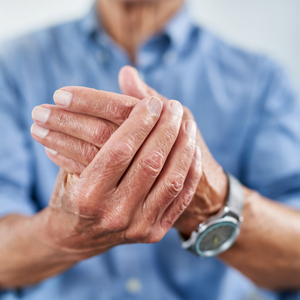
Most seniors suffer from conditions like osteoporosis, arthritis; and as a result, suffer from pain almost every day. Studies tell that almost all elderly over the age of 65 have some degree of arthritis in their spine no matter whether symptoms persist or not. Physical therapy can preserve strength and joint health so that the onset of symptoms is delayed. If a person already has arthritis, via physical therapy they can learn therapeutic methods to reduce the level of pain and everyday discomfort.

Can significantly reduce the risk of falls

Falls happen to be the leading cause of bone and head-related injuries/accidents. Also, one fall often leads to multiple falls. Physical therapy can ensure stability and strength via balancing techniques to prevent future falls.

Reduces dependence on pain medications

Physical therapy is often more effective in restoring balance and managing pain than medications prescribed by the doctor. When performed properly, it can produce almost the same kind of result in treating spine-related issues as surgery.

Reduces risk of injury

With advancing age, a person loses flexibility and muscle strength making them more prone to injuries. As part of physical therapy, a person learns several extension exercises that preserve flexibility and maintain balance to prevent falls and ensure correct posture.

Helps to regain independence and aid a healthy lifestyle

Many of the old age injuries and illnesses are due to lack of activity and mobility. Physical therapy programs incorporate various exercises to keep the elderly strong and fit. In this way, it enables them to complete everyday tasks all the while maintaining a healthy weight.

Outpatient Physical Therapy and Telehealth

Thanks to the transformation in digital technologies; seniors don’t always need to subscribe to an inpatient facility. They can work with an outpatient clinic wherein they receive physical therapy and go back to their home.

Outpatient clinics often use telehealth for physical therapy (online appointments) to work with patients that may not yet feel comfortable going into the clinic. These online telehealth appointments are more than a consultation. It is a:

  • Is a full therapy visit
  • Is a private, secure, and compliant way to receive care
  • Sessions can be done on a computer, tablet, or phone
  • Appointments are accessed on a user-friendly platform

Telehealth is a great option for seniors that are in need of care but are unable to make it into the clinic.

Final Thoughts

If you or someone you love needs physical therapy for adults living in retirement communities to recover from an illness, weakness, or injury, talk to your local physical therapist or primary care provider, and ask for more information.

physical therapy near me

winter injuries

Winter Is A Great Time To Take Care Of Injuries

winter injuries

As Mother Nature keeps bringing on the winter wind, now is the time to think about spring and summer!   Waiting to take care of these injuries when the first fair day arrives can be too late. No one wants to lose weeks to months of fun in the sun because of a lengthy rehabilitation. By taking care of these injuries now, you can have plenty of time to enjoy your favorite activities in the best kind of weather.

BACK INJURIES
From picking up leaves in the fall to shoveling snow, low back injuries are common this time of year. While a simple backache may dissipate in a day or two after shoveling out after a winter storm, if it lingers longer than a week, chances are it’s not going away on its own. Waiting until the first round of golf to find out that you can’t complete the backswing due to low back pain not only severely hinders the golf game, but can also severely hinder the recovery. The more chronic the pain is, the longer it takes to eliminate the pain once treatment is started. Pain management becomes more complex; muscle strength atrophies; and bad spinal mechanics become a difficult habit to break. Fortunately, from a simple muscle strain to a herniated disc, all low back injuries have the opportunity to be conservatively managed quickly if treatment is sought out quickly.

JOINT REPLACEMENTS
Fear of slipping and falling is often the biggest rationale people wait to have their much-needed joint replacement surgeries. While a legitimate concern, the process of recovery and length of time for recovery is often overlooked by patients. For a typical total hip replacement, it can take 12 weeks or more to feel “normal” again. For a total knee replacement, that timeline can extend to six months. By waiting until spring to have the surgery, patients forego their fun-in-the-sun for recovery and rehabilitation. However, if that same surgery were elected to be performed in the late fall or winter, then plenty of warm weather is still left in the year to enjoy the capabilities of the new joint. To address the fear of falling, simple precautions can easily be taken to minimize the risk of slip and fall in the snow following the surgery. As an added benefit, patients in the winter often experience less swelling than those in the summer, as a result of the reduced humidity.

ROTATOR CUFF REPAIRS
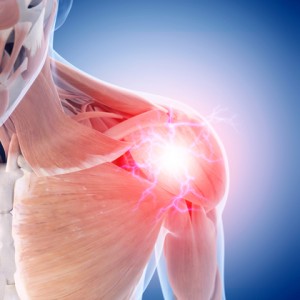
Similar to joint replacement surgery, shoulder surgeries are often avoided in the winter due to the fear of falling. However, again, similar to joint replacement surgeries, the length of time for recovery from this surgery is grossly underestimated. Returning to swing a golf club, throwing a ball, or even swimming laps in a pool will take a
minimum of 12 weeks of physical therapy. While a neighborhood teenager may need to be hired to shovel the snow, the winter hibernation season is an idea for resting and mending from a rotator cuff repair surgery. After completing a comprehensive rehabilitation program with your physical therapist, you will be ready to tee off with your regular golf league and enjoy your planned summer vacation without restrictions.

SPORTS EVALUATIONS AND CONDITIONING
Winter is not only the time to remedy nagging injuries, but it’s the perfect time to prepare for the athletic season ahead. Whether you are a runner, a golfer, or an over-40 league softball player, preparing for the upcoming outdoor activities can help prevent future nagging injuries. The “off-season” is the best time to undergo performance and biomechanical evaluations with a physical therapist trained in motion analysis. From this evaluation, deficiencies can be addressed and a plan for improvement implemented. Furthermore, winter is a perfect time to re-strengthen after the holidays and to condition yourself into the shape you need to be in in order to enjoy those outdoor activities and minimize the concern for strains and sprains. In just a few simple visits to physical therapy, conditioning tips and technique changes can help make the warm weather even more rewarding and enjoyable.

The winter is long and it would be unfortunate to miss enjoying any of the warm, sunny weather heading our way in a few months. Addressing lingering winter injuries now will help ensure a fun spring and summer without restrictions. Always discuss your medical options with your doctor first. Then, call your physical therapist to help accelerate your recovery and be a picture of health.

PT News PTandMe

PT News December 2020

PT News PTandMe

This time in PT News we recap what our clinics have been posting throughout November & December 2020. We are excited to bring you current physical therapy based posts featuring published articles from PTandMe partnering clinics!

blood clots while traveling

1. Blood Clots: Don’t Bring Them on Your Holiday Trip

Written by The Jackson Clinics with multiple locations throughout Northern Virginia and Maryland.

The coming holidays and winter breaks mean traveling for many people. But spending more than four hours in a car, bus, train or plane leaves you at moderate risk for blood clots in your legs caused by a lack of circulation. These can sometimes break free and travel to the lungs, causing a potentially fatal pulmonary embolism. The longer you are immobile, the greater your risk of developing a blood clot.  Read more


Physical Therapy for Cancer Patients

2. How Physical Therapy Can Benefit Cancer Patients

Written by Wright Physical Therapy, an outpatient physical therapy practice with multiple locations throughout Idaho. 

When faced with cancer, having the right medical and support team becomes exponentially more critical. Oncology teams skillfully lead the way in managing a myriad of symptoms and complications that arise. In conjunction with oncology teams, physical therapy is an integral part of healthcare as they help patients regain their functional strength and balance. Physical therapists are serviceable in managing edema and a multitude of other cancer-related dysfunctions in addition. Read more


Physical Therapy

3. Are You Missing Out on Free Physical Therapy?

Written by Momentum Physical Therapy, an outpatient physical therapy group with locations throughout Greater San Antonio.

Have you met your annual insurance deductible? If you have, it’s a great time to come in to see your physical therapist! Many find they can access physical therapy at low or no cost after their deductible has been met. Most deductibles reset on January 1st, so NOW is the time to take advantage of your access to physical therapy.   Read more


Find these locations and others to start feeling better today!

physical therapy near me