Category Archives: Blog

PT News

This Month in PT News. Featuring articles from PTandMe partnering clinics!

1. Simple Steps to Starting a Weight-Training Program
Written by the Therapy Team at The Jackson Clinics – Middleburg, VA

One of the challenges of weight training is determining how much effort to put in for the most benefits. Read more

2. Sit Up Straight! Avoid Sitting with Bad Posture
Written by Megan Russo, PTA at The Center for Physical Rehabilitation – CPR – Grand Rapids, MI

Do you ever find yourself sitting in a slumped position while at work or driving in the car? Read more

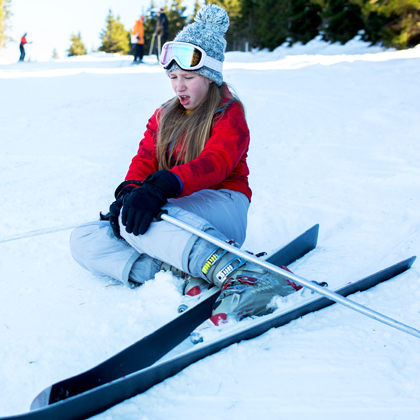
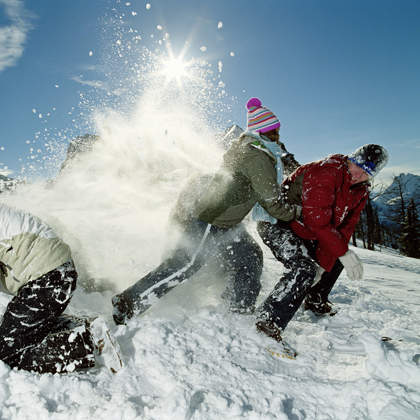
3. Minimizing the Risk of Ski Injury
Written by the Therapy Team at The Jackson Clinics – Middleburg, VA

If winter weather has you prepared to hit the slopes, be sure to take the necessary precautions to keep yourself injury-free this season. Read more

Frisco Physical Therapy

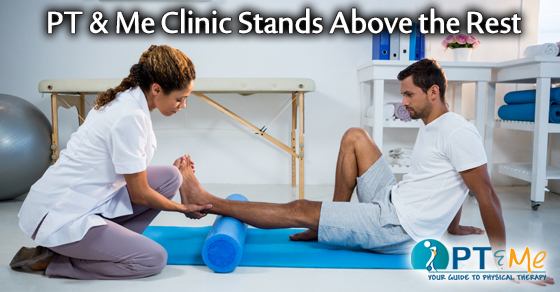
PT & Me Clinic Stands Above the Rest

ClinicStandsAboveRest_FBsize

At PT & Me we love it when our partnering physical therapy clinics shine. We are so excited that we couldn’t help ourselves, we just had to highlight one of our award winning clinics!

FriscoPTLogo_forBlog

FRISCO PHYSICAL THERAPY – Physical Therapy Clinic – Frisco, TX
Frisco Physical Therapy was voted the BEST PHYSICAL THERAPY CLINIC in Frisco, Texas by over 32,000 readers of the Frisco Enterprise Newspaper. Clinic Director Colby Pigg, MPT graduated with honors in 1999 and has more than 18 years of experience in physical therapy. Perhaps one of the reasons Frisco Physical Therapy stands out among the crowd is the variety of services it offers to its patients. In addition to general orthopedics the licensed physical therapists in Frisco offer:

• Balance and Fall Prevention Programs
• Cancer Related Fatigue Program
• TPI Certified Golf Fitness Intructor
• Primal 7 and TRX Suspension Training
• Game-Ready Vasopneumatic Cold Compression

We are super excited for Colby and the rehab team at Frisco Physical Therapy for the honor they received by their community. We are certainly looking forward to all of the great things to come. More information about Frisco PT can be found at: www.friscopt.com

work related stress

Work Related Stress & Increased Risk Zones: Part 2 of 2

THE SOLUTIONS

• Alternate Heavy Tasks with Light Tasks

• Develop Lifting, Carrying and Push / Pull Guidelines within limits and set up Lift Teams if necessary

• Provide variety in jobs to eliminate or reduce repetition (i.e., overuse of the same muscle groups)

• Adjust work schedules, work pace, or work practices

• Provide recovery time (e.g., short rest breaks)

• Modify work practices so that workers perform work within their power zone (i.e., above the knees, below the shoulders, and close to the body)

• Modify work environment to minimize work related stress (e.g., seating, lighting, workstation, process flow, angle of access to loads)

• Rotate workers through jobs that use different muscles, body parts, or postures (Administrative improvements, such as job rotation, can help reduce workers’ exposures to risk factors by limiting the amount of time workers spend on “problem jobs.”)

• Provide hands-on practice when new tools, equipment, or procedures are introduced to the workforce (review counter balancing of tools and take advantage of gravity flow in product movement)

• Use several types of visual aids (e.g., pictures, charts, videos of actual tasks in your workplace and the “right way to perform tasks”)

• Hold small-group discussions and problem-solving sessions

• Give workers ample opportunity for questions
• Industrial Athlete directed Exercises and Stretches (make them specific to those areas under most stress perform at beginning of day, when leaving for lunch and end of day)

• Ensure proper protective equipment (PPE) is available and used properly

• Research ergonomic assistive aids to accommodate heavier load lifting and movement

• Review packaging of items and research if handles or alternative coupling can be incorporated

• Review exposure to heat and cold extremes and take necessary precautions

• Minimize exposure to vibration (this can be done through tool selection, gloves, or limiting your time of exposure)

• Posture (change or modify your body position periodically throughout the day to relieve stress)

Part one of our Work Related Stress & Increased Risk Zones can be found here

Sources:
1) American Industrial Hygiene Association (AIHA)
2) Human Factors and Ergonomics Society (HFES)
3) National Institute for Occupational Safety & Health (NIOSH)

Exercising Do's and Don'ts

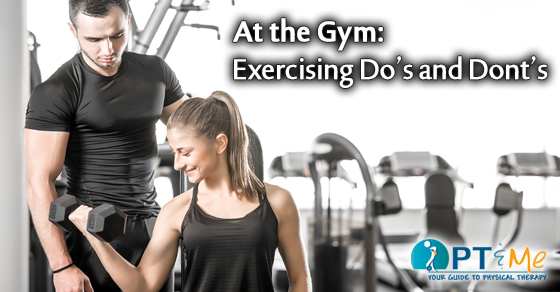
Exercising Do’s and Don’ts

In the last post of our 5 part series on exercising do’s and don’ts, we examine the proper ways to exercise at the gym from start to finish. If you have any sudden significant increase in pain, swelling, or discoloration while performing or following exercise, discontinue immediately and contact your primary care provider.

UPRIGHT ROWS

START POSITION
• Standing with feet shoulder width apart
• Palms facing back when holding onto barbell.
• Hands spread apart a bit wider than shoulder width.
• Maintain proper posture throughout exercise.

ENDING POSITION
• Barbell lifted up to chest height with elbows flexed pointing outward.
• Forearm should be aligned with upper arm horizontally.

DON’T
• Swing body back and forth.
• Lift feet off ground.
• Allow elbows to point upward.
• Raise past shoulder height.

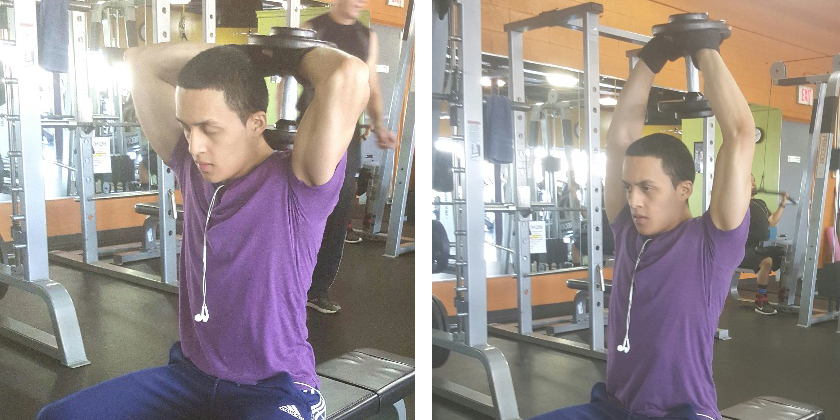
OVERHEAD TRICEP EXTENSION

START POSITION
• Seated with feet flat on the ground.
• Hold dumbbell vertically behind head with shoulders slightly out and 90 degree elbow flexion.
• Maintain head upright throughout exercise.

ENDING POSITION
• Dumbbell held above and slightly behind head.
• Elbows fully extended.

DON’T
• Lift feet off ground.
• Lift up from bench.
• Swing body back and forth.
• Let your head lean forward.
• Bring your elbows inwards towards the ears.

This information was written by STAR Therapy Services, an outpatient physical therapy group with six locations in Houston, Texas. At Star Houston Therapy Services, their number one priority is the patient. They strive to provide individualized treatment with hands-on, compassionate care. They perform comprehensive evaluations and encourage patient input for treatment planning and goal setting. For more information click here.

View the complete Exercising Do’s and Don’ts series below:


exercising do's and dont's

Increased Risk Zones

Work Related Stress & Increased Risk Zones: Part 1 of 2

INCREASED RISK ZONES
All Risks Increase with Duration, Frequency and Magnitude.

• Excessive Force

• Repetition of Activity (Can irritate tendons and increase pressure on nerves)

• Awkward Posture (Can compress nerves and irritate tendons)

• Sustained Static Posture (Can restrict blood flow and damage muscles)

• Unsupported Positions

• Motion (Increased speed or acceleration when bending / twisting, can increase the amount of force exerted on the body)

• Compression (Grasping sharp edges like tool handles, can concentrate force on small areas of the body, reducing blood flow and nerve transmission, and damaging tendons and tendon sheaths)

• Inadequate Recovery Time (Overtime, lack of breaks, & failure to vary tasks)

• Vibration of Tools (From vibrating tools, can decrease blood flow, damage nerves, and contribute to muscle fatigue)

• Whole Body Vibration (From driving trucks or operating subways, can affect skeletal muscles and cause low-back pain)

• Effects of Temperature (Cold temperatures can adversely affect a worker’s coordination and manual dexterity while Heat stroke can be very serious as when the body becomes unable to control its temperature, it rises rapidly, the sweating mechanism fails, and the body is unable to cool down.)

• Environment (Slip/Fall hazard-Uneven Floor Surfaces)

• Material Handling Guidelines:
Weight Loading over 50lbs
Lift Speed greater than 5/minute
Vertical Lift Exceeds 3ft
Carry over 1 minute
Sustained Push/Pull over 30 seconds
Static reach holding tasks over 1 minute

Part two of our Work Related Stress & Increased Risk Zones can be found here

work related stress

Sources:
1) Ergonomics: The Study of Work, U.S. Department of Labor, Occupational Safety and Health Administration, OSHA 3125, 2000 (Revised)
2) T. R. Waters, “Manual Materials Handling”, in: Physical and Biological Hazards of the Workplace 2nd. Edited by P. Wald and G. Stave. New York: John Wiley and Sons, 2002.
3) Ergonomics and Musculoskeletal Disorders, Centers for Disease Control and Prevention/ National Institute for Occupational Safety and Health (NIOSH) © Fit2WRK 2015 R.Gagne

healthy start

A Healthy Start in 2017

AHealthyStartIn2017_FBsize

It’s time to get a healthy start in 2017!  We provided some general health and wellness tips to get you on your way to an amazing year!  We call it the Pearls of Longevity!

PROTEIN
Eat 25 grams of protein each meal especially breakfast to prevent being hungry from carb cravings and crashes, help maintain and build muscle, and improve your immune system.

DID YOU KNOW?
For every 100 calories of protein you eat, it takes 25 calories to digest meaning you really only ate 75 calories! This is a 25% discount! For carbs and fat, you get less than a 10% discount.

EXERCISE
Exercise at least 30 minutes a day to burn calories and decrease stress. Lift weights or use body weight strengthening exercises to increase lean muscle and boost your metabolism.

DID YOU KNOW?
Exercise relieves symptoms of depression as well or even better than medication. Losing 10 lbs. decreases your risk of knee arthritis by 50%, while losing 10% of your body weight decreases joint pain by 50%!

ANTI INFLAMMATORY & ANTIOXIDANT-RICH FOODS
Fill half your plate at every meal to ensure you eat enough of these power foods.

DID YOU KNOW?
Eating lots of fruits, vegetables, nuts, olive oil, beans, salmon, spices, and even dark chocolate helps reduce inflammation and stress, decreases joint and muscle pain, and reduces your risk heart disease, hypertension, diabetes, cancer and stroke.

pushup_woman

RELAXATION & STRESS REDUCTION
Practice inhaling slowly through your nose until you feel your belly button move out and then slowly exhale through your mouth feeling your belly button move in. Practice at least 5 minutes a day while driving, at your computer, while watching TV or when in bed. Smile, laugh and hug someone once a day.

DID YOU KNOW?
Deep breathing reduces stress, muscle pain, and blood pressure, while improving memory, concentration and performance. Happiness and affection are considered by many experts to be the fountain of youth as it lowers stress and releases hormones that help fight aging.

LIQUIDS
Drink 2 cups of water or tea when you wake up and drink 1-2 cups in between meals. Coffee does not count as it can lead to dehydration.

DID YOU KNOW?
Water reduces hunger, improves metabolism, brings nutrients, and hydrates your muscles and connective tissue. This can reduce inflammation and scar tissue which can lead to decreased muscle and joint pain.

SLEEP
Sleep at least 7-8 hours per night consistently going to bed and waking up the same time even on weekends.

DID YOU KNOW?
Sleep releases growth hormone which helps keep you young, increase lean muscle and decrease body fat!

A healthy start can lead to great endings. Best of luck to you and yours and Happy New Year!

winter safety tips

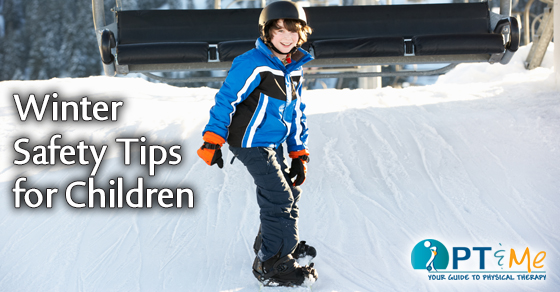
Winter Safety Tips for Children

winter safety tips for Children PTandMe
When the temperature drops and snow is on the ground, your children can still benefit from some outdoor physical activity. All it takes is a little extra planning to stay safe.

Layer Up!
Infants and children lose heat more quickly due to their size. As a result, they are more likely to suffer from low body temperature, also known as hypothermia. Dressing in layers is a good way to provide your child with added warmth during the winter months. Your child should wear 1 more layer than an adult would wear. Choose fabrics that wick moisture to help pull sweat away from your child’s skin and keep them warm.

Here are some other winter stafety tips to help keep your child safe in the cold:
• Mittens are warmer, but gloves allow your child to use their fingers more. Consider having your child wear mittens over a pair of light gloves.
• Keep your child’s feet warm and dry with 2 pairs of socks.
• Avoid long scarves and drawstrings or ties, which could become a choking hazard. Consider neck warmers or turtleneck garments.
• Choose hats and hoods that do not obstruct your child’s vision.
• Keep a dry set of clothing at school in the event your child’s clothes become wet.

Winter Sport Safety
Winter safety tips for sports such as skiing, skating, snowboarding, and sledding require adult supervision and added safety measures. To help keep your child safe:
• Make sure your child wears a helmet and other protective gear such as wrist guards for snowboarding and a mouth guard for ice hockey.
• Teach your child to be aware of and avoid hazards when sledding such as cars, trees, and ponds.
• Do not allow your child to skate on surfaces until you are sure the water is frozen solid.
• Do not allow your child to wear headphones while playing. Headphones will block traffic or grooming machine sounds.
• Encourage your child to keep moving when outdoors to help generate body heat.

Bring your child inside at the first sign of frostnip—skin that is red, numb, and tingly. Soak your child’s skin in warm water until the symptoms go away. Do not rub the skin. If symptoms do not improve, call your child’s doctor. If your child’s skin becomes white, hard, and swollen, your child may have frostbite. The skin may also burn, tingle, or become numb. If you think your child has frostbite, bring your child inside and put your child in dry clothes. Do not rub the skin, rubbing can cause more damage. Call for medical help right away.

hockey_player

Don’t Skip the Sunscreen
It is possible for your child to get a sunburn in the winter since sunlight reflects off of the snow and ice. Your child should use a sunscreen with an SPF of at least 30. Apply it to your child 20 minutes before going outside and reapply it every 2 hours.

Fuel Up for Fun
Dehydration can contribute to hypothermia. Encourage your child to drink plenty of fluids, especially during vigorous physical activities. Your child will also need to fuel up to generate body heat needed for outdoor play. Provide your child with plenty of healthy snacks such as trail mix, fruit and bread.

When to Play
Freezing temperatures and wind are risk factors for hypothermia and frostbite. Avoid severe cold. Keep an eye on weather forecasts and plan outdoor activities for warmer days without snow or rain.

Following these winter safety tips will allow you and your child to safely enjoy the beauty of winter.

by Cynthia M. Johnson, MA

RESOURCES:
Family Doctor—American Academy of Family Physicians
http://familydoctor.org

Healthy Children—American Academy of Pediatrics
http://www.healthychildren.org

CANADIAN RESOURCES:
Canadian Paediatric Society
http://www.cps.ca

Health Canada
http://www.hc-sc.gc.ca

REFERENCES:

Chillin’ with winter safety. Healthy Children—American Academy of Pediatrics website. Available at: http://www.healthychildren.org/English/safety-prevention/at-play/Pages/Chillin-With-Winter-Safety.aspx. Updated January 19, 2016. Accessed February 11, 2016.

Frostbite in children. Lucile Packard Children’s Hospital Stanford website. Available at: http://www.stanfordchildrens.org/en/topic/default?id=frostbite-in-children-90-P02820. Accessed February 11, 2016.

Keeping kids safe in the cold. American Academy of Pediatrics website. Available at: http://www2.aap.org/sections/schoolhealth/ECarchivenovember11.html. Accessed February 11, 2016.

Sunscreen FAQs. American Academy of Dermatology website. Available at: https://www.aad.org/media-resources/stats-and-facts/prevention-and-care/sunscreens. Accessed February 11, 2016.

Last reviewed February 2016 by Michael Woods, MD Last Updated:10/20/2014

EBSCO Information Services is fully accredited by URAC. URAC is an independent, nonprofit health care accrediting organization dedicated to promoting health care quality through accreditation, certification and commendation.

For more winter safety tips to keep you out of harm’s way this season check the articles below!
Staying Warm in Winter PTandMe  snow shoveling safety PTandMe  

PT News

This Month in PT News. Featuring articles from PTandMe partnering clinics!
2. Winter Activities Foster Year-Round Fitness
Written by the Therapy Team at the Jackson Clinics – Middleburg, VA

The urge to “hibernate” in winter is strong, even for us humans. Read more

3. Top 5 New Year’s Resolutions 
Written by Therapy Team at Momentum Physical Therapy – San Antonio, TX

2017 is almost here, and it’s the perfect time for assessing the year behind and looking forward to the changes we want to make in 2017. Read more

January 2017 Events

Check out our Physical Therapy Monthly Events Calendar! Focusing on events from PTandMe.com participating physical and occupational therapy clinics. Read more to find out what’s happening in your community in January 2017!

NEVADA PHYSICAL THERAPY EVENTS

TAHOE MEADOWS, NV
DATE: January 7th, 2017, 9:00AM – 12:00PM (and every following Saturday until the snow melts!)
HIIT Snowshoeing Training Program
CLINIC: Custom Physical Therapy – Reno
Join Custom Physical Therapy and Sierra Strength and Speed in Tahoe Meadows for a 60 minute snowshoe High Intensity Training Program session with warm-up, aerobic and anaerobic challenges, and simple fun. The only prerequisite: want to have fun and challenge yourself with a group of other crazy people. It is just for fun and to build community in our area! For more information about Custom Physical Therapy, visit them online at http://custom-pt.com.

TEXAS PHYSICAL THERAPY EVENTS

HOUSTON, TX
DATE: January 29th 2017, 12:15PM – 2:00PM
Fitness Expo 2017
CLINIC: Action Physical Therapy – Houston
Action Physical Therapy is proud to be a part of Houston First Baptist Church’s Fitness & Recreation Center Expo for 2017. Please stop by the Action Physical Therapy table. We’d love to get to know you and talk about the benefits of physical therapy. We can’t wait to see you there! For more information about Action Physical Therapy, visit them online at http://action-pt.net.

VIRGINIA PHYSICAL THERAPY EVENTS

BLACKSBURG, VA
DATE: January 20th, 2017, 1:30PM – 5:00PM
WellFest 2017: Student Health and Wellness Fair
CLINIC: University Physical Therapy -Blacksburg
If you are a VA Tech student or staff member please stop by the University Physical Therapy table at this years WellFest 2017: Student Health and Wellness Fair located in McComas Hall. We would love to get to know you and talk about the benefits of physical therapy and explore opportunities that are available to keep you performing at your best! For more information about University Physical Therapy, visit them online at http://universityptonline.com.

WISCONSIN PHYSICAL THERAPY EVENTS

JEFFERSON, WI
DATE: January 21st 2017, 10:00AM – 1:00PM
JUMP Community Health & Wellness Fair
CLINIC: Sport & Spine Physical Therapy – Jefferson
Sport & Spine Physical Therapy is proud to be a part of the JUMP 2017 Healthy Family Activities Event located at Jefferson High School. JUMP invites individuals of all ages to come to our community healthy activities free event. Activities for all ages, as well as demonstrations.
Water Aerobics 10:00AM – 11:00AM
Open Swim 11:00AM – 1:00PM
Open Gym 10:00AM – 1:00PM
The goal of JUMP is to continue to strengthen our community while working to improve our community’s health. For more information about Sport & Spine Physical Therapy, visit them online at http://sportandspineclinic.com.

elf injuries

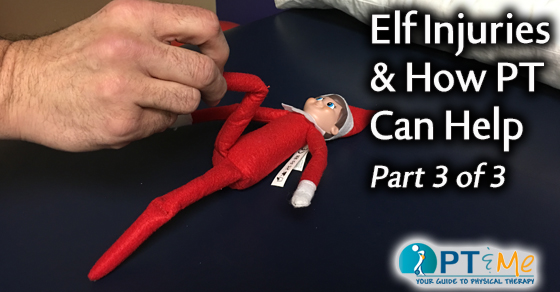
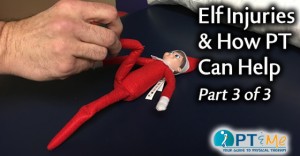
Elf Injuries and How PT Can Help: Part 3 of 3

It’s that time of year, when we check in on Santa’s helpers to see if they can use some physical therapy. With their heavy lifting and high demand job they’re always experiencing injuries. Our new elf friend Ziggy, is the perfect patient for PT.

Previously…

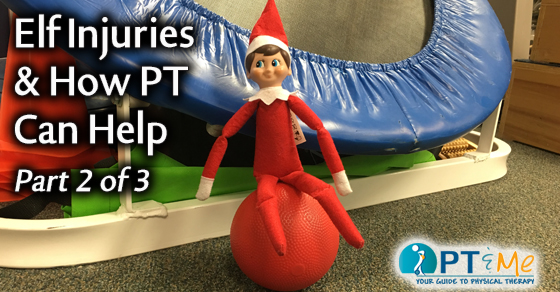
Ziggy was at one of PTandMe’s partnering physical therapy clinics awaiting the arrival of one of our trusted physical therapists.
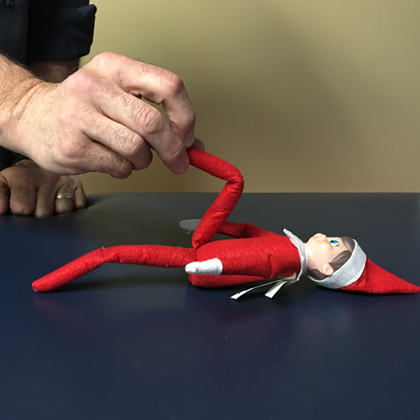
Our therapist first performed some stretching techniques on Ziggy to help relieve his aches and pains (Don’t worry Santa said it was okay to touch our “elf on the shelf” friend).

Then so more stretching techniques to help out our little friend…

Now the therapist has Ziggy doing some pulls ups on our wonderful clinic’s pull-up bar to help Ziggy get back to working shape.

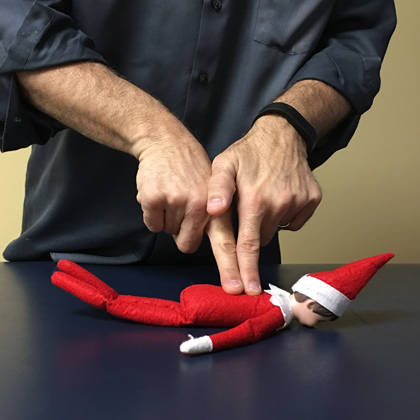
Time for deep tissue massage on Ziggy’s aching back…

elf back massage

Thanks to the great physical therapy Ziggy got at our wonderful PT & Me clinics he is now ready to lift all the toys into Santa’s sleigh just in time for the holiday!

THE END.

See Ziggy’s complete physical therapy experience here!

elf injuries physical therapy PTandMe   Elf on the Shelf Physical Therapy

elf injuries

Special thanks to Action Physical Therapy, in Houston, TX, for accommodating the demanding work schedule of Santa’s elves. Click Here for more information about Action Physical Therapy.