Category Archives: Blog

What should I wear to physical therapy

What Should I Wear to Physical Therapy?

What should I wear to physical therapy

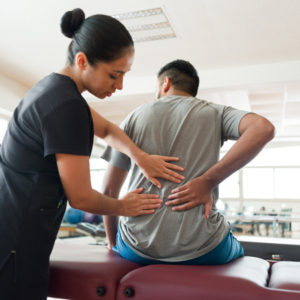
When you come to physical therapy, we evaluate your movement and your body’s ability to function correctly.  It’s hard to do that when a patient shows up in restrictive or cumbersome clothing. So if you’re asking yourself… Self,  “What should I wear to physical therapy?” We’ve got you covered.

physical therapy near me

What Should I Wear to Physical Therapy for Hip, Leg, Ankle, or Foot Pain?

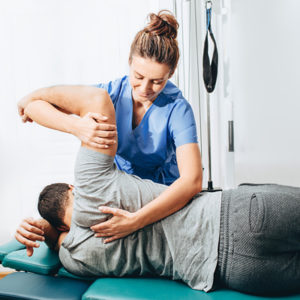
You’ll want to wear loose-fitting clothing – preferably shorts or yoga pants that can roll up past the knee.  The last thing we want is for your movement to be restricted by your clothing.  Additionally, many treatment plans incorporate manual therapy techniques, which means we’ll be moving muscles with our hands or with tools specifically designed to help your recovery.

Footwear matters too – depending upon the injury,  patients may spend time walking and running on the treadmill,  drills on the clinic floor, etc.  Come prepared by wearing a comfortable set of tennis shoes.  In some cases, a physical therapist may need you to take off your socks and shoes to better evaluate and treat your feet. An extra pair of socks may be helpful for patients that don’t want to put on a used pair. You can even bring them in a bag to put the stinky ones in ;).

What Should I Wear to Physical Therapy for Back, Arm, Shoulder, or Neck Pain?

Great question. Again, the best option is to wear a loose-fitted short-sleeved shirt. Not only does it make getting your blood pressure readings, but it’s the easiest way to make sure your body has free range of movement. If you’re cold-natured, bring a cardigan that you can easily take on and off throughout the appointment.

What if I’m Coming from Work or School?

No worries, bring a change of clothes with you to change into before your appointment.  We understand that you’re fitting us into your schedule.

Wearing the right clothes during your physical therapy appointment can be the difference between having a good visit and a great one.  If you’re in pain or experiencing a loss of function, reach out to schedule your first visit today!

Special thanks to Star Physical Therapy Services, in Tomball, TX for helping to provide videos and content.

Physical Therapy Appointment


How to Correctly Use Workout Equipment

How To Correctly Use Workout Equipment In Your Gym

How to Correctly Use Workout Equipment

Are you looking to exercise more? Or are you a recent physical therapy graduate looking to keep making progress on the health of your body? Either way, going to the gym can be an experience that benefits both the body and mind tremendously. With that, understanding how to correctly use your workout equipment can reduce the risk of first-time or reoccurring injuries. If you are recovering from an injury, ask your physical therapist for an adjusted workout, or for updated restrictions as you continue to improve through care.

physical therapy near me

From stationary bikes to pull-ups, there is a plethora of workout equipment available for use in the gym that can better overall the health of your body. With that, the knowledge of the right and wrong ways to use the equipment we are about to teach can be the difference in benefiting or damaging your body.

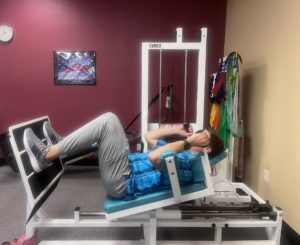
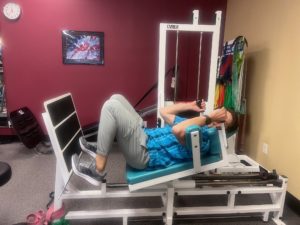
How to Correctly Use a Leg Press

The leg press is a popular piece of gym equipment that can help build muscles in your legs. This piece of equipment develops the hamstrings of the thigh and the gluteus.

Correct Form:


Incorrect Form:

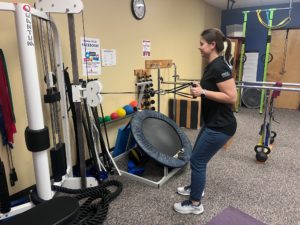
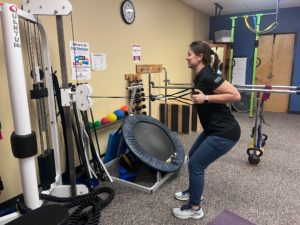
When you get into a leg press you’ll want to position yourself so that your back is pressed firmly against the back machine with your shoulders touching the top of the seat.  Your feet should be positioned shoulder-width apart and fully flush on the platform with your legs at a 90-degree angle. Make sure to hold onto the handlebars before straightening your legs and lifting the weight. If you’re unsure about what weight to start with,  start small and gradually add weight as you build endurance and strength. You can also consult your physical therapist or an athletic trainer for help.

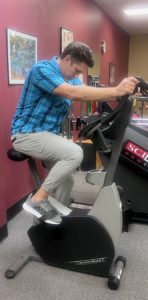
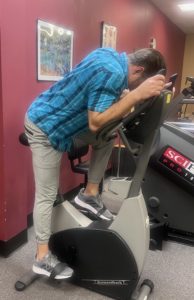
How to Correctly Use a Stationary Bike

The stationary bike has been a staple in the exercise community for years. This machine provides low-impact, high-intensity cardiovascular exercise while building strength and endurance.

Correct Form: 

Incorrect Form: 

When sitting on a stationary bike you’ll want to adjust the seat’s height so that there is a slight bend to your knee when your foot reaches the furthest position.  You also want to make sure your back is straight and avoid hunching. Your elbows should slightly bend when you grab onto the handles. If your arms are overextended, move the seat forward or backward until you reach the right position.

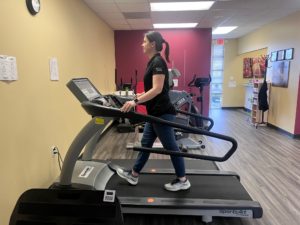
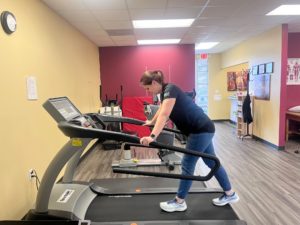
How to Correctly Use a Treadmill

There are lots of benefits to using a treadmill. It’s a great alternative to beginning runners when the weather is not in their favor, or if you want to pick the speed or incline to run.

Correct Form: 

Incorrect Form: 

Make sure you keep your head up and looking straight ahead and try to keep your feet landing in the middle of the treadmill to take advantage of the shock absorption.  Finally, run or walk as you would outside on the street. If needed a physical therapist can help make sure you have a good gait and posture

How to Correctly Use a Standing Cable Row

The cable row develops the muscles of the back and the forearms. It is an excellent all-around compound exercise for developing the middle back.

Correct Form: 

Incorrect Form:

When standing you’ll want to adjust the pulley so that it’s level with your chest. You’ll want to stand with your feet firmly on the ground hip-width apart, with a slight bend to your knees. Similar to the bike you’ll want to keep your back straight (careful to watch the position of your butt).  When pulling towards you make sure to keep your shoulders down, and don’t lean into the machine.  If you are struggling to keep a good position, remove some of the weight.

How to Correctly Do a Low Row Hold

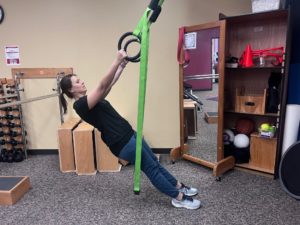
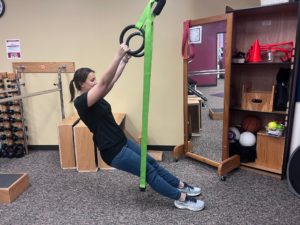
The Primal 7 is a versatile tool that can be used to assist patients in recovery by allowing for modified exercises, as well as an everyday workout tool for home and at the gym.  Many of our clinics utilize it to help with assisted pull-ups, push-ups, and in this example a low row hold.

Correct Form: 

Incorrect Form: 

Grab hold of the rings and walk back to your starting position.  Firmly plant your feet hip-width apart, keeping your back straight, and lean back until your arms are extended outward at chest level. From here you’ll pull your hands to your chest making sure the shoulders stay back.  If you need help finding your starting position ask your physical therapist for help.

Working out and staying active is highly beneficial to the body but using the incorrect form could result in personal injury. If you have any sudden significant increase in pain, swelling, or discoloration while performing or following exercise, discontinue immediately. Don’t hesitate to schedule an appointment or find a physical therapist near you today!

Special thanks to Kingwood Occupational & Physical Therapy, in Kingwood, TX for supplying the Imagery

Physical Therapy Appointment


benefits of a home exercise program

Why Should I Do My Physical Therapy Home Exercise Program?

benefits of a physical therapy home exercise program: Why should I do my physical therapy home exercise program?

When a patient walks in for physical therapy, one of the things they are sent home with is a home exercise program. But why do they do that? Aren’t they supposed to take care of everything while you are in the clinic?  These are questions that may run through your head, but what exactly are the benefits of a home exercise program? If you’re on the fence about whether or not to take your HEP seriously, we’re here to tell you why you should.

  • Continuation of forwarding progression in rehabilitation: Physical and occupational therapists tailor each program to the abilities and strengths of each patient. A patient that completes their home exercise program is more likely to excel in the one-on-one sessions at the clinic and experience fewer setbacks in rehabilitation.
  • Increases level of mobility and endurance: Exercise in the home is designed to continue the progress of the clinic visit by increasing a patient’s flexibility and stamina. A good home exercise program allows a patient to increase function and improve muscle memory so that progress is gained rather than lost from one visit to another.
  • For some patients, therapy doesn’t end at discharge: A home exercise program can help a patient remain pain-free and functional without having to pay for repeat visits and costly medical bills. For patients experiencing chronic pain – a home exercise program is a ticket to staying out of the doctor’s office.

physical therapy near me

New Remote Therapeutic Monitoring Program Helps Seniors Complete their Home Exercise Programs!

With RTM, physical therapists continue to create and prescribe home programs as part of the treatment plan as they have always done. The difference with RTM however,  is that now our teams can monitor a patient’s performance and response to the home exercise program between clinic visits. RMT provides physical therapists with musculoskeletal data and reports pain levels each time the patient engages with the platform. Additionally, if a patient can’t perform their exercises or follow the instructions correctly, the physical therapist will know and be able to make modifications immediately.

Despite the benefits of a home exercise program, patients have trouble following through on their home exercise program goals. We’re going to go over some of the more common excuses:

  • I don’t have time, because life at home is too busy: It can be hard, especially for those running a household with multiple schedules to accommodate. However, a physical therapist can offer suggestions on working these into your schedule. Some exercises can be done at work, at home, on the playground. If time is truly a concern then don’t be afraid to let the therapist know.
  • It hurts: Some pain is considered normal – it’s a normal part of the exercise. However, if you are doing an exercise and something feels wrong, let your physical therapist know immediately. Don’t wait until your next appointment and tell yourself you will take care of it then. It could be something as simple as not doing the exercise correctly and they can talk you through it over the phone. Communication is a large part of rehabilitation and your therapist wants to know if something is causing concern.
  • Not motivated: Not seeing the point of the exercises your therapist gave you – ask them why it is so beneficial. Going to see a physical therapist 2-3 times a week alone without doing home exercises will not be enough to maintain muscle strength and flexibility. Healthy habits begin with persistence. If you need motivation talk to your therapist, they are born motivators and want nothing more than to watch you succeed. Enlist the help of family or friends to keep asking about your progress.

Physical therapists may utilize print copies of exercises or they may choose to go utilize a digital version that you can access from a mobile device. No matter the delivery, the goal for each is the same. To help you heal more effectively. If you have questions about your home exercise program and what it contributes to your recovery talk to your physical therapist. Education and understanding are crucial to making sure your experience in recovery is successful. If you need help finding a physical therapist to answer your questions, we have you covered in our “Find a PT” section.

Physical Therapy Appointment


PT News PTandMe

PT News January 2023

PT News PTandMe

This time in PT News we recap what our clinics have been posting throughout January 2023. We are excited to bring you current physical therapy-based posts featuring published articles from PTandMe partnering clinics!

Stretching

1. The Secret Benefits of Stretching Before and After Your Workout

Written by Wright Physical Therapy with locations throughout Idaho

Answer this question. If you do work out regularly, are you stretching properly? If you’re not stretching before and after your workout, you’re not really taking advantage of a complete workout routine. Stretching exercises are a staple of physical therapy for many reasons.  Read more


Low Back Pain Physical Therapy

2. Spondylolisthesis: An Unknown Cause of Back Pain and How to Treat it.

Written by JACO Rehab an outpatient physical therapy practice with 4 locations in O’ahu, HI

In rare occasions, back pain, stiffness, numbness and tingling down the legs, or weakness in the legs can be associated with spondylolisthesis. Let’s take a closer look at spondylolisthesis and how physical therapy can help treat it! Read more


3. Reducing Work Place Injuries

Written by The Center for Physical Therapy, an outpatient physical therapy group located throughout Greater Grand Rapids, MI.

As companies continue to search for ways to offset the increasing cost of doing business, minimizing workman compensation costs is an effective way to reduce medical costs. When an employee sustains an on-the-job injury, the potential cost to the company can be significant. It is estimated, the cost incurred by the company to treat an injury from onset to return to unrestricted work is around $70k thus requiring companies to produce more goods to help offset work comp costs.  Read more

We hope you enjoyed our picks for the PT News January 2023 edition.

Find these locations and others to start feeling better today!

Physical Therapy Appointment

How Do You Know if you have Bursitis

How Do You Know if You have Bursitis?

How Do You Know if you have Bursitis

What is Bursitis and What Causes it?

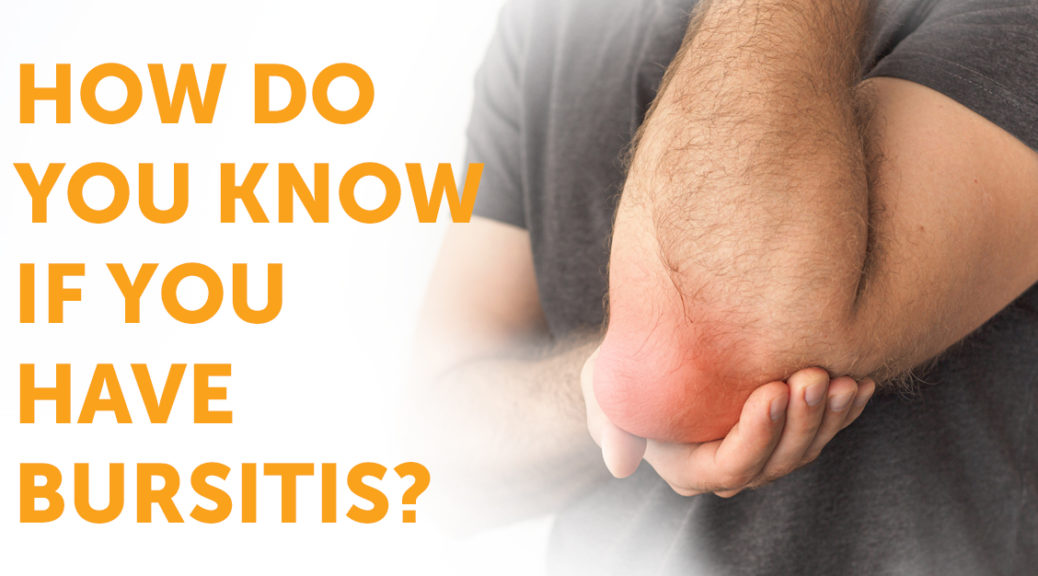
Aching, inflamed, and painful joints can often be mistaken for arthritis, but what might really be happening in your body is a case of bursitis. Although bursitis does result in joint pain, it is a condition that concerns the bursae within the joints. In our body, there are 160 tiny, slippery fluid-filled sacs called “bursa” that allow our joints to move in a smooth fashion, by providing a thin cushion and reducing friction between bones, tendons, muscles, and skin surfaces.

Although there are bursae found all over the body, the major ones are found near large joints such as the elbows, hips, knees, and shoulders. Joints with higher ranges of motion typically see the most bursitis damage leading to inflammation from repetitive use or pressure. Bursitis is the result of an inflammation of the bursae, and once these sacs become inflamed, there’s more friction between the bone and the muscles moving around, making the problem worse.

Bursitis can be caused by excessive pressure and repetitive movement. As a result, the shoulders, knees, and elbows are the most affected parts of the body. Another cause of bursitis is traumatic injury, since the bursae no longer fits in the small space between the bone and muscle or tendon.

Bursitis Symptoms to Look For:

  • Feel achy or stiff
  • Swelling
  • Dull pain with occasional sharp pain
  • Painful to the touch
  • Pain (increases with movement or pressure)

How Do I Treat Bursitis?

Home treatment is often enough to reduce pain and let the bursa heal. Physical therapists can also help strengthen the muscles around your joints and relieve pain.

What do I do if I have bursitis?

  • Rest the affected area. Avoid any activity or direct pressure that may cause pain.
  • Apply ice or cold packs as soon as you notice pain in your muscles or near a joint. Apply ice 10 to 15 minutes at a time, as often as twice an hour, for 3 days (72 hours). You can try heat, or alternating heat and ice, after the first 72 hours.
  • Use pain relievers. To reduce pain and inflammation, use nonsteroidal anti-inflammatory drugs (NSAIDs), such as ibuprofen or naproxen. NSAIDs come in pills and also in a cream that you rub over the sore area. Acetaminophen (such as Tylenol) can also help with pain. Don’t rely on medicine to relieve pain so that you can keep overusing the joint.
  • Do range-of-motion exercises each day. If your bursitis is in or near a joint, gently move the joint through its full range of motion, even during the time that you are resting the joint area. This will prevent stiffness. As the pain goes away, add other exercises to strengthen the muscles around your joint.
  • Avoid tobacco smoke. Smoking delays wound and tissue healing.

Physical Therapy treatment for Bursitis:

Your physical therapist also will perform an evaluation to determine the likelihood that you have bursitis. The time it takes to heal the condition varies, but results can often be achieved in 2 to 8 weeks when a proper stretching and strengthening program is implemented. Contact your physical therapist today to help you get on a healing & regenerative program.

Physical Therapy Appointment

The Risks of Not Treating Bursitis:

If you don’t treat this condition and develop a severe case of bursitis, your doctor may use a needle to remove extra fluid from the bursa. You might wear a pressure bandage on the area. Your doctor may also give you a shot of medicine to reduce swelling. Some people need surgery to drain or remove the bursa. Sometimes the fluid in the bursa can get infected. If this happens, you may need antibiotics.

Preventing Bursitis:

While not all types of bursitis can be prevented, you can reduce your risk and the severity of flare-ups by changing the way you do specific tasks. Examples include:

  • Using kneeling pads. Use some type of padding to reduce the pressure on your knees if your job or hobby requires a lot of kneeling.
  • Lifting properly. Bend your knees when you lift. Failing to do so puts extra stress on the bursae in your hips.
  • Wheeling heavy loads. Carrying heavy loads puts stress on the bursae in your shoulders. Use a dolly or a wheeled cart instead.
  • Taking frequent breaks. Alternate repetitive tasks with rest or other activities.
  • Maintaining a healthy weight. Being overweight places more stress on your joints.
  • Strengthening your muscles can help protect your affected joint.
  • Warming-up and stretching before strenuous activities to protect your joints from injury.

Sources:

https://www.mayoclinic.org/diseases-conditions/bursitis/symptoms-causes/syc-20353242

https://stanfordhealthcare.org/medical-conditions/bones-joints-and-muscles/bursitis/treatments.html

https://therapydiadenver.com/resources/bursitis-pain-treatment/

https://ptrenew.com/what-exactly-is-bursitis/

How physical therapy can treat Rheumatoid Arthritis

How Physical Therapy Can Treat Rheumatoid Arthritis

How physical therapy can treat Rheumatoid Arthritis

What is Rheumatoid Arthritis (RA)?

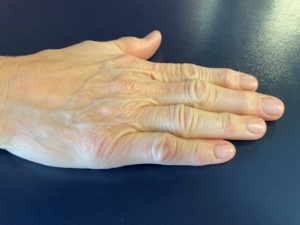
Rheumatoid Arthritis (RA) is a chronic inflammatory and autoimmune disease that has the potential to impact many different joints and organs in the human body. RA can cause inflammation and swelling in the joints. While medications are necessary in most cases to help slow the progression of RA, programs such as physical therapy can relieve the symptoms and improve the overall quality of life when living with RA

How Does RA Happen?

While there are many different types, Rheumatoid Arthritis is the most common form of autoimmune arthritis. This disease occurs because of a faulty immune response that causes the body to attack its tissue. Specifically, RA attacks the lining, or synovium, of a joint, leading to swelling and eventually erosion in the joint itself over time.

While in the early set stages, RA typically affects the smaller joints in your body such as the hand, wrist, and toes. However, as RA progresses, larger joints including the knees, hips, and shoulders along with vital organs such as the heart, lungs, and eyes can also be impacted.

Benefits of Physical Therapy for Rheumatoid Arthritis

While Rheumatoid Arthritis can have an effect on the joints and organs of the body, physical therapy can provide several meaningful benefits. Physical therapy can help ease symptoms and enhance your quality of movement, making everyday life easier for people suffering from RA.

When seeing a physical therapist about pain resulting from RA, a therapist will evaluate your posture, muscle imbalances, and the overall mechanics of your body. They’ll teach you to improve how to move to prevent injury and reduce pain.

Your therapist can also create a customized stretching and exercise plan that helps ease pain, increase your range of motion, and improve your movement patterns.

Things that physical therapy can do to help with RA include:

  • Create a HEP (Home Exercise Program)
  • Improve your overall level of fitness
  • Increase your endurance
  • Help eliminate stiffness in your joints
  • Decrease fatigue
  • Improve your balance and stability
  • Increase coordination

Other Physical Therapy Treatments for Rheumatoid Arthritis

There are passive ways that PT can help with rheumatoid arthritis. A physical therapist performs these treatments.

Massage Therapy
This relaxing treatment can help target specific muscles and release tension. Massage can also stimulate healthy blood circulation and manage stress.
Note that massage therapy is not recommended for painful joints during a rheumatoid arthritis flare-up.

Hydrotherapy
This type of therapy involves submerging the affected area or the whole body into warm water to relieve arthritis pain.
Hydrotherapy can be passive therapy or active therapy. Some physical therapists assist rheumatoid arthritis patients in performing light movements and exercises in the water.

Cryotherapy Therapy
This therapy is performed by putting a cold compress on the affected area to reduce swelling and help alleviate pain.

Heat Therapy
Heat therapy is done by placing a warm towel on the affected area to promote circulation. This therapy may also stimulate blood flow and soothe muscle tension and pain.

Ultrasound
Therapeutic ultrasound uses vibrations from sound waves to reduce stiffness and pain, improving joint function.

For help with your arthritis pain please reach out to a physical or occupational therapist near you.  We can work to manage your symptoms and still keep you doing the activities you love most!

Exercises to Help with Rheumatoid Arthritis

Many people with RA tend to avoid exercise, as they are worried that the activity might worsen their pain. However, exercise is a key treatment to help reduce the disability often associated with RA.

Regular exercise can produce stronger muscles that can better support the joints and improve flexibility which can aid joint function. Regular exercise can also reduce fatigue and boost your mood. Better overall fitness helps prevent heart disease and diabetes, two life-shortening ailments that often accompany RA.

Some low-intensity exercises are recommended for people with rheumatoid arthritis.

Walking
Low-impact and straightforward exercises are great for rheumatoid arthritis. Make sure to start your pace slowly and constantly drink water to stay hydrated. Walking promotes aerobic conditioning and boosts your mood.

Stretching
Stretching can help reduce joint stiffness, promoting flexibility among people with rheumatoid arthritis. Developing a stretching routine may help improve your range of motion. You can start your stretching routine with a warm-up for three to five minutes and proceed with mild stretching. Remember to hold the stretch for 10 to 20 seconds before releasing the stretch. You can repeat each stretch exercise two to three times.

Cycling
Low-impact aerobic exercises like cycling benefit the joints. Cycling may have beneficial effects on your cardiovascular health, which may be at risk when you have rheumatoid arthritis. You can ride a bike outside or cycle on a stationary bike with the supervision of a physical therapist.

Yoga 
Building your strength through these low-intensity exercises may increase your muscle strength and joint flexibility. These activities encourage flowing movements and deep breathing that are also advantageous for balance to avoid falls.

Safety Tips for Exercising with Rheumatoid Arthritis

Exercising is beneficial for RA if you do it safely. Before beginning, consult your physical therapist. They can recommend appropriate exercises and suggest techniques that can subside your pain.

Some safety tips for exercising with RA include:

Make sure to stretch: Warm up before each session and end by cooling down. Stretch all the major muscle groups before working out, especially the joints in your body that are prone to pain and stiffness.

Take it slow:  Start with short workouts, build up your endurance, and work within your limitations. Listen to your body, especially if you are going through a flare-up, and take as many breaks as necessary. Allow yourself plenty of rest between workouts.

Do low-impact exercises:  Low-impact exercises reduce stress and pressure on the joints. These exercises include swimming, walking, cycling, yoga, and many more. Avoid any workouts that cause severe pain or worsen your symptoms.

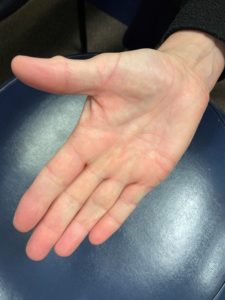
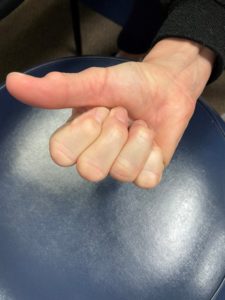
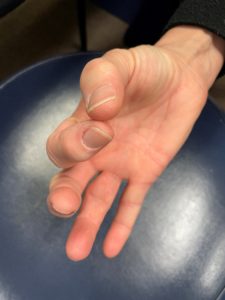
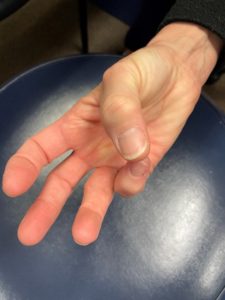
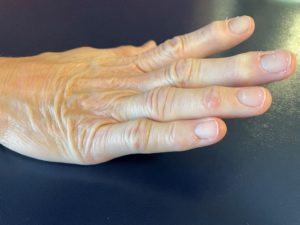
Here are some helpful hand stretches that you can try.
Patients with RA present differently and may benefit from an appointment with a hand or physical therapist.  Here are some general stretches that may help.
(Images Provided by The Hale Hand Center)

  • Making a Fist
    Start this simple exercise by stretching out your hand with your fingers straight, and then slowly draw them together to form a fist. Make sure that your thumbs are not tucked under your fingers. Hold the fist for a minute and repeat it as many times as you want.

    Rheumatoid Arthritis Stretches  

  • Touching Fingers
    Start by opening your hand again. Move your thumb to touch each finger lightly.

    Hand Stretches for Rheumatoid Arthritis    

  • Lifting Your Fingers
    Place your hand facing down on a flat surface. One by one, slowly lift each of your fingers, starting from your thumb to your pinky. Hold the finger lift for a second or two before lowering it.

    How physical therapy can treat Rheumatoid Arthritis  

  • Stretching Fingers
    You can do this stretch by slowly and gently opening your hand and stretching out your fingers for several seconds. This stretch can strengthen the muscles and reduce the stiffness of finger joints.

For help with Rheumatoid Arthritis, please reach out to a physical or occupational therapist near you. We can work to manage your symptoms and keep you active so you can continue living life to the fullest and doing the activities you love most!


physical therapy near me

Holiday Exercise Routine

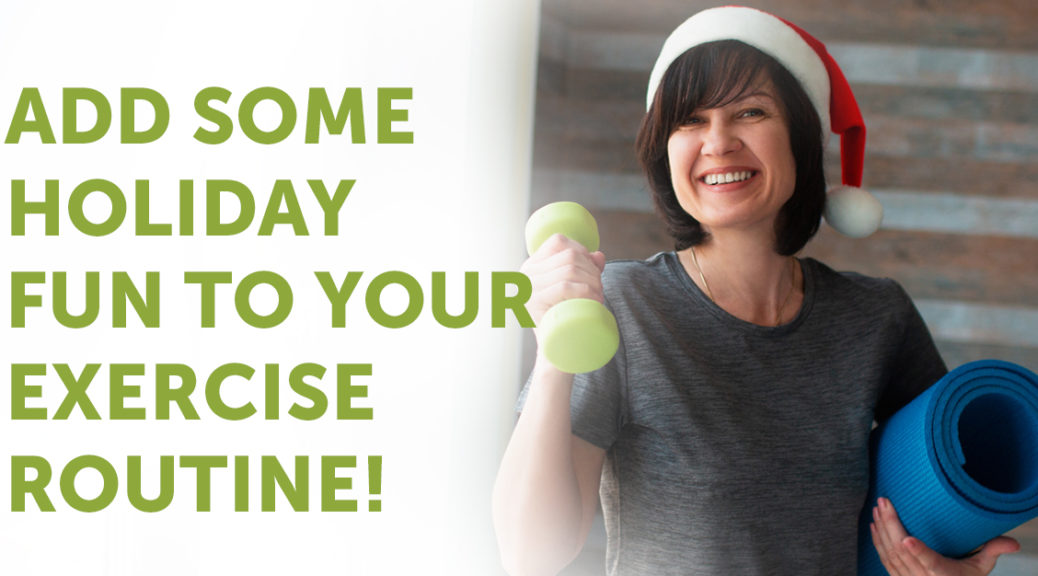
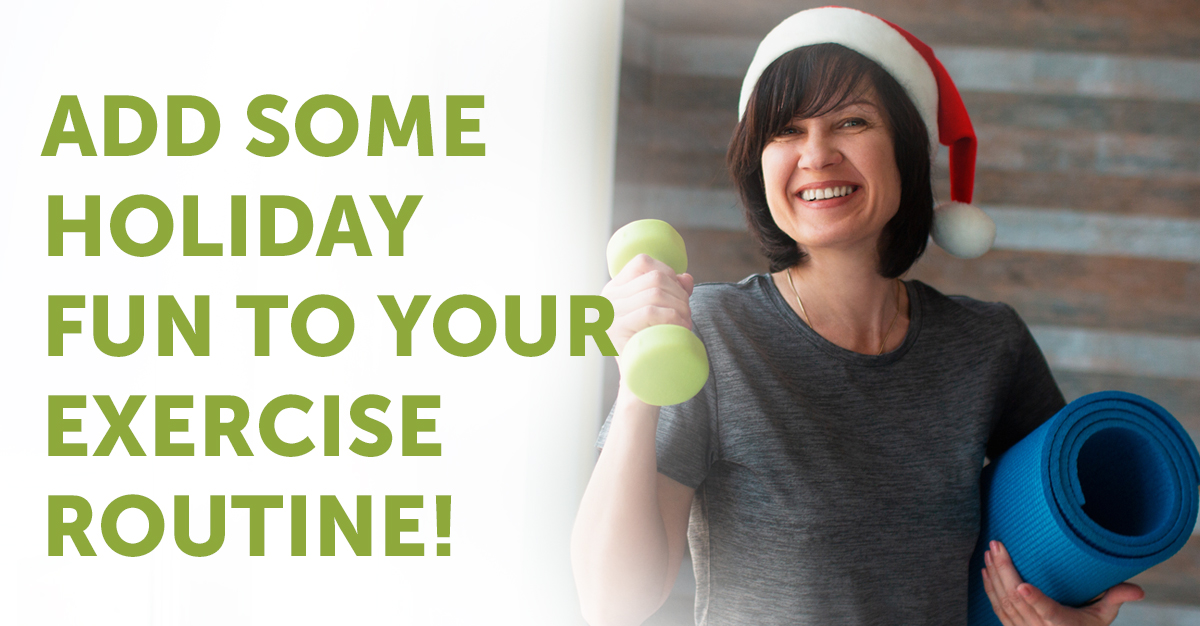
Add Some Holiday Fun to Your Exercise Routine

Holiday Exercise Routine

The majority of adults in the United States are not physically active on a regular basis. Only 30% get the recommended amount of physical activity. Lack of time is the most often cited reason for not getting in enough exercise. When the holiday season begins, the lack of time issue only becomes more problematic. For most people, even for those who do exercise regularly, this means that daily exercise slips to the bottom of the long list of things to do during the holidays. You know that list: gift shopping, party hopping, and traveling to see family and friends. Take some time to figure out what you can and can’t control. Then, work on the elements you can control to help with your time management. Here are some ways you can stay on track and have some fun with your exercise routine throughout the holidays.

Find a Holiday Race to Join
Knowing you need to be physically prepared may be the motivational tool you need in terms of keeping you consistent with your workouts. Realizing that all your training will have an additional benefit, other than improved fitness, may also improve your chances of sticking with it. Most holiday-themed races have opportunities to dress up adding even more fun to the mix!

Find or Create the Perfect Holiday Workout Playlist
It’s hard not to love Mariah Carey’s all I want for Christmas is you – it’s also a great song to workout to.  Are you a Spotify user? Try this playlist during your next workout. Is iTunes your jam? They have a holiday classics remix playlist that’s perfect for a holiday workout.

Get a Workout Partner
Some people find that working out with a partner helps motivate them and keep them consistent in terms of getting to the gym or hitting the pavement. Knowing that someone is waiting for you can motivate you on the days you don’t feel like getting out of bed to exercise. Find someone with a similar schedule and treat yourselves after your workouts – Grab a cup of coffee together or plan a trip to a holiday market afterward. You’ll feel great, and be able to check some things off of your to-do list!
Set Some Holiday Related Goals
Rather than dragging yourself to the gym each day to shed those extra holiday pounds, set a fitness goal for the holiday season.

Try writing down what you want to accomplish during the two-month period from November 20 to January 20. Choose a goal such as losing 5 pounds, increasing your strength, or improving your time in a mile run. Don’t make exercise a penance for the holiday cookies you ate. Make it a personal goal unrelated to holiday revelry. Your goals need to be flexible and in line with your capabilities, needs, values, and available resources. They should be challenging, but also realistic. Measure the baseline of where you are now and decide where you would like to be on a certain date in January.

Have fun this holiday season and add some cheer to your regular workout routine. Mixing it up will keep your routine fun, fresh, and will be something you can more easily stick to. Getting started on a new workout routine? We have some great tips to help you get started safely. Need help with an injury so that you can get back to your exercise routine? Look no further. We have wonderful teams of therapists throughout the country that specialize in sports rehabilitation.

physical therapy near me

REFERENCES:
2020 physical activity guidelines for Americans. US Department of Health and Human Services website. Available at: https://health.gov/sites/default/files/2019-09/Physical_Activity_Guidelines_2nd_edition.pdf  Accessed November 17, 2020.

The Surgeon General’s call to action to prevent and decrease overweight and obesity. US Department of Health and Human Services’ Surgeon General website. Available at: http://www.ncbi.nlm.nih.gov/books/NBK44206. Accessed November 17, 2020.

PT News PTandMe

PT News November 2022

PT News PTandMe

This time in PT News we recap what our clinics have been posting throughout November 2022. We are excited to bring you current physical therapy-based posts featuring published articles from PTandMe partnering clinics!
Physical Therapy

1. You’ve Met Your Deductible. Don’t Miss Out on Free Physical Therapy

Written by Momentum Physical Therapy with locations throughout San Antonio

Many people find that they can access physical therapy at low or no cost after their deductible has been met. Most deductibles reset on January 1st, so NOW is the time to take advantage of your access to physical therapy. Not sure if your deductible has been met?  Read more


Work Injury Patient

2. Treating Sports Athletes vs. Industrial Athletes

Written by The Center for Physical Rehabilitation an outpatient physical therapy practice with locations throughout greater Grand Rapids, MI

Over the course of my 25+ career as an Athletic Trainer, I have had the opportunity to see the profession evolve. Athletic Trainers can be found working in a variety of settings. These settings may include high school/clinic settings, college athletics, government agencies, public safety, and essentially any profession that involves physical activity. One area that has become more attractive to athletic trainers is manufacturing and industrial settings. Read more


food is fuel

3. Nutritional Considerations in Recovery from Orthopedic Injury or Surgery

Written by Mishock Physical Therapy, an outpatient physical therapy group located throughout Montgomery, Berks, and Chester Counties, PA.

Nutritional interventions are not commonly used as the standard of care in recovery from injury or orthopedic surgery. However, it is well known that good nutrition is critical to optimizing health and wellness. The nutritional needs become amplified when individuals heal and recover from physical injury or orthopedic surgery. For those recovering from surgery, studies have shown that nutrition strategies can reduce hospital stay, increase wound healing time, reduce the risk of postsurgical infections, and enhance earlier functional return to activity. (Evans et al. Nutr Clin Pract., 2014)  Read more

We hope you enjoyed our picks for the PT News November 2022 edition.

Find these locations and others to start feeling better today!

Physical Therapy Appointment

The Benefits of Custom-Made Splints for Hand and Wrist Injuries

Benefits of Custom-Made Splints for Hand and Wrist Injuries

The Benefits of Custom-Made Splints for Hand and Wrist Injuries

The Benefits of Custom-Made Splints for Hand and Wrist Injuries

Hand and wrist injuries can be surprisingly debilitating if it prevents you from doing your job or daily necessary tasks. Hand and wrist injuries have a very broad range, from mild muscle strains to more devastating injuries such as fractures or deep lacerations. Pain and discomfort can push patients to quickly decide the best way to quickly relieve pain. When this is the case, buying an over-the-counter splint at a local store may sound enticing, but did you know that you can have a custom-made splint built specifically to suit your needs?

We asked one of our colleagues at Desert Hand Physical Therapy, Brittney Moya OTR/L CHT, about the benefits of having a custom-made splint for a hand or wrist injury.

Q: What types of conditions or injuries benefit from having a custom-made splint?

Any injuries that involve the elbow or wrist, such as carpal tunnel, cubital tunnel,(typically post-operative they don’t need them because they want them moving for nerve compression) elbow fractures, hand fractures, metacarpal fractures, P1-P2-P3, any and all tendon & artery repairs need one, nerve repairs also need one. There is also specific positioning [that] has to be adjusted over time to manage the protocol directly.

What are P1, P2, and P3?
P1 is the proximal phalange(lower third of a finger), P2 is the middle, and P3 is the distal phalange(the end of the finger).

Q: What makes custom-made splints better than the standard splints that are sold in convenience and big box stores?

Most importantly, they’re individualized. We like to say that over-the-counter splints are really one-size-fits-none! -there’s a small, medium, and large.

The custom splint will [be] individualized for the left or the right hand, where it fits that person specifically and it won’t fit one person to the next. They’re also individualized in care based on protocol and what that patient needs; so, if we’re making one for a CMC(carpometacarpal) joint, for example, some people have very mobile CMC, where we can put in the right position, some people we really have to work our way out into that more functional position- so they can be individualized in that way also.

They are carefully constructed to fit said protocol and/or person so we take a lot of effort to pad bony prominences, protect vulnerable tissue, and manage incisions and wounds, whereas the OTC would be just what it is, the metal is where it is, slight moveable but not really.

Also, they are more effective. There is research to indicate that because they’re fit for that person they’re made and molded specifically for them and they’re monitored. That’s a big thing, we monitor and modify our splints, absolutely throughout treatments, make little changes, and things like that.

Q: What type/(s) of material/(s) is the splint made out of that makes it comfortable to wear?

It is a thermoplastic material and as we’re molding it, it fits that person specifically so that’s what makes it comfortable. So if their wrist is of a specific girth, it fits exactly into that place and that position. We [can also create] “bubble-out areas” because it’s a plastic material, so we can lay down any foam on, for example on an ulnar stylite.

We usually put something on there and lay the splint over top and then remove that pad so that there’s a bubble and that splint material is never physically touching those bony prominences -that’s the other part that makes it comfortable. All splint material is [made of] thermoplastic, some of it has more/less elastic, it just depends on the provider and what they like to use.

custom splint for hand and wrist

Q: What are the risks of ignoring the importance of not wearing a custom-made splint after an injury has happened?

If we’re dealing with specifically a tendon or a nerve repair of some sort, it could rupture the repair or gap the repair -that’s huge. It’s part of the protocol for healing. It’s protecting structures and recently repaired things. The other risk would be for conservative structures or things that could be used for comfort or pain. It would not really change their pain or not progress their therapy protocol overall. They could stay more plateaued with their goals, or they [would] not be able to progress as fast as they would like to if they’re more intermittent with their therapy schedule versus the schedule we recommend.

We also used splints for progression of mobility, so we’ll use some more dynamic components to do this where if we’re trying to get a finger to bend, we may add something to a custom splint to get it to slowly bend, so in that situation, if the person is not with their wear schedule, then again their goals would be really slow to come by and we may get to a point where we have a joint contracture, or we’re really struggling with our manual component of therapy because the splint is supposed to be an add-on to what we’re doing.

Q: What are some things you can do to protect or stabilize an injury after it has occurred before you can get to a clinic?

Typically, you can use things like popsicle sticks, if you need to, for finger fractures. They also have a thing called AlumaFoam, they have aluminum on the outside and blue foam on the inside. Some people just put their finger in that and just get where they need to go. Big bulky ACE wraps(elastic bandage), just wrap up the injury several times over. They could put a thick sock or sleeve on [over the injured arm] and then put a balled-up sock inside of the other to keep their arm open.

Obviously, there are OTC products are there as well. The emergency room will place people in something called Ortho-glass, it’s a fiberglass component on the inside and soft white foam on the outside. They put it under running water wring it out and when they lay it on the patient, it will harden into whatever position it is in. Note, that’s the temporary [solution] otherwise known as, “soft cast” or “half cast” which is usually the gold standard they’ll use, and then they’ll recommend you go to physical therapy as soon as possible.

In Conclusion:

In many cases, a custom-made splint is a great option for patients suffering from both overuse and acute, hand and wrist injuries. Certified Hand Therapy can develop an individualized hand therapy program with a suitable custom-made splint created for your comfort and recovery.

schedule physical therapy appointment

Triple 3 Work Conditioning

Functional Work Conditioning – Triple 3 Program

Triple 3 Work Conditioning

Functional Work Conditioning 

Preparing workers for safe, sustained re-entry into the workforce.

physical therapy near me

Productive return-to-work strategies are needed to minimize the consequences of occupational injuries and illnesses. Here are the facts:

  • Approximately 1/3 of all injuries in the United States are occupational in nature. 1
  • In 2020, 2.7 million nonfatal workplace injuries and illnesses were reported, with nearly 43% resulting in lost work days (i.e., recuperation away from work or restricted duties at work). 2
  • Focused inter-disciplinary rehabilitation programs have been shown to achieve return-to-work rates as has as 50-88%
  • The longer patients are away from work, the less likely they are ever to return (50% of people who are out of work for six months never return). 4-6

Work Conditioning Statistics

Our Triple 3 Functional Work Conditioning Program

Work Conditioning is a “work-related, intensive, goal-oriented treatment program designed to restore an individual systemic, neuromusculoskeletal (strength, endurance, movement, flexibility, and motor control) and cardiopulmonary functions.” and is an integral part of our industrial rehabilitation physical therapy services.

Our functional work conditioning program is tailored to benefit everyone involved.  We help patients recover and achieve functional goals, while congruently meeting the needs of employers, physicians, and case managers. We all know that once a patient has moved from an acute to a sub-acute phase the process of return to work begins. The job specific conditioning is instrumental in ensuring that a re-injury does not occur upon a too-early and unprepared entry back to work. An employer understands that this step is an integral and necessary component of the return-to-work process. By using the same therapy provider for acute and sub-acute therapy, you are assured that the client will be motivated and directed towards the best possible outcomes.

The Triple 3 program used by our physical therapy teams is a functional rehab model that takes place over three weeks with an opportunity for an extended three-week session depending upon outcomes.

Each week the patient will have three sessions lasting on average three hours and each session will be equally divided between cardio, job-specific, and injury-specific therapy. The initial eval will establish a baseline and an FCE can be performed at the end of the treatment program. Treatment involves exercises as well as functional tasks and activities. The work conditioning program aims to restore the injured employee’s physical capacity and function for return to work with an emphasis on the prevention of future injury by teaching correct body mechanics with safe movement patterns.

Functional Work Conditioning Treatment Plan

A functional capacity evaluation post the Triple 3 program may be available to quantify functional abilities prior to return-to-work-related duties. Our goal is to provide a motivated and confident employee back to work safely and functionally sustainable.

The Results of a Functional Work Conditioning Program:

A confident and capable employee ready to undergo the essential and critical demands of the job without concern for safety or re-injury. An employee that is functionally ready to participate in the field of work is our end goal.


Triple Three Functional Work Conditioning

Physical Therapy Appointment

References: 

1. Rubens AJ, Oleckno WA, Papaeliou L. Establishing guidelines for the identification of occupational injuries: a systematic appraisal. J Occup Environ Med. 1995;37:151-9.

2. United States Department of Labor, Bureau of Labor Statistics. Employer-Reported Workplace Injuries and Illnesses, 2020. https://www.bls.gov/news.release/osh.nr0.htm

3. National Safety Council. Accident facts. Itasca, Ill.: National Safety Council, 1997.

4. Bendix AF, Bendix T, Ostenfeld S, Bush E, Andersen null. Active treatment programs for patients with chronic low back pain: a prospective, randomized, observer-blinded study. Eur Spine J. 1995;4:148-52.

5. Cleary L, Thombs DL, Daniel EL, Zimmerli WH. Occupational low back disability: effective strategies for reducing lost work time. AAOHN J. 1995;43:87-94.

6. Niemeyer LO, Jacobs K, Reynolds-Lynch K, Betten-court C, Lang S. Work hardening: past, present, and future—the work programs special interest section national work-hardening outcome study. Am J Occup Ther. 1994;48:327-39