Tag Archives: Physical Therapy

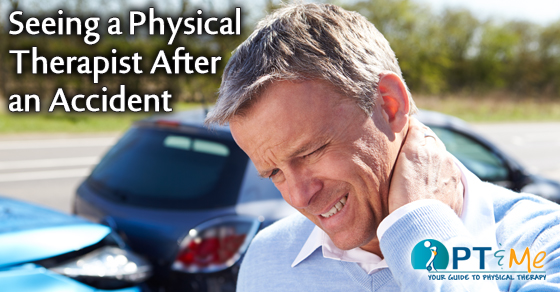
Seeing a Physical Therapist After an Accident

SeeingaPTafterAccident_FBsize

Anyone who has been involved in an accident and is now struggling to cope with a resulting injury should seriously consider visiting a physical therapist. The documented benefits of physical therapy are numerous, and in many cases physical therapists are able to greatly improve their patients’ quality of life. Whether you are mildly hurt or are suffering from a long-term debilitating injury, read on to learn what physical therapy is, which types of accident injuries physical therapists commonly work with, and about the numerous benefits of physical therapy

What is Physical Therapy?

Physical therapy is a type of rehabilitation aimed at bringing injured patients back up to their optimal level of health via various treatments and exercises. Physical therapists create patient specific plans designed to enable the patient to perform their daily tasks at the highest possible level of function. While a physical therapist will set different goals for different patients, common goals of therapy include:

  • Improving physical function and movement
  • Decreasing/managing the patient’s pain
  • Preventing re-injury
  • Increasing the patient’s strength, endurance, range of motion and flexibility

Wondering how physical therapy helps achieve these goals? While different therapists may approach these goals in slightly different ways, physical therapy programs rely mostly on progressive exercises and manual therapy in order to reach a patient’s goals. For example, a therapist will generally start you out with simple stretches and gradually work towards more challenging exercises tailored to suit your injury, limitations, and recovery goals. Additionally, manual therapy, such as soft tissue mobilization and joint mobilization, can help decrease a patient’s pain, reduce swelling, and restore motion.

Accident Injuries that Physical Therapists Commonly Work With

While physical therapists are well equipped to assist patients with minor as well as serious injuries, many people who visit a physical therapist in Houston do so because of a long-term debilitating injury that they suffered as a result of a boat, truck, or car accident. For example, physical therapists commonly work with patients who have been involved in an accident and are suffering from:

  • Back and neck pain
  • Arm and shoulder pain
  • Leg and knee pain
  • Foot and ankle injuries
  • Hand injuries
  • Decreased range of motion

car accident

The Benefits of Physical Therapy

Individuals who are injured in an accident often find that attending physical therapy improves their well-being in a number of different ways. While each case and each patient are different, the benefits commonly associated with physical therapy include:

  • Pain Management: Many people who are injured in an accident attend physical therapy primarily in order to reduce or eliminate the pain caused by whiplash, disc herniation, fractures, and other injuries. The therapeutic exercises and manual therapy techniques utilized by physical therapists are often able to help reduce a patient’s pain and allow them to rely less on pain medication.
  • Can Help Avoid Surgery: In some circumstances physical therapy has been known to help a patient avoid having surgery altogether. This can be beneficial as surgeries sometimes involve a lengthy recovery, not to mention the inherent risk of undergoing the surgery itself.
  • Quickens Recovery: Individuals who attend physical therapy after an accident often recover much faster than they otherwise would have. Additionally, these individuals also tend to ultimately achieve better range of motion and muscle strength than those with comparable injuries who did not attend rehab.
  • Helps Prevent Chronic Pain: People injured in car accidents often suffer from chronic pain and other symptoms long after the accident occurred. Additionally, some car accident injuries, if left untreated, will worsen over time. Fortunately, accident victims who promptly attend physical therapy tend to experience much less chronic pain than they otherwise would.

Of course, if you have been injured in a wreck due to another person’s negligence, you may wish to speak with a car accident lawyer for help. Indeed, an attorney can help advocate on your behalf to ensure you receive the compensation necessary to pay for your recovery.
FCE

Functional Capacity / Work Capacity Evaluation

FCE_WCE_Testing_FBsize

What is FCE / WCE Testing?
A Functional Capacity / Work Capacity Evaluation evaluates an individual’s ability to perform work activities post injury or illness. It documents the patient’s current ability from physical, medical, behavioral and ergonomic perspectives. It is within the scope of practice for occupational and physical therapists to provide such testing.

What to Expect
• FCE / WCE s can be used by physicians to complete work status reports. The FCE / WCE identifies the ability of an individual to safely return to work at full, modified or transitional duty
• The patient’s strength for material handling activities are identified via Department of Labor Standards: ex.) sedentary, light, medium or heavy
• An individual’s tolerance to non material activities such as sitting, walking, bending, etc. are quantified as never, occasional, frequent or constant as per Department of Labor standards
• A FCE / WCE will identify discrepancies between symptoms and objective findings
• FCE / WCEs can identify whether further medical evaluation or intervention is appropriate
• It can determine if there is a need for therapy or change in current therapy or direction
• If the individual is not ready for return to their previous job, it can establish a baseline for a work hardening program

Shoulder Stretch

This information provided by Rebound Physical Therapy, an outpatient physical therapy group located throughout Bend, OR. Rebound’s Bend North location specializes in industrial rehabilitation and More information about their industrial rehab center can be found here.

feet cause pain

Can Your Feet Cause Pain in Your Knee, Hip or Back?

CanYourFeetCausePain_FBsize

Can your feet cause pain in other areas of the body?  Yes it can.  The foot is an arch and arches decrease compressive forces by distributing them across the span of the arch. Engineers use arches in building and bridges to hold up greater weight across longer spans.  The human foot has 3 arches that all work together to distribute the forces our bodies put on it.  This allows us to walk, run and jump.

We start running into problems when the arch is either too flat or too high – causing the forces put through the foot to be abnormally distributed, resulting in strain.

  • Flat feet limit the range of motion of our ankle, causing our hips to rotate inward and move towards the center of our body.
  • High arches do the opposite to our hip joints.
  • These changes cause strain to our ankle, knee and hip joints, and our back.

knee pain

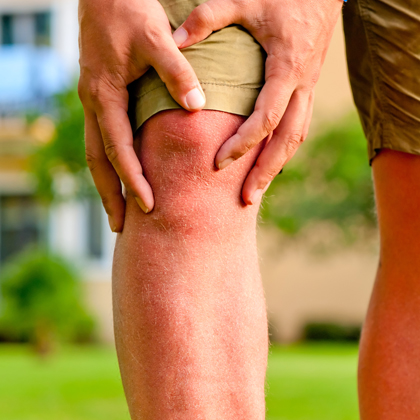
People can be unaware that their feet cause pain throughout the body because they were born with flat feet or high arches and they do not know what “normal” feels like.   As physical therapists we have treated many children who didn’t realize that their feet are not supposed to be sore.  But instead of seeing them for prescribed foot pain, they come for pain in their joints or back.

Orthotics were developed to correct or adapt to changes in the foot.  Orthotics should be fitted by a healthcare professional trained in assessing the foot and gait.  Standing on a pressure plate in the store is not good enough.  Why?  If your foot hurts are you going to stand on it normally?  Probably not.  This results in an abnormal reading.

An orthotic by itself is not the best treatment.   A physical therapist will assess your function, strength, flexibility and range of motion.  Patients will present with other problems as the result of abnormal arches.  Treatment with orthotics combined with strengthening and stretching exercises, balance training, functional training and manual therapy is necessary to restore full function.

PT News

This Month in PT News. Featuring articles from PTandMe partnering clinics!

2. Early Intervention is the Key to Success
Written by Ben Eggleston, PTA at the Center for Physical Rehabilitation – Grand Rapids, MI

The relationship between longevity of symptoms and healing time is of reciprocal proportion? Read more

3. Overtraining Doesn’t Help, It Hurts 
Written by the Therapy Team at Momentum Physical Therapy – San Antonio, TX

Working to achieve a sports or fitness goal can drive many people to overtrain in an effort to get stronger, better, faster. Read more

shoulder surgery

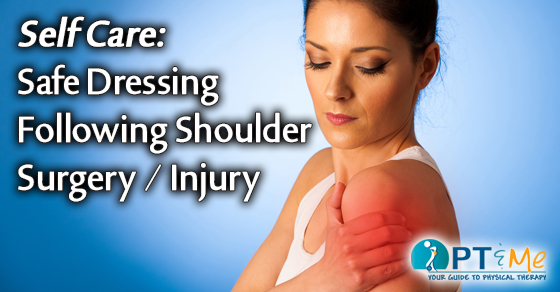
Self Care: Safe Dressing Following Shoulder Surgery / Injury

SafeDressingShoulderSurgery_FBsize

When recovering from shoulder surgery, it can be difficult to dress and undress without assistance. With the help of one of our trusted Certified Hand Therapists (CHT) they have compiled a list of tips to get dressed safely and independently while recovering.  It is highly recommended that you follow the instructions prescribed by your surgeon or attending physician.

DRESSING

Upper Body
• Bend forward at your hips and let your affected arm dangle loosely forward
• Always dress the affected arm through the sleeve of your shirt first
• Proceed to dress the unaffected arm

Lower Body
• One handed techniques to don socks: touch all fingers to your thumb, then slide the sock over your hand. Spread your fingers apart to open the sock and slide it onto the foot

Bra
• Clip the bra from the front and as low as possible to your waist. Guide the bra enclosure towards your back. Slide the strap over the affected arm and then slide

shoulder_3D

GROOMING

• Bend forward at the hips and dangle arm in order to clean and apply deodorant

These post shoulder surgery dressing tips were provided by The Hale Hand Center, with locations in Melbourne and Rockledge, FL. The Hale Hand Center offers both physical therapy and certified hand therapy services, as well as provides custom splinting. More information about The Hale Hand Center can be found on their website here.

PT News

This Month in PT News. Featuring articles from PTandMe partnering clinics!

1. Simple Steps to Starting a Weight-Training Program
Written by the Therapy Team at The Jackson Clinics – Middleburg, VA

One of the challenges of weight training is determining how much effort to put in for the most benefits. Read more

2. Sit Up Straight! Avoid Sitting with Bad Posture
Written by Megan Russo, PTA at The Center for Physical Rehabilitation – CPR – Grand Rapids, MI

Do you ever find yourself sitting in a slumped position while at work or driving in the car? Read more

3. Minimizing the Risk of Ski Injury
Written by the Therapy Team at The Jackson Clinics – Middleburg, VA

If winter weather has you prepared to hit the slopes, be sure to take the necessary precautions to keep yourself injury-free this season. Read more

Frisco Physical Therapy

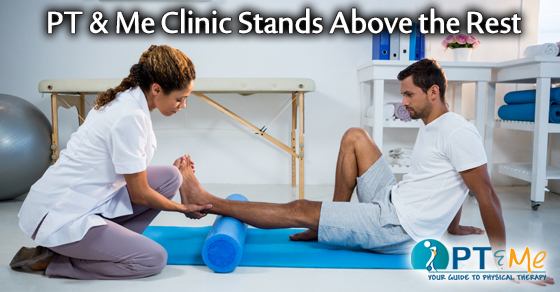
PT & Me Clinic Stands Above the Rest

ClinicStandsAboveRest_FBsize

At PT & Me we love it when our partnering physical therapy clinics shine. We are so excited that we couldn’t help ourselves, we just had to highlight one of our award winning clinics!

FriscoPTLogo_forBlog

FRISCO PHYSICAL THERAPY – Physical Therapy Clinic – Frisco, TX
Frisco Physical Therapy was voted the BEST PHYSICAL THERAPY CLINIC in Frisco, Texas by over 32,000 readers of the Frisco Enterprise Newspaper. Clinic Director Colby Pigg, MPT graduated with honors in 1999 and has more than 18 years of experience in physical therapy. Perhaps one of the reasons Frisco Physical Therapy stands out among the crowd is the variety of services it offers to its patients. In addition to general orthopedics the licensed physical therapists in Frisco offer:

• Balance and Fall Prevention Programs
• Cancer Related Fatigue Program
• TPI Certified Golf Fitness Intructor
• Primal 7 and TRX Suspension Training
• Game-Ready Vasopneumatic Cold Compression

We are super excited for Colby and the rehab team at Frisco Physical Therapy for the honor they received by their community. We are certainly looking forward to all of the great things to come. More information about Frisco PT can be found at: www.friscopt.com

work related stress

Work Related Stress & Increased Risk Zones: Part 2 of 2

THE SOLUTIONS

• Alternate Heavy Tasks with Light Tasks

• Develop Lifting, Carrying and Push / Pull Guidelines within limits and set up Lift Teams if necessary

• Provide variety in jobs to eliminate or reduce repetition (i.e., overuse of the same muscle groups)

• Adjust work schedules, work pace, or work practices

• Provide recovery time (e.g., short rest breaks)

• Modify work practices so that workers perform work within their power zone (i.e., above the knees, below the shoulders, and close to the body)

• Modify work environment to minimize work related stress (e.g., seating, lighting, workstation, process flow, angle of access to loads)

• Rotate workers through jobs that use different muscles, body parts, or postures (Administrative improvements, such as job rotation, can help reduce workers’ exposures to risk factors by limiting the amount of time workers spend on “problem jobs.”)

• Provide hands-on practice when new tools, equipment, or procedures are introduced to the workforce (review counter balancing of tools and take advantage of gravity flow in product movement)

• Use several types of visual aids (e.g., pictures, charts, videos of actual tasks in your workplace and the “right way to perform tasks”)

• Hold small-group discussions and problem-solving sessions

• Give workers ample opportunity for questions
• Industrial Athlete directed Exercises and Stretches (make them specific to those areas under most stress perform at beginning of day, when leaving for lunch and end of day)

• Ensure proper protective equipment (PPE) is available and used properly

• Research ergonomic assistive aids to accommodate heavier load lifting and movement

• Review packaging of items and research if handles or alternative coupling can be incorporated

• Review exposure to heat and cold extremes and take necessary precautions

• Minimize exposure to vibration (this can be done through tool selection, gloves, or limiting your time of exposure)

• Posture (change or modify your body position periodically throughout the day to relieve stress)

Part one of our Work Related Stress & Increased Risk Zones can be found here

Sources:
1) American Industrial Hygiene Association (AIHA)
2) Human Factors and Ergonomics Society (HFES)
3) National Institute for Occupational Safety & Health (NIOSH)

Exercising Do's and Don'ts

Exercising Do’s and Don’ts

In the last post of our 5 part series on exercising do’s and don’ts, we examine the proper ways to exercise at the gym from start to finish. If you have any sudden significant increase in pain, swelling, or discoloration while performing or following exercise, discontinue immediately and contact your primary care provider.

UPRIGHT ROWS

START POSITION
• Standing with feet shoulder width apart
• Palms facing back when holding onto barbell.
• Hands spread apart a bit wider than shoulder width.
• Maintain proper posture throughout exercise.

ENDING POSITION
• Barbell lifted up to chest height with elbows flexed pointing outward.
• Forearm should be aligned with upper arm horizontally.

DON’T
• Swing body back and forth.
• Lift feet off ground.
• Allow elbows to point upward.
• Raise past shoulder height.

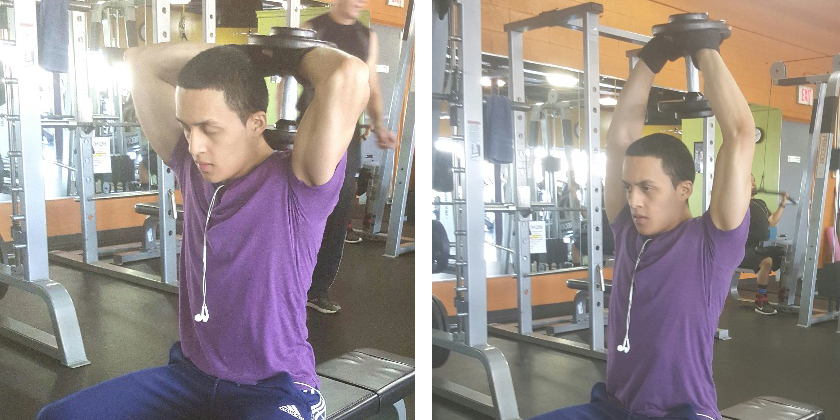
OVERHEAD TRICEP EXTENSION

START POSITION
• Seated with feet flat on the ground.
• Hold dumbbell vertically behind head with shoulders slightly out and 90 degree elbow flexion.
• Maintain head upright throughout exercise.

ENDING POSITION
• Dumbbell held above and slightly behind head.
• Elbows fully extended.

DON’T
• Lift feet off ground.
• Lift up from bench.
• Swing body back and forth.
• Let your head lean forward.
• Bring your elbows inwards towards the ears.

This information was written by STAR Therapy Services, an outpatient physical therapy group with six locations in Houston, Texas. At Star Houston Therapy Services, their number one priority is the patient. They strive to provide individualized treatment with hands-on, compassionate care. They perform comprehensive evaluations and encourage patient input for treatment planning and goal setting. For more information click here.

View the complete Exercising Do’s and Don’ts series below:


exercising do's and dont's

PT News

This Month in PT News. Featuring articles from PTandMe partnering clinics!

2. Winter Activities Foster Year-Round Fitness
Written by the Therapy Team at the Jackson Clinics – Middleburg, VA

The urge to “hibernate” in winter is strong, even for us humans. Read more

3. Top 5 New Year’s Resolutions 
Written by Therapy Team at Momentum Physical Therapy – San Antonio, TX

2017 is almost here, and it’s the perfect time for assessing the year behind and looking forward to the changes we want to make in 2017. Read more