Category Archives: Sports and Fitness

hockey upper body images

Most Common Hockey Upper Body Injuries

Hockey season is getting ready to start and the sport of hockey can be quite dangerous. It is important for players to know how to prevent and treat injuries that occur during games. Unfortunately, these injuries leave us with some questions with descriptions such as “lower-body” and “upper-body” injuries. These injuries are purposely vague to leave some question as to the exact nature of the injury.

The accompanying infographic gives players an assist by listing off some common “upper body injuries.” It features tips and tricks to remain healthy both on and off the ice. The following should ease the minds of players who want to play the game as safely as they possibly can.

Click arrows in the bottom right corner to expand full screen

Upper Body Injuries by Pro Stock Hockey, an online resource for authentic pro stock hockey equipment (https://www.prostockhockey.com/)
applied functional science AFS

What is Applied Functional Science (AFS)?

The unique and wholistic practice of Applied Functional Science (AFS) requires extensive education and training beyond the traditional education received by rehabilitation clinicians.

AFS vs. Traditional Therapy

Traditional Therapy
Local Joint Focused

TREATMENTS INCLUDE:
• Focused on correcting the injured joint or muscle
• Therapeutic exercise focused on the muscles around the affected joint
• Manual treatments to improve movement in the affected joint
• Successful treatment evaluated by reduction of pain and improved joint strength

Functional Approach
Whole Body Focused

TREATMENTS INCLUDE:
• Source of pain and cause of pain are rarely the same
• Focused on correcting the underlying cause of the injured joint or muscle
• Therapeutic exercise individual developed based on patient-specific mechanics and affected functional tasks
• Manual treatments utilized to help facilitate normal functional mechanics
• Successful treatment evaluated by restoring pain free function lost due to injury

Body, Mind, and Spirit Do I need a Specialist?
Applied Functional Science (AFS) is a unique approach that uses the collaboration of the physical, biological and behavioral science used to treat patients as a whole. AFS uses biomechanics affected by the everyday forces of life to identify and treat the underlying cause of an injury.

Physical: Functional mechanics of the joints and muscles as they respond to everyday activities

Biological:
Functional application of neuromuscular properties in everyday activities

Behavioral: Why are you here? Incorporating personal driving factors and goals for betterment in your individualized treatment plan

This information was written by Plymouth Physical Therapy Specialists, an outpatient physical therapy group with 17 locations in Michigan. Plymouth Physical Therapy Specialists was established in 1994 by Jeff Sirabian PT, MHS, OCS, Cert. MDT, CSCS. With over 20 years of experience in orthopedics and sports medicine, Jeff has established a state of the art physical therapy practice with 17 locations to conveniently serve you. For more information click here.

strength training

Age Appropriate Strength and Performance Training

In recent years there has been discussion on training for our adolescent athletes and what is appropriate, whether it be how much, how soon, how specialized? Here are some answers to common strength training questions we hear:

When Can My Athlete Start Lifting Weights?
The NSCA’s position statement states pre-adolescence (7-8 y/o) is a safe age to begin resistance training with graduated modalities and loads. Basically, if the athlete is ready for organized sports, they are ready for some kind of resistance training.

Why Can’t I Just Buy a Blu-Ray Workout for My Adolescent to Train By?
No athlete is the same, and doing a cookie-cutter workout without properly screening for potential injury risk would be negligent. The risk is too great to potentially hurt an athlete by trying to perform exercises their bodies cannot physically handle.

What Should I Look for with Overtraining?
Ongoing decreased performance on field. Often injured or sick. Disengagement from sport and school. Mood swings. Physically tired all the time. Sleep issues. Overreactive emotional response to failure. Depression. Nutrition issues.

A strength training and conditioning specialist can screen each athlete’s movements in order to determine a baseline level of movement and strength. They then develop exercises and drills that will enhance the good movement qualities while addressing any bad motor patterns that may exist. Main components that are often noticed by trained professionals are mobility(flexibility) and stability (strength) issues.

For more on strength & conditioning or to inquire about training with the Center for Physical Rehabilitation at the Academy for Sports & Wellness, please visit: www.pt-cpr.com/academy

throwing injuries PTandMe

Guidelines to Prevent Throwing Injuries

In this monthly series, we examine the proper ways to exercise and prevent throwing injuries in baseball. If you have any sudden significant increase in pain, swelling, or discoloration while performing or following exercise, discontinue immediately and contact your primary care provider.


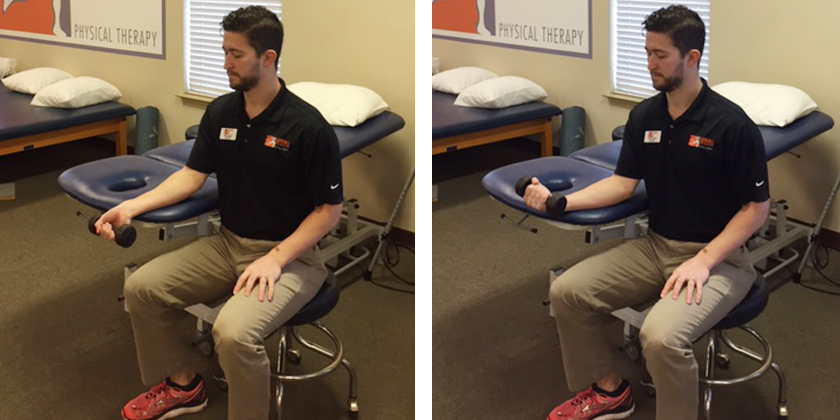
WRIST EXTENSION
Start with the arm supported on a table and your wrist facing toward the ground. Hold the weight off the edge of the table and bring the back of your hand toward the ceiling.


WRIST FLEXION
Start with the arm supported on a table and your wrist facing toward the ceiling. Hold the weight off the edge of the table and bring your palm toward the ceiling.

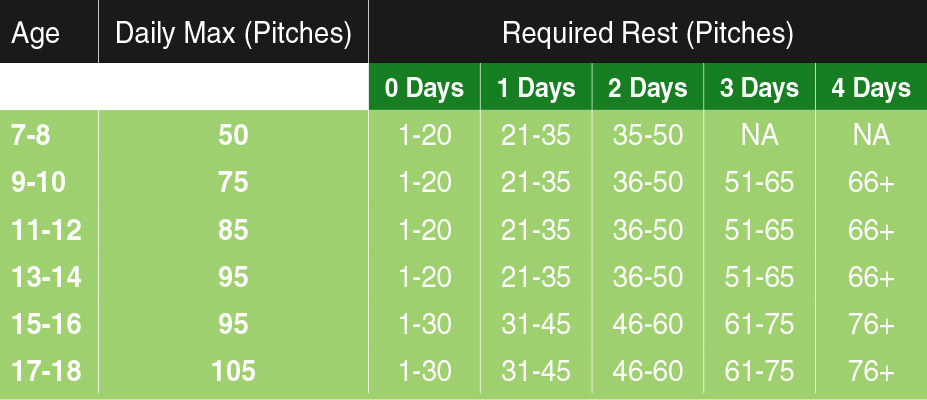
ASMI GUIDELINES TO HELP PROTECT PITCHERS FROM SHOULDER & ELBOW THROWING INJURIES:

Don’t throw too much:
Daily, weekly and annual overuse is the greatest risk to a pitcher’s arm health. Numerous studies have shown that pitchers who throw more pitches per game and those who do not adequately rest between appearances are at an elevated risk of injury. While medical research does not identify optimal pitch counts, pitch count programs have been shown to reduce the risk of shoulder and elbow injury in Little League Baseball by as much as 50% (Little League, 2011). The most important thing is to set limits for a pitcher and stick with them throughout the season.

Don’t pitch through arm fatigue:
Individuals are 36 times more likely to develop shoulder and elbow injuries when routinely pitching with arm fatigue.

Don’t pitch more than 100 innings per year:
If an athlete throws over 100 innings they are 3.5 times more likely to be injured than those who did not exceed 100 innings pitched.

Don’t throw more than 8 months per year:
Athletes who throw > 8 months per year are 5 times as likely to suffer an injury requiring surgery of the elbow or shoulder. Pitchers should refrain from throwing for at least 2-3 months per year and avoid competitive pitching for at least 4 months per year.

Don’t pitch on consecutive days:
Pitchers who pitch on consecutive days have more than 2.5 times greater risk of experiencing arm pain.

Don’t play catcher following pitching:
If the player catches following pitching they are 2.7 times more likely to suffer a major arm injury.

Don’t play on multiple teams at the same time:
There is increased risk of injury due to the difficulty in monitoring pitch limits and rest time. If the player is on multiple teams, make meticulous efforts to keep track of the amount of pitches thrown to allow adequate rest.

Don’t forget the shoulder in strength and conditioning programs:
Numerous studies have shown that deficits in upper extremity strength and mobility are strongly correlated to serious arm injuries. Shoulder and forearm strengthening exercises can build strength, endurance and motor control which can prevent injury.

Be cautious with throwing curve balls and sliders:
While existing research has not consistently shown a strong connection between the curveball and injuries, Yang et al., found that amateur pitchers who threw curveballs were 1.6 times more likely to experience arm pain while pitching and Lyman et al, found that youth pitchers who throw sliders are 86% more likely to experience elbow pain.

Be cautious with the radar gun:
Radar guns do not directly cause harm to a pitcher, however, the gun may cause the pitcher to over throw beyond their normal comfort level. This could possibly create arm strain.

Following these guidelines may keep the throwing athlete safe from the debilitating shoulder and elbow throwing injuries seen on a regular basis in physical therapy clinics.

Pitching Guidelines Chart

This information was written by Advance Rehabilitation Physical Therapy, an outpatient physical therapy group with 24 locations in Georgia and Florida. Advance Rehabilitation is a physical therapy practice that focuses on providing the highest quality rehabilitation services. They specialize in physical therapy, sports medicine, industrial rehabilitation and athletic training. Their staff includes highly-trained professionals that serve as a bridge between injury and recovery to help patients get back to pre-injury status as quickly as possible. For more information click here.

See the entire Guidelines to Prevent Throwing Injuries series here:

   Prevent Throwing Injuries

   prevent throwing injuries

throwing injuries PTandMe

concussion physical therapy

What We Know About Concussions is Changing

As concussion research continues we’ve learned that a few of the things we have held as truth isn’t entirely accurate. Including the fact that a person with a concussion shouldn’t be allowed to sleep for long periods of time. So let’s take a look at how concussion treatment is evolving from what was… to what it is now.

Old School vs. New School Concussion Treatment
The first step to treating a concussion is to seek medical help.  Your health care provider is knowledgeable and can help you or your child return to work or sport safely.

Old School Concussion Rehabilitation

  • It’s just a “Mild, Grade-1” concussion.
  • They didn’t have loss of consciousness, it’s not a concussion.
  • Should we have a CT scan or MRI?
  • An athlete needs to be hit on the head to sustain a concussion
  • Injury to the brain only occurs at the initial impact of the concussion.
  • Should I wake them up every couple of hours?
  • Male athletes have a higher chance of sustaining a concussion than females.
  • He’s young, he’ll bounce back quick.
  • Protective equipment will prevent concussion if the newest modelis used.

New School Concussion Rehabilitation

  • Medical professionals with “up-to-date” education on concussions will not use the historic grading scale. The grading scale has been abandoned in favor
    of a symptom-based, multi-faceted approach to concussion management that emphasizes the use of objective assessment tools aimed at capturing the spectrum of clinical signs and symptoms,cognitive dysfunction and physical deficits, and a symptom-limited, graduated exercise protocol leading to a return to play.
  • Approximately 90% of concussions are NOT accompanied with loss of consciousness.
  • Conventional CT or MRI scans will not diagnose a concussion and are not needed or recommended for the vast majority of sport related concussions. While these types of neuroimaging are crucial in the diagnosis of intercranial hemorrhaging and detecting brain lesions, approximately 78% of concussions will have normal scans.
  • Concussions can occur with any movement or jostling of the head as in whiplash injuries or rotational force, causing injury to the brain.
  • Traumatic brain injury is an evolving process at the microscopic level of thebrain. Chemical and metabolic changes occur for days, weeks to months after impact. That is why it is important to prevent any additional concussions andavoid a second impact syndrome during this time period.
  • Encourage plenty of rest with uninterrupted sleep. Since fatigue and drowsiness are common symptoms associated with concussions, sufficient sleep will allow the brain to heal and is necessary for recovery.
  • Studies show a higher probability in female vs. male athletes. This is likely due to their genetic make up and the fact that women are more likely to self report symptoms vs their male counterparts.
  • Due to their continued brain development at these ages, children and adolescents actually recover more slowly.
  • Evidence shows that protective equipment such as helmets, mouth guards and other protective devices may lower risk but no equipment eliminates the risk of concussion

This article about concussions was provided by PTandMe physical therapy partner: The Center for Physical Rehabilitation. More information about the Center and their locations throughout Grand Rapids, MI can be found on their website at www.pt-cpr.com

Additional articles from PTandMe about concussions can be found here:

concussion baseline testing   

concussion treatment   

prevent throwing injuries

Guidelines to Prevent Throwing Injuries

throwing injuires

In this monthly series about how to prevent throwing injuries, we examine the proper ways to exercise and prevent throwing injuries in baseball. If you have any sudden significant increase in pain, swelling, or discoloration while performing or following exercise, discontinue immediately and contact your primary care provider.


PRONE ROW
Lay on your stomach with your arm hanging off the edge toward the ground. Squeeze your shoulder blade and bring your elbow toward the ceiling while keeping your forearm perpendicular to the ground.


PRONE ROW WITH EXTERNAL ROTATION
Lay on your stomach with your arm hanging off the edge toward the ground. Turn your wrist so your palm is toward your feet. Squeeze your shoulder blade and bring your elbow toward the ceiling while keeping your forearm perpendicular to the ground. Once your arm is parallel with the ground rotate the back of your hand toward the ceiling while keeping the elbow bent.


PRONE T (HORIZONTAL ABDUCTION)
Lay on your stomach with your arm hanging off the edge toward the ground. Lift your arm straight out to your side and squeeze your shoulder blade with the palm continuing to face toward the ground.


PRONE Y (SCAPTION)
Lay on your stomach with your arm hanging off the edge toward the ground. Lift your arm at a 45 degree angle over your head with your thumb facing toward the ceiling. Squeeze your shoulder blade down and toward your spine.

This information was written by Advance Rehabilitation Physical Therapy, an outpatient physical therapy group with 24 locations in Georgia and Florida. Advance Rehabilitation is a physical therapy practice that focuses on providing the highest quality rehabilitation services. They specialize in physical therapy, sports medicine, industrial rehabilitation and athletic training. Their staff includes highly-trained professionals that serve as a bridge between injury and recovery to help patients get back to pre-injury status as quickly as possible. For more information click here.

See the entire Guidelines to Prevent Throwing Injuries series here:

   Prevent Throwing Injuries

   prevent throwing injuries

throwing injuries PTandMe

crossfit

The Skinny on CrossFit

If you find going to a new gym nerve-wracking, joining a CrossFit gym might be downright terrifying. Walking into the warehouse-like gym and seeing people flipping tires while loud music pumps out of the stereo system and primal grunts and screams reverberate off the walls can be intimidating. Just take a deep breath, slip on your sneakers, grab your water bottle, and get ready to change your life completely.

Created by Gary Glassman, CrossFit is a high-intensity strength and conditioning program. It uses functional movements and varied workouts to help people lose weight, build muscle, and live healthier lives. While every CrossFit trainer is certified and able to adapt workouts to your needs, it is important that you consult your physician about any pre-existing conditions before beginning a new workout regime.

If you are nervous about going to your first CrossFit class, you can rest easy knowing it probably will not be very intense. Before you can participate in the daily workouts, you need to complete the Foundation Training. This is where you will learn the proper form and technique for the nine fundamental movements. Once you feel comfortable with these movements you can join the masses.

You first week at a Crossfit gym (typically called a “Box”) will be like your first week at a new school. There will be new friends to make, lots of questions to ask, and new skills to learn. You won’t be doing advanced moves in the beginning but you will still be working hard and will find yourself sore and tired by the end of the week.

Each class consists of a 15-minute warm-up, followed by 15 minutes of skill work. This is a great opportunity to improve on a move you are struggling with, or tackle an exercise you are nervous about in the Workout of the Day (WOD). After the skill work segment, you will move on to the WOD. The amount of time to complete a workout varies depending on the objective. Sometimes you will be racing against the clock, while other times you will be aiming for a timed personal best. A cool-down will round out your workout.

10 Components of CrossFit

Doing CrossFit is a full mind and body experience. There are 10 specific elements of physical fitness you will practice during each workout. Your overall fitness level will be determined based on your competency in all these domains.

  • Cardiovascular and Respiratory
  • Stamina
  • Strength
  • Flexibility
  • Power
  • Speed
  • Coordination
  • Agility
  • Balance
  •  Accuracy


Building Blocks of CrossFit
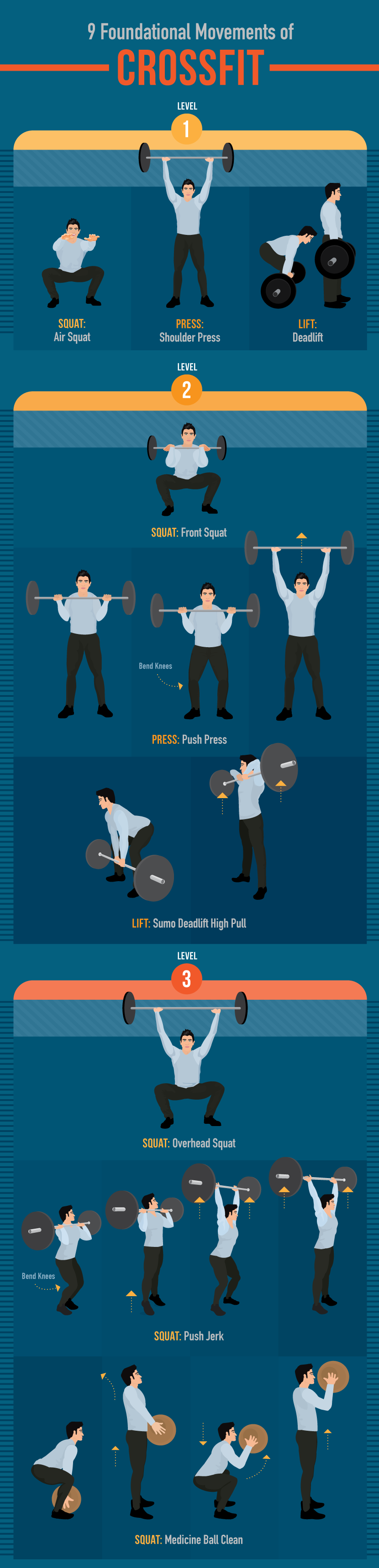
There are nine foundational movements every new CrossFit member must understand and master to ensure they get the most out of their workout and avoid injury. The three basic movements are: Squats, Presses, and Lifts. These movements increase in difficulty from Level 1 to Level 3. Once an athlete is comfortable with the form and technique associated with an exercise, they can progress to the next level.

Squats
The first movement you will learn when you join a CrossFit gym is an air squat. This basic movement is the foundation for the next two levels of squats. Squats are excellent lower-body exercises that engage your hamstrings, glutes, and quadriceps. As you progress through the three levels of squats, you will also begin to engage your upper body and core, making the squat a full-body workout.

Level 1 – Air Squat:

  • Stand with your knees shoulder-width apart and your toes angled out at approximately 10 degrees.
  • Keep your back, shoulders, and core tight.
  • Extend your arms out in front of you.
  • Press your hamstrings back and down.
  • As you lower yourself to the ground, press your knees out.
  • At the lowest point of the movement, your hips should be lower than the crease in your knees.
  • Press up through your hamstrings and glutes to return to the starting position.
  • Rest your hands at your side.

Level 2 – Front Squat:

  • Begin in the same stance as for an air squat.
  • Hold a bar in front rack position. (Rack position: Rest the bar on your shoulders across your chest. Your elbows should be up and your triceps parallel to the floor. Loosely grip the bar at slightly wider than shoulder width, with palms facing the ceiling.)
  • Once you are comfortable holding the bar, complete the same downward movement executed in an air squat.

Level 3 – Overhead Squat:

  • Begin in the same stance as for an air squat.
  • Hold a bar over your head with your palms facing forward.
  • Elbows should be locked and your wrist and forearms aligned (no bend or flexion).
  • Complete the same downward movement executed in an air squat.
  • Keep your chest up and eyes forward during this movement. If you feel like you are leaning too far forward you might be compromising the exercise. Reduce your weight and continue.

Presses
Presses are fantastic for targeting and toning your upper body. They will engage your arms, shoulders, back, and, depending on what level you are on, your legs. As with squats, there are three levels of press.

Level 1 – Shoulder Press:

  • Stand with your feet hip-width apart and eyes looking forward.
  • Rest the bar across the front of your shoulders, gripping it slightly wider than shoulder width.
  • Use a hook grip to secure your hands around the bar. (Hook Grip: Cross your middle finger and index finger over your thumb.)
  • Press the bar upwards.
  • As the bar moves straight up, only your head should move back to allow the bar to travel in front of your face.
  • At the top of the movement your arms should be fully extended above your head with elbows locked.
  • Follow the same line to lower the bar back to the starting position.

Level 2 – Push Press:

  • Hold the bar in the same position as for a shoulder press.
  • Keep your torso upright and your core engaged, and slightly lower your body by bending your knees.
  • Explosively straighten your knees and use the momentum in the movement to press the bar above your head.
  • Arms should be fully extended with locked elbows at the top of the movement.
  • Lower the bar back to starting position.

Level 3 – Push Jerk:

  • Hold the bar in the same position as for a shoulder press.
  • Lower your body into a quarter-squat position.
  • Perform a vertical jump.
  • When you are in the air, press the bar above your head.
  • Land with your feet in the exact same spot they took off from and with a slight bend in your knees.
  • Finish the movement by fully extending your hips and knees.
  • Return the bar to your shoulders.

Lifts
The three progressive lifts in CrossFit engage your entire body. These full body movements allow you to make the most out of any workout. If you are short on time, incorporate these exercises into your routine to torch calories and burn muscle.

Level 1 – Deadlift:

  • Place the bar in front of you and stand with your feet hip-width apart.
  • Bend forward at the hips, bending your knees slightly, and grip the bar at a point that is wider than hip-width.
  • The bar should be in contact with your shins and your shoulders should be slightly ahead of it.
  • Keep a flat back as you lower your glutes and pull up on the bar (arms should not bend).
  • Straighten your back and legs while lifting the bar in a vertical line up your body.
  • When the bar passes your knees, fully extend your hips forward.

Level 2 – Sumo Deadlift High Pull:

  • Use a wide stance for this movement.
  • With your hands narrowly apart (about two fist-widths), grip the barbell in front of you with your palms facing down.
  • Keep your arms straight and chest up while you slightly bend your knees into a quarter-squat.
  • Explosively stand up and shrug your shoulders, pulling the bar up in a vertical line.
  • By the time your hips are fully extended, your elbows should be above the bar pointing up and your hands should be aligned with your shoulders.
  • Slowly lower the bar back to the ground by reversing this movement to complete the repetition.

Level 3 – Medicine Ball Clean:

  • Swap out the barbell for a medicine ball.
  • Squat down over the ball.
  • Keep your chest up and gaze ahead.
  • Keep your arms straight and grab the ball on opposite sides.
  • Explode up, shrug your shoulders, and slip your body under the ball so that it lands in front of your face.
  • Catch the ball at the bottom of a front squat with your hips below your knee joints.
  • Complete the movement by standing up with your arms remaining bent, and the ball in front of your face.

WOD are you Talking About?
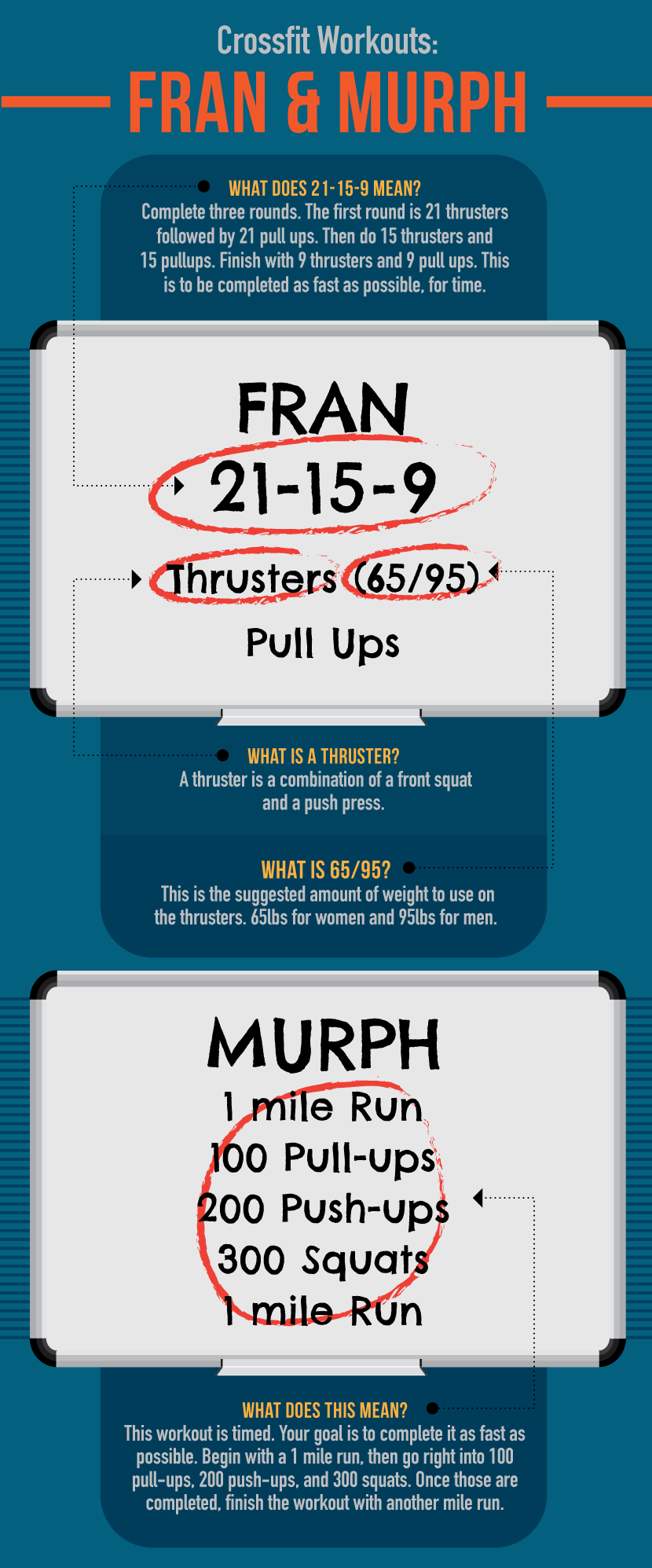
It’s no secret that CrossFit has a lingo of its own. If you’ve ever heard someone talking about CrossFit, you might wonder what language they are speaking and why they hate their friends Josh and Nancy so much. While they might be talking about a person, it is more likely your CrossFit friends are discussing a tough workout they just did. Each WOD is given a name. WODs are usually named after women (in the same way storms are, because they are so intense they leave you feeling like you were hit by a hurricane) or after fallen war heroes. Here are two notorious WODs that people love to trash.

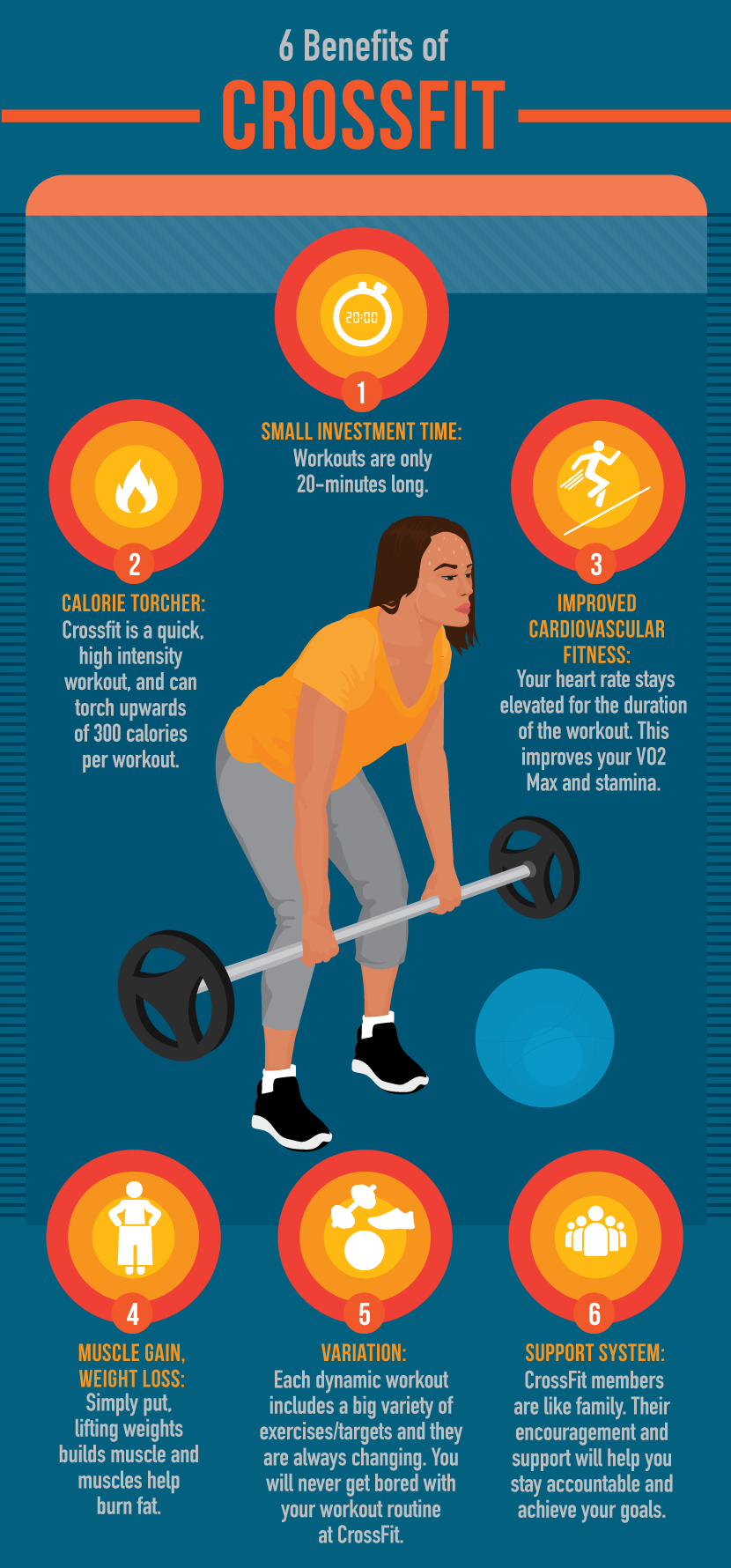
Six Benefits of CrossFit
CrossFit is a tough workout, you can’t deny that. But, if you are willing to take a shot and get your sweat on, you will reap the rewards. Here are just a few of the many benefits CrossFit will have on your health and life.
The best thing to do if you are considering joining a CrossFit gym is to stop by and check one out. They have certified coaches on site who will be more than willing to answer your questions and put your fears to rest. Who knows, you could be the next breakout star at the CrossFit games!
Guidelines to Prevent Throwing Injuries

GuidelinesPreventThrowingInjuries#3_FBsize

In this third intallment of our series to prevent throwing injuries, we examine the proper ways to exercise and prevent throwing injuries in baseball. If you have any sudden significant increase in pain, swelling, or discoloration while performing or following exercise, discontinue immediately and contact your primary care provider.


INTERNAL ROTATION WITH SHOULDER AT 90 DEGREES OF ABDUCTION
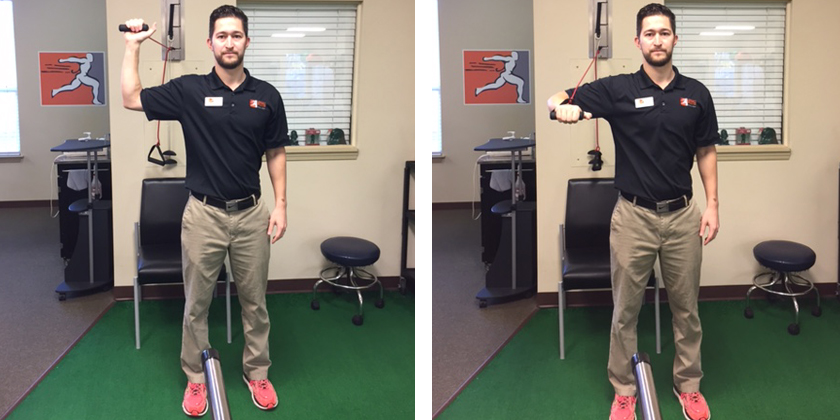
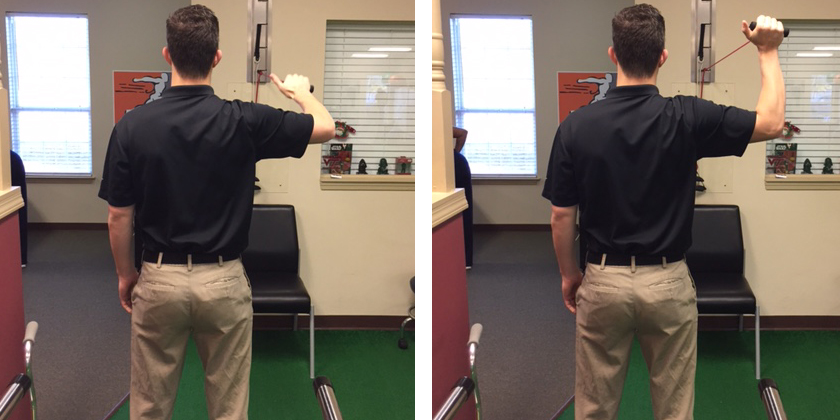
Attach band high up on a doorway and face away from door. Hold band and move your arm out sideways away from your body until your arm is parallel with the ground. Bend your elbow to 90 degrees and point your fist toward the ceiling. Rotate from your shoulder bringing your hand forward while keeping your arm parallel to the floor and your elbow bent to 90 degrees.


EXTERNAL ROTATION WITH SHOULDER AT 90 DEGREES OF ABDUCTION
Attach band high on a doorway and face toward the door. Hold band and move your arm out sideways away from your body until your arm is parallel with the ground. Bend your elbow to 90 degrees and point your fist toward the door. Rotate from your shoulder bringing your hand away from the door while keeping your arm parallel to the floor and your elbow bent to 90 degrees.


SHOULDER INTERNAL ROTATION AT SIDE
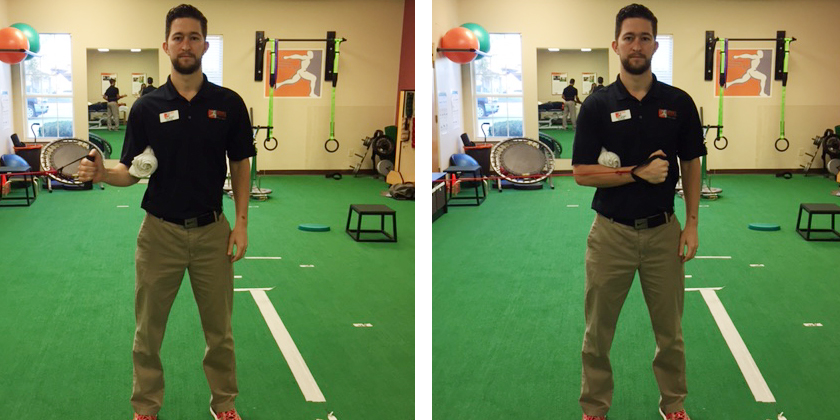
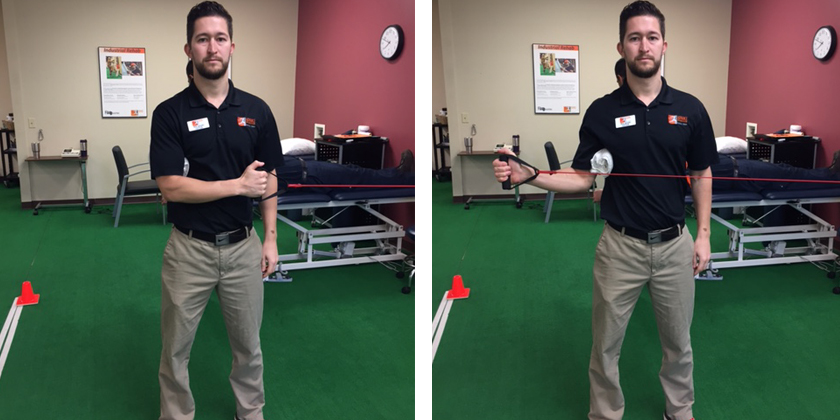
Attach band to the doorway at chest height. Stand perpendicular to the doorway with the arm you are exercising closest to the door. Keep your arm at your side with a towel roll under the arm and bend the elbow to 90 degrees. Bring your hand toward your stomach while keeping the elbow bent to 90 degrees.


SHOULDER EXTERNAL ROTATION AT SIDE
Attach band to the doorway at chest height. Stand perpendicular to the doorway with the arm you are exercising furthest from the door. Keep your arm at your side with a towel roll under the arm and bend the elbow to 90 degrees. Bring your hand away from your stomach while keeping the elbow bent to 90 degrees.

This information was written by Advance Rehabilitation Physical Therapy, an outpatient physical therapy group with 24 locations in Georgia and Florida. Advance Rehabilitation is a physical therapy practice that focuses on providing the highest quality rehabilitation services. We specialize in physical therapy, sports medicine, industrial rehabilitation and athletic training. Our staff includes highly-trained professionals that serve as a bridge between injury and recovery to help patients get back to pre-injury status as quickly as possible. For more information click here.

See the entire Guidelines to Prevent Throwing Injuries series here:

   Prevent Throwing Injuries

   prevent throwing injuries

throwing injuries PTandMe

soccer injury

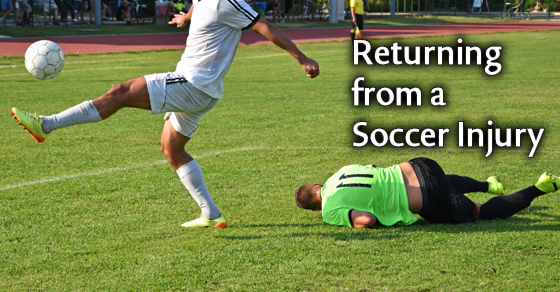
Returning from a Soccer Injury

Returning from Soccer Inury_FBsize

Soccer is the most played sport in the world and is the number one sport in many countries. It is a great cardiovascular workout that combines aerobic and anaerobic movements. However, due to the sudden changes in pace and the speed at which the game is played there is a high chance of a soccer injury.

Sports injury expert Dr. David Geier reveals that that the six most common soccer injuries are ankle sprains, joint fractures, anterior cruciate ligament (ACL) tear, meniscus tear, adductor strain, and hamstring strains. These injuries are due to the amount of stress a soccer player will put on their leg joints. The good news is that through physical therapy these injuries can be recovered from.

Ankle Sprains
The ankle sprain is the most common and least serious soccer injury. The most common recovery method is to put ice on the ankle to stop the swelling, strap it, and lightly exercise it through physical therapy. One effective motion exercise is to sit on a chair with the foot flat on the floor and gently move the knee from side-to-side to stop it becoming stiff. A player should be out for a maximum of six weeks.

ACL
An ACL soccer injury can leave a player out of the game for much longer. For example, an ACL tear may require surgery (making a new ligament) in order to return to the pitch. While surgery may be required, physical therapy is definitely needed to help rebuild knee strength. The exercises will include mobility and strength exercises such as knee flexion and extension, heel slides, and isometric quadriceps exercises. As the knee joint gets stronger, plyometric drills will be introduced to the therapy to see whether the knee is strong enough to play competitive sport. These exercises may include resistance band jumps, hopping exercises and box jumps.

soccer_injury

Hamstring Strains
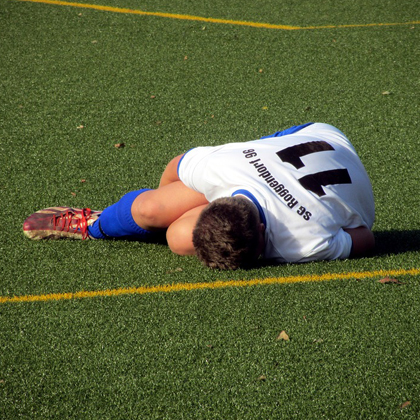
After knee and ankle injuries the next most common injury are hamstring strains. These are often caused through a combination of sudden explosive moments and overuse. We have all seen a soccer, football, or basketball player burst forward only to suddenly stop and crumple to the ground. That is nearly always a hamstring injury. Depending on which grade of hamstring injury the player has will change the therapy needed. If it is a grade one injury then as the muscle slowly heals the player will use ice alongside resting. Function training will also be required to regain strength and flexibility. A grade two or three injury may require surgery.

Career Threatening Injuries
A career threatening injury is the biggest risk of playing soccer. However, there is hope for injured and senior soccer players. Walking Soccer, which was developed in 2011 in England, according to British newspaper The Telegraph, allows those with mobility injuries to keep playing. As the name suggests running is outlawed, which in turns takes much of the risk and pressure off of the leg joints that can be easily injured.

Soccer injuries can be serious and more often that not require physical therapy to recover from. Even if you have suffered a serious injury there is still hope through new sports such as Walking Soccer.

Prevent Throwing Injuries

Guidelines to Prevent Throwing Injuries

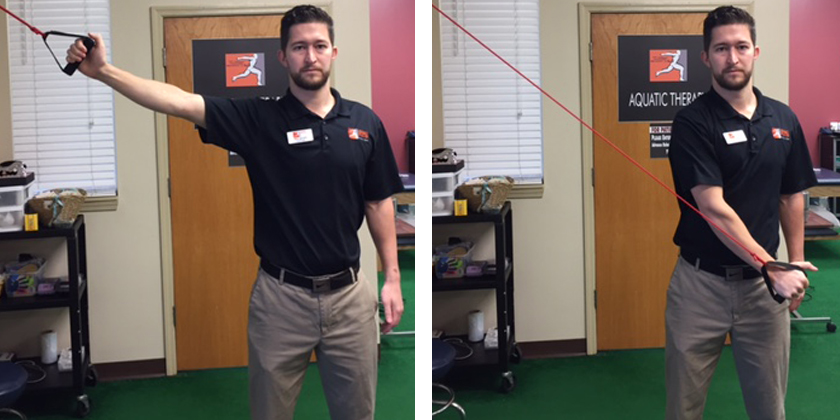
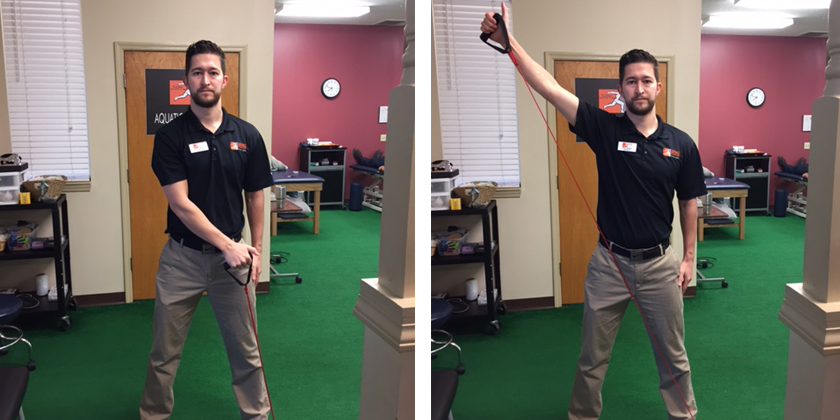
In our second installment of “Guidelines to Prevent Throwing Injuries” we examine the proper ways to exercise and prevent throwing injuries in baseball. If you have any sudden significant increase in pain, swelling, or discoloration while performing or following exercise, discontinue immediately and contact your primary care provider.


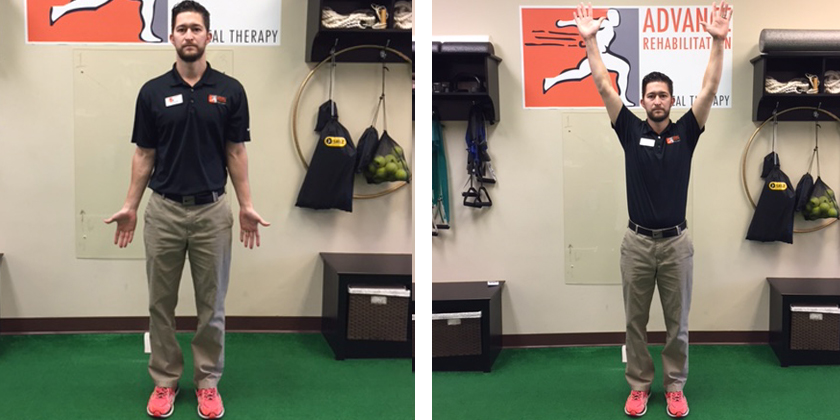
SHOULDER ABDUCTION
Begin with your arms at your side with your palms facing forward. Raise your arm straight out to the side until they are straight overhead.


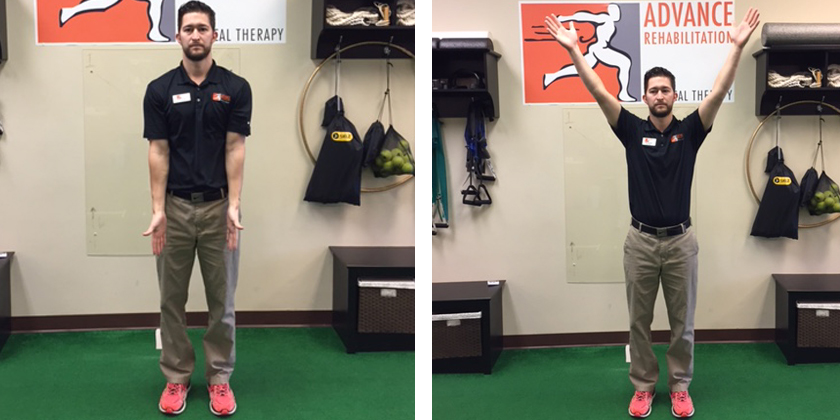
SHOULDER SCAPTION
Begin with your arms at your side. Raise your arms at a 45 degree angle creating a V shape with your arms until they are overhead.


D2 EXTENSION
Secure band to wall or top of the doorway. Pull diagonally down across your body toward your opposite hip. Make sure to keep the elbow straight. Return to the starting position with a straight elbow and repeat.


D2 FLEXION
Secure band to bottom of the doorway. Pull diagonally up across your body away from your body. Make sure to keep the elbow straight. Return to the starting position with a straight elbow and repeat.

This information was written by Advance Rehabilitation Physical Therapy, an outpatient physical therapy group with 24 locations in Georgia and Florida. Advance Rehabilitation is a physical therapy practice that focuses on providing the highest quality rehabilitation services. We specialize in physical therapy, sports medicine, industrial rehabilitation and athletic training. Our staff includes highly-trained professionals that serve as a bridge between injury and recovery to help patients get back to pre-injury status as quickly as possible. For more information click here.

See the entire Guidelines to Prevent Throwing Injuries series here:

   Prevent Throwing Injuries

   prevent throwing injuries

throwing injuries PTandMe