
Tag Archives: Physical Therapy

PT News PTandMe

PT News November 2018

PT News PTandMe

This time in PT News we recap what our clinics have been posting throughout November, 2018. Featuring published articles from PTandMe partnering clinics!

Seeing a physical therapist first with Direct Access

1. Seeing A Physical Therapist First, Through Direct Access, Improves Outcomes and Saves Money
Written by Mishock Physical Therapy & Associates with six physical therapy locations throughout Montgomery, Berks and Chester, PA Counties.

With direct access, getting the help you need has never been easier. Direct access is a law that allows you to seek care from your physical therapist without a physician referral. This means that as a patient, you can call us directly if you have an injury, pain, stiffness, or weakness that you want evaluated.  Read more


things you should know about vertigo

2. Things You Should Know About Vertigo
Written by the Therapy Team at Momentum Physical Therapy with 12  physical therapy locations throughout Greater San Antonio.

While anti-nausea medication and rest can help, there are ways to treat vertigo without medication. Vertigo can be helped with physical therapy. BPPV (Benign Paroxysmal Positional Vertigo), commonly described as having “loose crystals in the inner ear,” is the most common type of treated with physical therapy.  Read more

Questions to ask before surgery

3. Questions To Ask Before Choosing Surgery
Written by the Therapy Team at The Center for Physical Rehabilitation with 6, but soon to be 7, physical therapy locations throughout the Greater Grand Rapids Area.

Having surgery can be an intimidating process. Know what your surgical goals are. Are you looking to return to normal daily life functions or do you have plans to return to or start into high-level fitness/athletics? Read more

work hardening

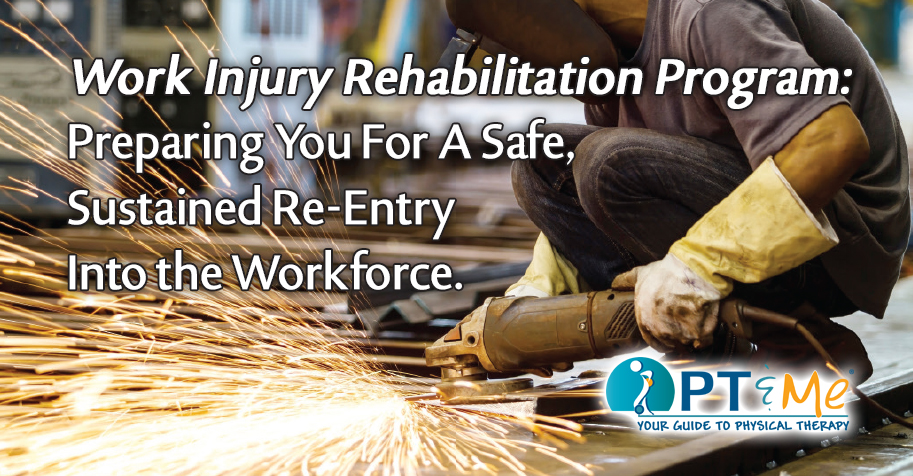
Work Injury Rehabilitation Program: Preparing You For A Safe, Sustained Re-Entry Into the Workforce.

Work Hardening

Our PT & Me physical therapists are dedicated to assisting the injured worker return to their job safely, with a decreased risk for re-injury. A work hardening program is a highly structured, goal oriented treatment program that improves work related functional abilities, with a skilled approach of graded exercise, activities, and education.

CRITICAL COMPONENTS OF OUR WORK HARDENING PROGRAM

  • Progressive program attended 4-8 hours / day.
  • Excellent patient to therapist ratio with constant supervision by a licensed OT or/and PT.
  • Completion of a musculoskeletal evaluation to identify deficit areas that affect safe performance of essential job functions, and to form the basis of the treatment approach.
  • An exercise program tailored towards improving the flexibility, strength, and endurance required for a successful return to work. At completion of the program, a comprehensive home exercise program will be provided to ensure long term success.
  • Assist the work hardening participant resume appropriate work behaviors including attendance, punctuality, and response to supervision.
  • Performance of graded job simulation activities, so that the participants gain confidence in their ability to return to work, and so they can apply their body mechanics training in a meaningful way.
  • Comprehensive patient education on pacing, stress management, back care, and injury prevention as indicated.
  • Upon Request a physical capacity / work capacity evaluation will be performed at the completion of the work hardening program to objectify the ability of the participant to return to work.

PT News

This Month in PT News. Featuring articles from PTandMe partnering clinics!

fall

1. Ways to Avoid Taking the Fall?
Written by the Therapy Team at the Jackson Clinics – Northern Virginia

Each year, injuries from falling afflict many adults— the majority of whom are senior citizens—causing painful fractures and leaving them with severe mobility problems. Read more

aging

2. Healthly and Graceful Aging – Throw Out the Rocking Chair
Written by Colleen Cleves B.S., ACSM Certified Personal Trainer, the Center for Physical Rehabilitation – Grand Rapids, MI

“Getting old isn’t for sissies.” “Good enough for my age and stage.” “There is no gold in the golden years.” “I shouldn’t be doing that for my age.” Read more

Quality PT

3. Quality of Care in Rehab
Written by Ian M. Campbell, DPT, Intermountain Physical Therapy & Hand Rehabilitation – Boise, ID

What Quality Care Means in Rehabilitation. One can drive through their city and likely notice multiple physical therapy (PT) clinics. Read more

OT Month 2018

OT Month 2018

OT Month 2018

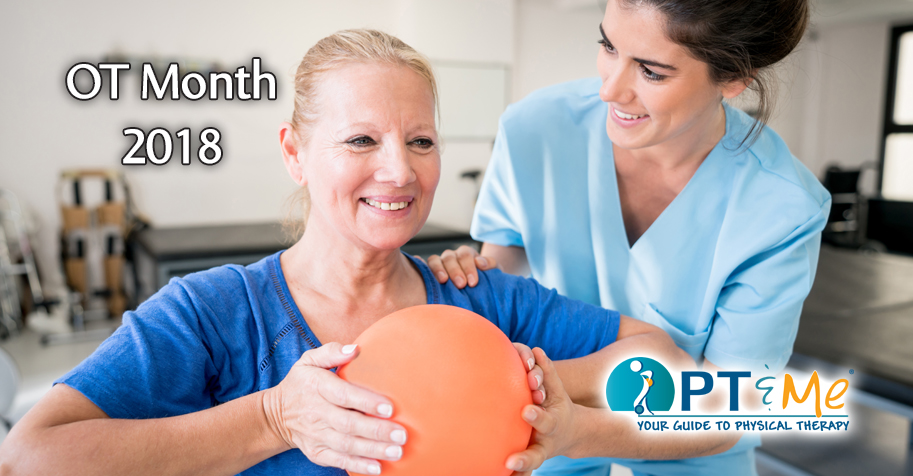
Occupational therapists & physical therapists are similar but different.
Here’s why…

Occupational therapy focuses on a person’s ability to perform activities of daily living.

OCCUPATIONAL THERAPY (OT)
mainly focuses on activities of daily living (ADL’s). For example this would mean helping patients to eat and write again after a stroke. OT’s also modify movements or the environment so a patient can complete tasks safely. These modifications help patients lead full and active lives.

PHYSICAL THERAPY (PT)

focuses on treating the injury itself, through the use of orthopedics, manual therapy and modalities. With the goals of reducing pain and improving function.

occupational therapist

Both professions educate patients on wellness and injury prevention. In some cases, like those having suffered a stroke, the patient may see both an OT and PT during recovery.

Occupational therapy is the only profession that helps people across the lifespan to do the things they want and need to do through the therapeutic use of daily activities (occupations). Occupational therapy practitioners enable people of all ages to live life to its fullest by helping them promote health, and prevent—or live better with—injury, illness, or disability.

Common occupational therapy interventions include helping children with disabilities to participate fully in school and social situations, helping people recovering from injury to regain skills, and providing supports for older adults experiencing physical and cognitive changes. Occupational therapy services typically include:

  • an individualized evaluation, during which the client/family and occupational therapist determine the person’s goals,
  • customized intervention to improve the person’s ability to perform daily activities and reach the goals, and
  • an outcomes evaluation to ensure that the goals are being met and/or make changes to the intervention plan.

Occupational therapy practitioners have a holistic perspective, in which the focus is on adapting the environment and/or task to fit the person, and the person is an integral part of the therapy team. It is an evidence-based practice deeply rooted in science.

National Athletic Training Month

March is National Athletic Training Month

March is National Athletic Training Month

March is Athletic Training Month!

ATHLETIC TRAINERS (ATCs) are highly qualified, multi-skilled health care professionals who collaborate with physicians to provide preventative services, emergency care, clinical diagnosis, therapeutic intervention, and rehabilitation of injuries and medical conditions. They can work in a variety of settings, including high schools, middle schools, universities, professional sports teams, hospitals, clinics, performing arts, club sports teams, and more. Athletics trainers decrease the liability on coaches, ensure a quicker and safer return to play, and reduce the risk of injuries for athletes of all ages.

Athletic Trainers Provide Game & Practice Coverage:

• Early injury detection and intervention
• Quick referral process to local specialists if required
• Concussion safety injury screenings:
• Evaluation of injury
• Recommendation on immediate care
• Quicker return to play

March is National Athletic Training Month

WHAT IS NATIONAL ATHLETIC TRAINING MONTH?
March is National Athletic Training Month, a time to celebrate the positive impact athletic trainers have on work, life, and sport. National Athletic Training Month is sponsored by the National Athletic Trainers’ Association (NATA), the professional members association for certified athletic trainers, and others who support the athletic training profession. NATA represents more than 45,000 members worldwide.

ATC SPORTS STATS
All statistics are taken from www.atyourownrisk.org

90% of student-athletes report some sort of sports-related injury in their athletic careers.
54% of student-athletes report they have played while injured.
12% report they have sustained concussions and head injuries from their time on the field.
163,670 middle or high school athletes were reported being seen in the emergency room for a concussion.
300 sports-related deaths of youth anything to prevent injuries.
37% of public high schools employ a full-time athletic trainer.
54% of athletes said they have played while injured.

Looking for help with an injury? Don’t go back on the field too soon. Our licensed physical therapists can get your athlete back in the game safely. 

physical therapy near me

PT News

This Month in PT News. Featuring articles from PTandMe partnering clinics!

ski

1. Skiing and Thumb Injury
Written by the Therapy Team at the Jackson Clinics – Northern Virginia

Skiing falls can often cause injury to the inner ligament of your thumb, caused by the force of the pole against this area of the hand during a fall. This area, a band of fibrous tissue connecting the bones at the bottom of the thumb, is known as the ulnar collateral ligament. Read more

crash

2. Amazing People Make A Difference: Megan and Earl’s Story
Written by the Therapy Team, ARC Physical Therapy+ – Topeka, Kansas

Earl Bayless was riding in his work truck on December 21, 2016 when his driver fell asleep, causing a major accident. Their truck flipped several times in the air and skidded a block down the road before coming to a stop and leaving Earl to wonder what just happened. Read more

rowing

3. 6 Benefits of Rowing
Written by the Therapy Team at Momentum Physical Therapy – San Antonio, Texas

If you are looking for a low-impact workout that targets multiple areas of the body while getting your heart rate up, rowing might be the right exercise for you! Read more

shin splints

PT News

This Month in PT News. Featuring articles from PTandMe partnering clinics!

flu

1. Resuming Exercise After the Flu Bug
Written by the Therapy Team at the Jackson Clinics – Northern Virginia

Flu season is in full swing, and along with the regular flu, the new H1N1 virus is infecting thousands of people. Influenza can be a serious illness. Symptoms include fever, chills, headache, body aches, sore throat , runny nose, dry cough and a general feeling of exhaustion and sickness. Read more

New Year Resolution

2. The New Way to Resolve
Written by Allison Whitteberry, PTA at the Center for Physical Rehabilitation – Cascade

According to Statistic Brain, 41% of Americans usually make New Year resolutions. However, after six months, less then half of those American’s have maintained their resolutions. Read more

Shin Splints

3. What You Need to Know About Shin Splints
Written by the Therapy Team at Momentum Physical Therapy – San Antonio, Texas

Shin splints is one of those old health terms that pop up from time to time, like “lumbago.” Lumbago refers to low back pain, which actually can be caused by different things. Read more

Lymphedema

What are the Signs and Symptoms of Lymphedema?

Lymphedema

Lymphedema can occur in any body part. Some common early symptoms include:

  • Tightness, swelling or thickening anywhere in the extremity. Initially the swelling may fluctuate but over timeit worsens.
  • A burning sensation or tingling sensation radiating down the extremity.
  • Complaints of heaviness or aching of the extremity.
  • Inability to wear rings, jewelry, watches or clothing secondary to edema.

STAGE 1 – Reversible Lymphedema

  • Lymphedema disappears with bed rest and/or elevation especially over night.
  • Edema is soft and pitting, no resistance is felt. Indentations are easily made.
  • No or little fibrosis. No alteration of tissues.

STAGE 2 – Irreversible Edema

  • Protein enriched edema which does not decrease with elevation/nights rest.
  • Connective and scar tissue formation (i.e. fibrosis). Fibrosclerotic changes.
  • Non pitting edema, strong pressure is able to produce pitting.
  • Edema becomes hard. Indentions are difficult to make.

lymphedema

Precautions and Guidelines

  • Maintain a well balanced diet, with low sodium intake. Keep a healthy weight, avoid obesity. Good nutritional guidelines are provided by the American Heart Association and the American Cancer Society.
  • Keep the affected arm or leg, clean, and well moisturized. Lotion should be at a relatively low pH balance. The goal is to prevent skin breakdown.
  • Use antibacterial and hypo-allergenic soap when washing.
  • Avoid injections, vaccinations, flu shots, blood draws and IV lines in the affected extremity. Remember, if this is an emergency, it is more important to treat the patient than to worry about putting an IV in the affected arm.
  • If at all possible, avoid having blood pressure taken in the affected arm.
  • Many people enjoy having a manicure. There is always a risk with this but you can decrease your risk by keeping your cuticles moist with lotion and push them back instead of cutting them. You could also consider buying your own manicure set and have the salon use only your tools.
  • When cleaning the house, wear a good quality rubber glove when handling harsh chemicals such as ammonia, bleach, furniture polish, abrasive cleansers etc.
  • Avoid using a razor or depilatory creams for the armpit or leg hair. The safest tool would be an electric razor.
  • When cooking, wear long protective mitts (to the elbow) when taking food out of the oven and when boiling a pot of hot water.
  • It is important to avoid pet scratches, insect bites, spider bites etc. Using an insect repellent may be necessary but remember some brands are very harsh. Look for a natural insect repellent if possible.
  • Avoid sunburn at all cost! Especially if you have received radiation therapy.
  • Be aware of items that can cause a burn such as a curling iron, an iron, space heaters etc.
  • Avoid saunas, hot tubs, and hot showers. Avoid extreme temperatures, very cold or very hot.
  • Avoid lifting or moving heavy objects.
  • Avoid tight fitting clothing or jewelry.
  • Exercise, and be knowledgeable of how exercise effects the lymphedema.
  • Check your skin daily, and call your physician immediately if you notice any adverse changes in your lymphedematous body part or if you have fever and redness.


Additional Precautions for Leg Lymphedema

  • Proper shoe wear is essential in avoiding blisters and ingrown toenails, avoid high-heeled shoes.
  • Do not walk bare foot, especially outside.
  • Get all fungal infections treated immediately.
  • Do not receive injections to remove varicose veins in the affected leg.

This information is for educational purposes only. This information should not be used without consultation with your healthcare professional. If you have questions regarding the material or its application, seek professional assistance from your provider. This information is not intended to diagnose any medical condition or to replace healthcare professional consultation.


When Is the Time Right for Physical Therapy?

physical therapy

Often, we end up in physical therapy based on the referral of our physician after dealing with and injury for a certain period of time. However, physical therapy can be used for many different ailments and can actually help cut down the time off work, off of sports and promote healing much faster.

Physical therapy can be used for many of your minor and major injuries. Following surgeries or traumas (accidents, dislocations, fractures, sprains) it can cause a considerable reduction in swelling and allow things to heal 75-80% faster than if without therapy. It has been shown that following surgery, the quicker someone goes for therapy, the less likely they are to stiffen up or have complications due to loss of range of motion. It also helps to significantly reduce pain and swelling.

Physical therapy is not only used following surgeries or sports injuries, but can be extremely helpful in preventing symptoms from getting worse and developing into more problems. If you’ve been having pain in your shoulder for 3 months or so, your body now has altered the way it moves your shoulder and in turn, you have developed some compensation patterns which could cause things to develop into other areas, such as your neck from your altered movements. This then, can lead to more significant problems which could have been easily avoided if therapy had been started and symptoms had gotten under control.

Remember, the quicker you get into therapy following an injury or persistent pain, the quicker your response time will be to therapy. If you are having some issues, talk to your physician about starting therapy. You don’t have to wait until it has a complete impact on your life or your recreational activities. Stop pain in your life and feel better by visiting one of our PT & Me physical therapists today.

PTandMe

PTandMe and How to Find Physical Therapy Near You

Find Physical Therapy

PTandMe is your online guide to physical therapy. We make it easy for you to look up common conditions, see how physical therapy will benefit you directly, and most importantly, we make it easy for you to find physical therapy.  If you are in pain, and need to find a licensed physical therapist in your area – we are the best place to look. To learn more about Physical Therapy click here.

The PTandMe injury center is unique in that it provides information on common conditions that physical therapists treat as well as gives you a glimpse into what physical therapy treatment may look like for your condition. Physical therapists are the musculoskeletal experts, so when it comes injury or musculoskeletal pain – you are in the right place. The injury center covers diagnoses from head to toe. To visit the PTandMe injury center click here.

PT & Me

In addition to the injury center, PTandMe sends out great health and wellness tips each month through the Therapy Connection newsletter & weekly PT & Me blog posts.  We partner with over 550 physical therapy clinic nationwide, so the topics covered are relevant and directly from licensed professionals in the field. Featured articles, recipes and fun trivia questions make these resources a great learning tool for everyone.

When it comes to finding physical therapy and scheduling your first appointment, PTandMe makes it easy.  We have collected an online database of our partnering clinics throughout the United States so that you can easily access them from your phone or home computer. To find a physical therapist near you visit our “Find a PT” search page by clicking here.

If you are on the fence about going to physical therapy, or simply want more information about it, PTandMe makes it easy for you to find the information you need quickly. The faster you start to treat pain or an injury, the better the long term benefits, so don’t wait to try physical therapy. Get started today and find physical therapy clinics near you!