Tag Archives: Physical Therapy

physical therapy knee pain

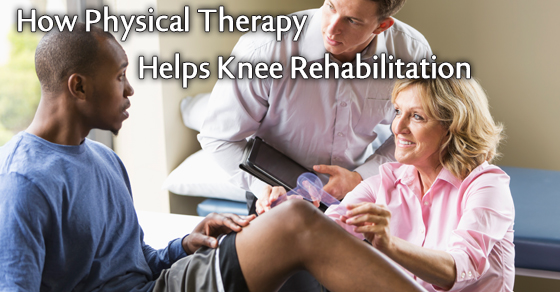
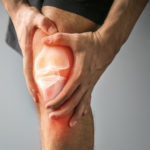
How Physical Therapy Helps Knee Rehabilitation

How physical therapy helps knee rehabilitation and how physical therapy provides knee rehabilitation.

Physical therapists can provide more than pre/post surgical knee rehabilitation for patients experiencing knee pain.

What Causes Knee Pain?
The knee is a relatively simple joint required to do a complicated job…to provide flexible mobility while bearing considerable weight. While walking down the street, our knees bear three to five times our body weight. When the knee is overstressed in sports or in everyday activities, these structures can break down — and a knee injury occurs.

Common Knee Problems Seen by Our Physical Therapists:

  • Strain / Sprain
  • Arthritis Pain
  • Muscle Weakness
  • Ligament Sprains
  • ACL Tears
  • Tendinitis (ie: Patellar, Pes Anserinus)
  • Chondromalacia Patella
  • Patellofemoral Syndrome / Knee Pain
  • Pre / Post Operative Therapy

How Physical Therapy Provides Knee Rehabilitation
Rehabilitation acutely after knee surgery or a knee injury primarily centers around decreasing swelling in the knee joint. Even a small amount of fluid inhibits the quadriceps muscle on the front of knee by slowing the signal for movement traveling from the brain to the muscle. Manual techniques to decrease muscle spasm and improve length tension relationships of soft tissue are also incorporated. Gradually, exercises to increase strength, range of motion and functional mobility are introduced.

Treatments Offered Include:

  • Comprehensive evaluation with an emphasis on determining the source of the problem
  • Individualized and specific exercise programs
  • Manual therapy (hands-on treatment)
  • Modalities as needed
  • Work and sport specific simulations
  • Progressive home program to help restore independence and self-management

Knee Rehabilitation Goals:

  • Reduce Pain
  • Improve Mobility
  • Movement Awareness/Gait Training
  • Functional Strength
  • Patient Education

For more information on knee injuries visit our PT & Me Knee Injury Center page by clicking here.

The PT & Me Injury Center goes over diagnoses on how physical therapists treat specific injuries.

To find or search for a local participating PT & Me physical therapy clinic in your local area please click here.

PT News

This Month in PT News. Featuring articles from PTandMe partnering clinics!

2. Don’t Let Your Asthma Freeze You Out of Winter Workouts
Written by the Therapy Team at the Jackson Clinics – Northern Virginia

Avoiding asthma attacks while exercising in winter is best accomplished by preventing cold, dry air from getting into your bronchial airways. One way to do this is to exercise indoors when it is cold. Read more

3. Living Our Mission Statement: Being a Catalyst of Change In 2018
Written by Colleen Norris, Partner/Practice Administrator – Overland Park, KS

I have been in healthcare for almost 40 years and the changes that have occurred over that time have been tremendous. I’ve seen everything from patient care innovations, new payment methodologies, advancing technology, improved workflow processes, and my personal favorite… a focus on outcome data. Read more

PT & Me Clinics Give to Families in Need During the Holidays

During the holiday season we are thankful for what we have, but we understand some families might not be as fortunate due to hardships, unforeseen circumstances or health related issues. We at PT & Me try to instill compassion and kind-heartedness into all of our clinics that are a part of us. These are just a few ways of how our dedicated clinics are giving back to those in need within their communities this holiday season…

Madison Spine & Physical Therapy is organizing it’s 2017 Spread the Warmth Winter Clothing & Blanket Drive on December 22nd, 2017. If you live in the New York City or New Jersey area please support their charity campaign by donating today!

Items Needed Are:
• Jackets
• Blankets
• Boots
• Gloves
• Hats
• Scarves
• Sweatshirts
• Pants
• New Undergarments

Call (201) 982-3050 for donation pick up.

On December 22nd Madison Spine and their employees will drive into NYC with the donations and hand them out to those who could use a little warmth!
You donate, we deliver! Let’s all come together and make a difference!

For more information on Madison Spine and Physical Therapy click here.

Pinnacle Therapy Services is organizing Operation Breakthrough. They are collecting items throughout the month of December to donate in the Kansas City area. Operation Breakthrough is an organization that has been helping Kansas City families since 1971. They provide a safe, loving, and educational environment for children in poverty and empower their families through advocacy, emergency aid and education. If you are able, please help Pinnacle help local, underprivileged families. Items can be dropped off at any Pinnacle Therapy Services location.

DONATIONS NEEDED

Non-Perishable Foods:
• Cereal – Cold & Oatmeal
• Boxed Meals
• Canned Fruit
• Hearty Soups / Chili
• Crackers
• Hamburger/Tuna Helper
• Tuna
• Canned Chicken
• Mac & Cheese
• Canned Vegetables

Other Items:
• Diapers: Size 3 & Up & Wipes
• Toothpaste/Toothbrushes for Children & Adults
• Toilet Paper
• Deodorant
• Bath Soap
• Feminine Hygiene Products
• Laundry Detergent
• Cleaning Items
• Children’s Toys

For more information about Operation Breakthrough click here.
For more information about Pinnacle Therapy Services click here.

Thank you for your generosity! Happy holidays!

labral tear physical therapy

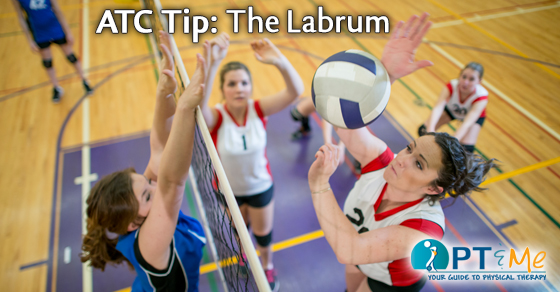
ATC Tip: The Labrum

Anatomy of the Shoulder
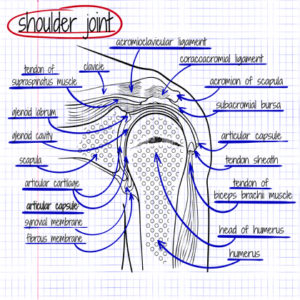
The shoulder can move in almost every plane of motion, it’s the most mobile joint in the human body; but more mobility = more instability. The shoulder joint is often described as a “ball in socket,” but it’s wide range of motion makes it a highly vulnerable joint. We have a network of soft tissue structures, such as the rotator cuff and ligaments, whose main job is to keep the humeral head in its assigned seat. However, often these muscles alone are not sufficient as they can become weak or tight and thus less efficient. The labrum is a small ring of cartilage that provides additional stability to the shoulder joint.

How Does a Labrum Become Damaged?
Direct trauma, shearing forces, or repetitive stress can cause damage to the labrum. Often, this damage will present as a tear in the labrum, which can restrict motion, decrease strength, and cause pain in the shoulder. Picturing that ring of cartilage, imagine a roughening of the edges of the bowl-like golf tee, or even a rip that flaps when the ball is spun around. It is not uncommon for a shoulder dislocation or subluxation to be accompanied by a labral tear; chronic shoulder instability can also lead to labrum injury.

What Does a Labrum Do?
Because the “ball and socket” is so shallow, the shoulder joint is often described, quite accurately, like a “golf ball sitting on a tee.” To picture the shoulder labrum, imagine a ring around the outer edge of a golf tee, effectively deepening the overall bowl shape, almost suctioning the humerus into the space. The labrum helps stabilize the shoulder by making the “ball” more difficult to remove from the “tee.”

How Can I Prevent a Labrum Injury?
The best way to prevent a labral tear is to strengthen the musculature surrounding the shoulder joint. The best case scenario is all of the muscles are working together to keep the shoulder joint moving fluidly through its full range of motion. Important within this group of muscles are the muscle that control the shoulder blades. By strengthening the stabilizing muscles individually and functionally, it helps them stay balanced and strong with the other, stronger muscles (like the RTC). The other way to prevent a labrum tear is to avoid excessive contact, repetitive overhead motions, and falls.

This article about athletic injuries was provided by PT & Me physical therapy partner: The Center for Physical Rehabilitation. More information about the center and their locations throughout Grand Rapids, MI can be found on their website at www.pt-cpr.com

To see a shoulder strengthening program visit our Sports Medicine Tip Page by clicking here.

PT News

This Month in PT News. Featuring articles from PTandMe partnering clinics!

1. How to Deal with Chronic Joint and Muscle Pain
Written by the Therapy Team at Cornerstone Physical Therapy – Gahanna, OH

All of us have experienced pain and discomfort in the muscles and joints at some point, especially with age. In most cases, the use of over the counter medications, hot/cold packs and rest help resolve the problem. Read more

2. Pain at the Mall
Written by the Therapy Team at the Jackson Clinics – Northern Virginia

As the outside temperatures drop, people contemplating undertaking an exercise program often consider walking at the mall. Benefits include a controlled climate, an absence of traffic, security and easily available restrooms and water. Read more

3. Quality of Care in Rehab
Written by the Ian M. Campbell, DPT at Intermountain Physical Therapy – Boise, ID

What does quality care mean in rehabilitation? One can drive through their city and likely notice multiple physical therapy (PT) clinics. Some may be privately owned and operated, others run by local hospitals. Read more

PT&Me Thanks Our Wonderful Patients

This Thanksgiving holiday PT&Me is thankful for our patients. Without their support for our physical therapy clinics we wouldn’t have the continued success that we are so thankful for. Here are some of the ways our patients have thanked us for their recovery and well being through their awesome online reviews:

Advance Rehabilitation – Brunswick, GA (click for location details)
“Love the great, friendly, knowledgeable and caring staff! Highly recommend for your needs!”
– Norma Worley (click for review)

Pinnacle Therapy Services – Overland Park, KS (click for location details)
“I’ve had PT at two of the area hospitals and another private facility, and although I had results from all of them, I feel that Pinnacle goes above and beyond in customer service, attitude and demeanor of all therapists, and most importantly, skills and knowledge of said practitioners. Most recently, I worked with Amy and received superior care. The results I received have been the most long-lasting and beneficial.”
– Shawna Deck (click for review)

Port City Physical Therapy – Portland, ME (click for location details)
“The therapists at Port City Therapy are wonderful! They made my time in therapy both fun and informative. I learned what to do to stay healthy for the future. I actually looked forward to each visit.”
– Carole J. (click for review)

The Center for Physical Rehabilitation – Grand Rapids, MI
(click for location details)
“Very caring and competent. Great to work with. I have used them multiple times. Always pleased.”
– Larry Pieniazek (click for review)

Plymouth Physical Therapy Specialists – Jackson, MI (click for location details)
“This is a great facility with a friendly and professional staff. Everyone seems to go above and beyond to address patient needs in a highly personalized manner. That means so much when you are trying to get back in tip top shape. I will definitely recommend to any of my family or friends requiring physical therapy. Thank you guys for your help!”
– Emily A. (click for review)

From all of us at PT & Me we would like to wish you and your family a very happy Thanksgiving!

knee injuries physical therapy

Common Causes of Knee Injuries

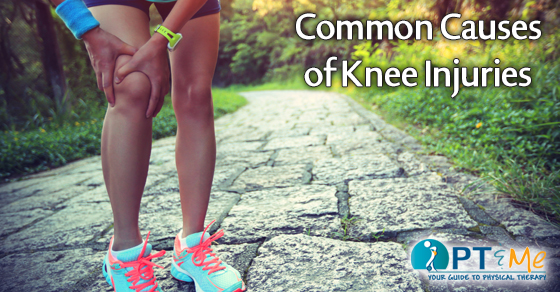
While most of us take our knees for granted, injuries can occur quite easily and for a variety of reasons. Only when you suffer a knee injury, do you realize how much we rely on these joints on a day to day basis. Knee injuries cause discomfort and pain, but that’s not all. They can also be extremely debilitating and in serious cases, result in dramatically reduced mobility. So let’s take a look at some of the most common causes of knee injuries, and what to do in case you experience one.

What Are the Most Common Knee Injury Causes?

Well, there are a number of them – some more serious than others. Let’s take a look at some of the most common ones!

  • Fractures: Fractures are very common knee injuries and can affect the patella, which is the most commonly fractured bone around the knee. Fractures can also affect the ends of the tibia and femur in the area where they come together to form the knee joint. Incidents such as serious falls and road traffic accidents are common causes of fractures. And sometimes even the best knee brace for running or other sports won’t be able to prevent a fracture.
  • Dislocated knee: Knee dislocation is another common knee issue and it occurs when the knee bone is either partially or totally out of place. This could include the patella slipping or the femur and tibia sustaining injury that forces them out of alignment. Various different sports activities as well as falls and other high impact trauma can cause this injury.
  • Torn ligament: Tearing of the anterior cruciate ligament is also a common type of knee injury. This is more common among those that take part in athletics and sporting activities. Some of the common causes of this injury include a rapid change in direction when running or incorrectly landing from a jump. In many cases, this sort of injury also comes with additional injuries to the cartilage.
  • Torn tendons: This type of injury is more common among older people, particularly those who are active runners or do any sports that require a lot of running. The tendons of the patella can become stretched and then torn during this type of activity. Direct force to the front of the knees, falls, and incorrect landing following a jump are all common causes of a torn tendons.

There are many different causes of knee injuries, but usually they involve some sort of high impact trauma. This is why these types of injuries are often sustained by athletes as well as people who are keen on physical activities. Falls, incorrect landings following a jump, and the twisting of the knee can all cause various different knee injuries.

The knees are among the most easily injured joints in the human body, and also one of the most common reasons for people seeing their doctor. So in the event of a knee injury, no matter what the cause, it is important to seek medical advice because a knee injury can escalate from simple twisting of the knee to a dislocation or worse pretty quickly. Because the treatment for a knee injury varies based on the severity as well as the type and cause of the problem, ranging from medication and physical therapy to even surgery, consulting a medical professional is the first step to treating your knee successfully.

More information about common knee injuries can be found in the PTandMe injury center.

Direct Access Physical Therapy

Direct Access: Physical Therapy Without A Physician Referral

direct access physical therapy PTandMe

Did you know that almost all states allow consumers to be treated by a qualified physical therapist without a referral from a physician? It is called direct access and most of our PT&Me partnering locations are able to provide direct access to physical therapy to your community.

EXPERIENCED PHYSICAL THERAPISTS

Quality and consistency of care are the cornerstones of our partnered clinics. Everything the clinics do is directed towards developing and fostering these behaviors. Quality means doing things that work. Licensed physical therapists design programs of care that have been proven to be effective treatment interventions. You can expect individualized, hands-on care.

HONEST AND TRUSTWORTHY

Your well being is our primary concern. Our direct access physical therapy clinics will always do what is best for you. After your initial physical therapy evaluation, your physical therapist will recommend the appropriate plan of care for you. They will not waste your time or money if physical therapy is not your best option for a full and quick recovery.

PHYSICIAN PARTNERS

Our partnered direct access physical therapy clinics have wonderful relationships with numerous physicians in and around your community. If you choose to receive physical therapy via direct access, your therapist will communicate appropriately with your physician at your discretion. If you are new to the area or you do not have a physician and need one, they will be happy to help facilitate a referral to a doctor for you.

* Not applicable to patients in federal or state funded programs, such as Medicare, Medicaid or Tricare

For more information about direct access physical therapy and to see if your state participates, go here:

Direct Access Physical Therapy

physical therapy near me

This article was written by STAR Physical Therapy  – with over 65 locations throughout TN. For more information on STAR Physical Therapy, visit them online at www.STARpt.com 

PT News

This Month in PT News. Featuring articles from PTandMe partnering clinics!

1. Age Appropriate Strength & Performance Training
Written by Joe Chiaramonte AT, ATC, CSCS at The Center for Physical Rehabilitation and Therapy – Grand Rapids, MI

In recent years there has been much discussion on training for our adolescent athletes and what is appropriate, whether it be how much, how soon, how specialized? Read more

2. Breast Cancer Rehabilitation
Written by the Therapy Team at the Jackson Clinics- Northern Virginia

October is Breast Cancer Awareness Month, which is an annual campaign to increase awareness of the disease. Physical Therapy is an integral part of breast cancer rehabilitation. Read more

3. Show Hope Video Shares Impact of STAR Physical Therapy
Written by the Therapy Team at STAR Physical Therapy – Tennessee

STAR Physical Therapy’s mission, To Serve, knows no boundaries. Read more

lumbar physical therapy

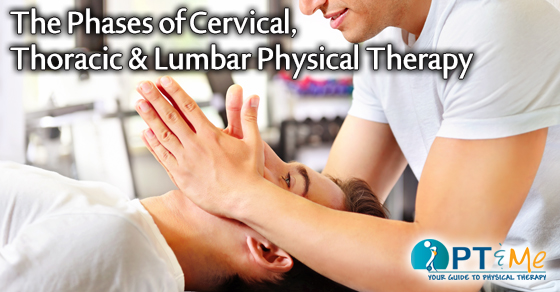
The Phases of Cervical, Thoracic and Lumbar Physical Therapy

A great cervical, thoracic and lumbar physical therapy program is very important for patients who have experienced surgery. Rehabilitation will be modified based on body region and type of surgery.

Pre-Operative Phase
Prior to surgery, your physical therapist will perform a comprehensive evaluation to assess your mobility, strength, coordination, and function in order to create a customized home exercise program to perform in preparation for your surgical procedure. This program will be important for you to perform until you have surgery to help improve your recovery after surgery.

NON-FUSION PHYSICAL ACTIVITY PROGRAM

Phase 1 Post-Operative (0 – 4 Weeks Post-Op)
During this phase, you will undergo light activities, like walking. During this time, it is imperative that you perform the home exercise program your physical therapist taught you to improve muscle function, and help improve healing. During this time, you may exhibit pain and soreness due to the surgery. This is a normal part of the healing process.

  • Immediately following your surgery, you will be allowed to perform very light, gentle, activities of daily living around your home. However, do not lift more than 10 pounds (a milk jug), and go slowly when bending or twisting.
  • Walking is important to perform consistently as well. Move around your house, ensuring that the area is free of any obstacles which can cause you to fall. Walking around the block should be the limit to what you do in the first 2 weeks. This duration can be increased but should stay under one quarter of a mile for the first 4 weeks.

  • Healing is most important during this phase and post-surgical pain and soreness is normal.

Phase 2 Post-Operative (4 – 6 Weeks Post-Op)
During this phase, you will start physical therapy. Physical therapy during this phase will involve exercises to improve your mobility, strength, and stability. Due to an increase in activity during this time, it is normal to exhibit increased muscle soreness with physical therapy. The soreness will resolve as your muscles get stronger.

  • Formal physical therapy as prescribed by your surgeon will start.
  • Physical therapy will include a comprehensive evaluation to determine the appropriate treatment to improve mobility, strength, stability, and coordination.
  • It is normal to experience muscle soreness during this time with your program. Each person’s body has a different activity threshold that needs to be reached to make physical improvements and muscular soreness is a healthy, safe response to working in this threshold.
  • As your activity threshold level improves, the soreness will resolve.

Phase 3 Post-Operative (7 – 10 Weeks Post-Op)
During this phase, physical therapy will focus on dynamic exercises and activities emphasizing multiple planes of motion. During this time, you can expect more complicated exercises to challenge your coordination and stamina for reaching your goals.

  • During this phase, physical therapy will increase intensity in regards to your appropriate activity threshold.
  • Exercises and activities will become more challenging, more dynamic, and will involve multiple planes of motion to simulate and retrain muscles to complete your daily or recreational activities.
  • Your custom physical therapy program will include specific activities and exercises to prepare you for return to your functional goals.

Information provided by PT and Me physical therapy partner, Rehab Associates of Central Virginia. R.A.C.V. has 13 locations throughout central Virginia. More information about Rehab Associates of Central Virginia can be found on their website at www.racva.com.